Introduction
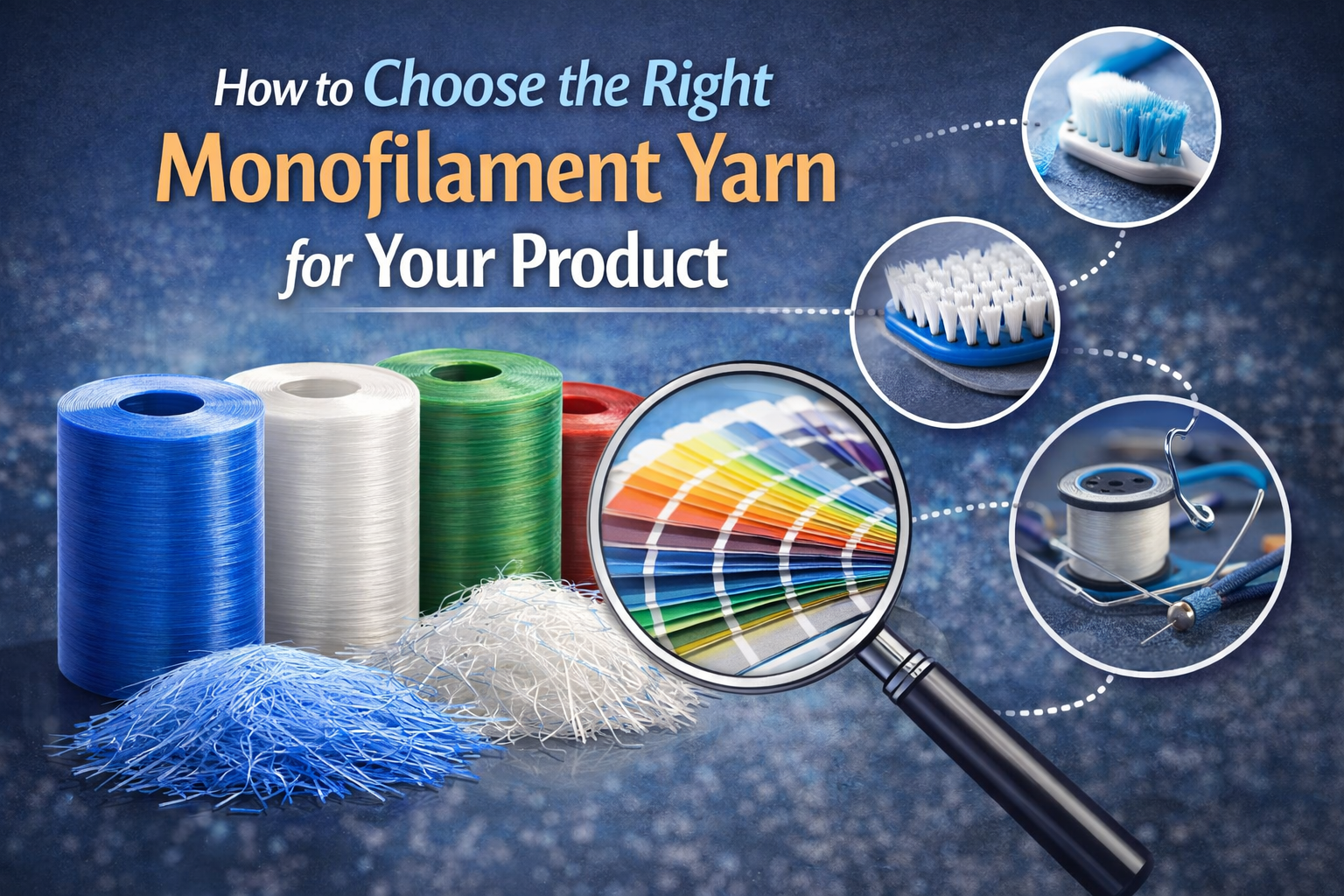
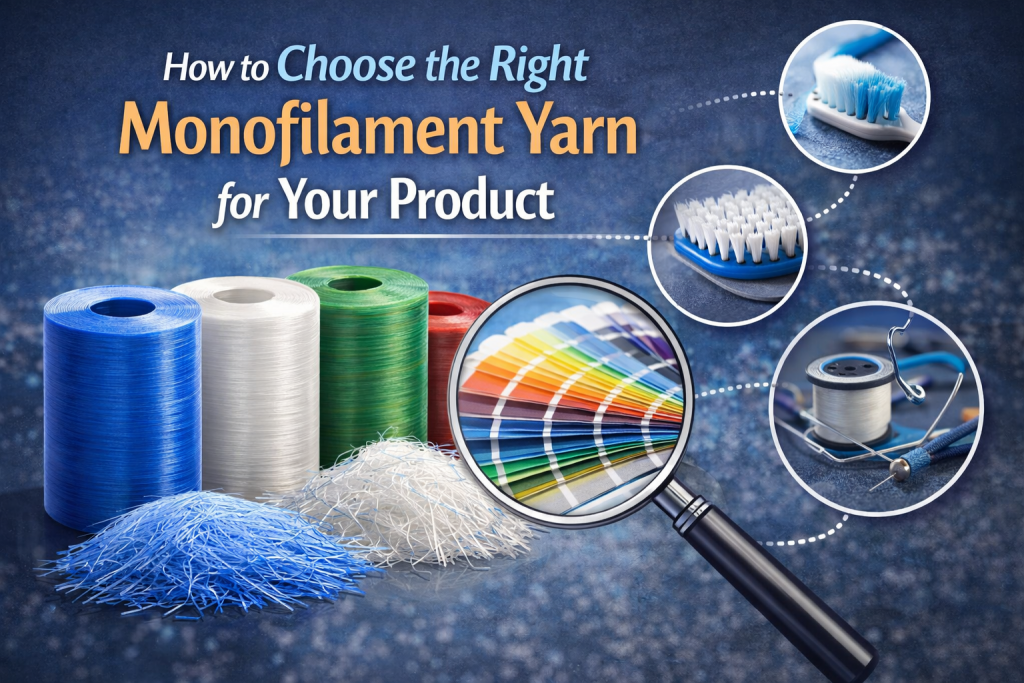
Selecting the right monofilament yarn is a critical decision that directly impacts product performance, durability, and long-term efficiency. Whether you are manufacturing household brushes, industrial tools, filtration systems, or oral care products, choosing the correct filament ensures consistent results and reduced operational costs.
If you’re new to the material, understanding what is monofilament can help you make informed decisions about selecting the right yarn for your application.
In this guide, we’ll walk you through the key factors, material types, and practical considerations to help you choose the best monofilament yarn for your product.
Key Factors When Choosing Monofilament Yarn
Choosing the right monofilament yarn depends on multiple technical and application-based parameters.
Important Factors to Consider
- Material type (nylon, polyester, polypropylene)
- Filament diameter
- Tensile strength
- Abrasion resistance
- Chemical and moisture resistance
- End-use application
Understanding these factors helps ensure that your selected yarn performs efficiently in its intended environment.
Monofilament Yarn Material Types
1. Nylon Monofilament Yarn
Nylon monofilament yarn is widely used for its strength and flexibility, making it ideal for demanding applications.
Key benefits:
- High tensile strength
- Excellent abrasion resistance
- Superior flexibility and resilience
It is commonly used in industrial environments where durability is critical, especially in monofilament for industrial brushes and engineering applications.
2. Polyester Monofilament Yarn
Polyester monofilament yarn is known for its dimensional stability and moisture resistance.
Key benefits:
- Low moisture absorption
- High stability under varying conditions
- Good chemical resistance
It is often used in filtration and technical textile applications where consistent performance is required.
3. Polypropylene Monofilament Yarn
Polypropylene monofilament yarn is lightweight and cost-effective, making it suitable for a wide range of industrial applications.
Key benefits:
- Excellent chemical resistance
- Low density
- Economical solution
It is commonly used in agricultural, filtration, and general industrial applications.
Monofilament Yarn Diameter and Strength Selection
Selecting the correct diameter is a key step in any monofilament yarn selection guide.
Why Diameter Matters
Filament diameter affects:
- Stiffness and flexibility
- Strength and durability
- Surface interaction with materials
Quick Selection Guide
| Diameter Type | Best Use |
| Fine | Oral care, precision filtration |
| Medium | Household brushes, textiles |
| Thick | Industrial brushes, heavy-duty use |
For example, products like monofilament for oral care brushes require fine, soft filaments, while industrial tools need thicker, stronger variants.
Monofilament Yarn Properties That Impact Performance
1. Tensile Strength
High tensile strength ensures the yarn can withstand mechanical stress without breaking. This is essential in industrial applications and high-load environments.
2. Abrasion Resistance
Applications involving friction require yarns with excellent abrasion resistance. This is especially important in monofilament applications in industrial usage such as cleaning tools and machinery.
3. Chemical Resistance
In environments exposed to chemicals or cleaning agents, selecting the right polymer ensures durability and long-term performance.
4. Moisture Resistance
Low moisture absorption is critical for products used in wet or humid environments, such as filtration systems and cleaning brushes.
Monofilament Yarn Applications Across Industries
1. Brush Manufacturing
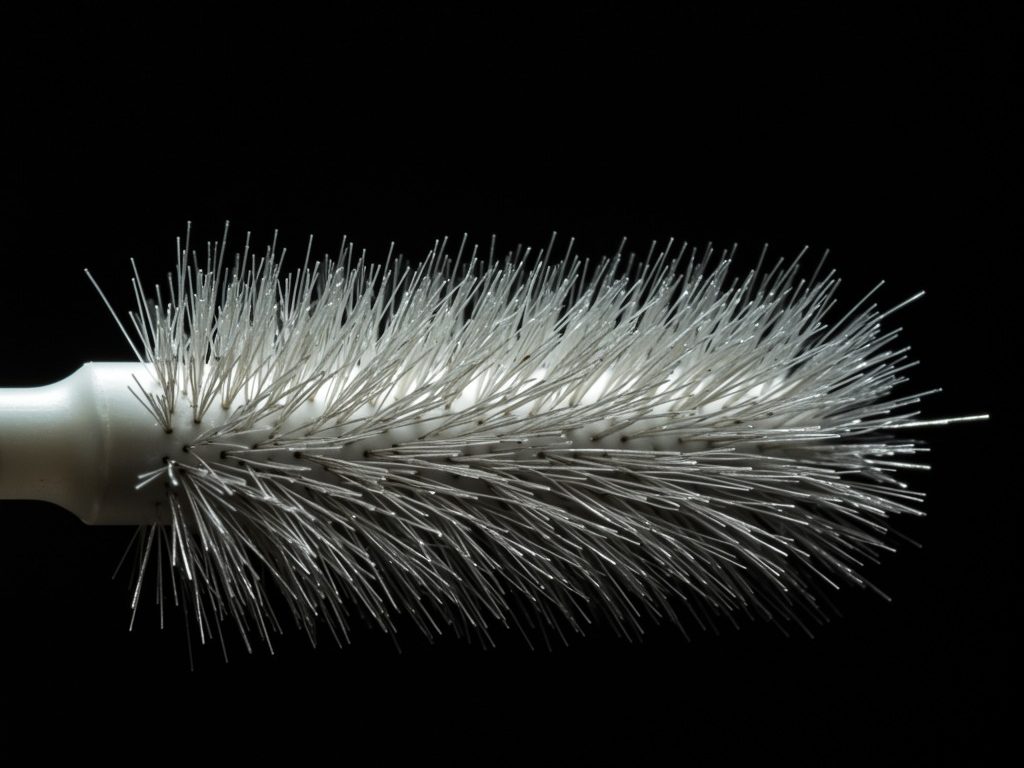
One of the most common uses of monofilament yarn is in brush manufacturing.
Applications include:
- Household cleaning tools
- Industrial brushes
- Oral care products
For example, monofilament for household brushes is designed for flexibility and durability in everyday cleaning tools.
2. Filtration Applications
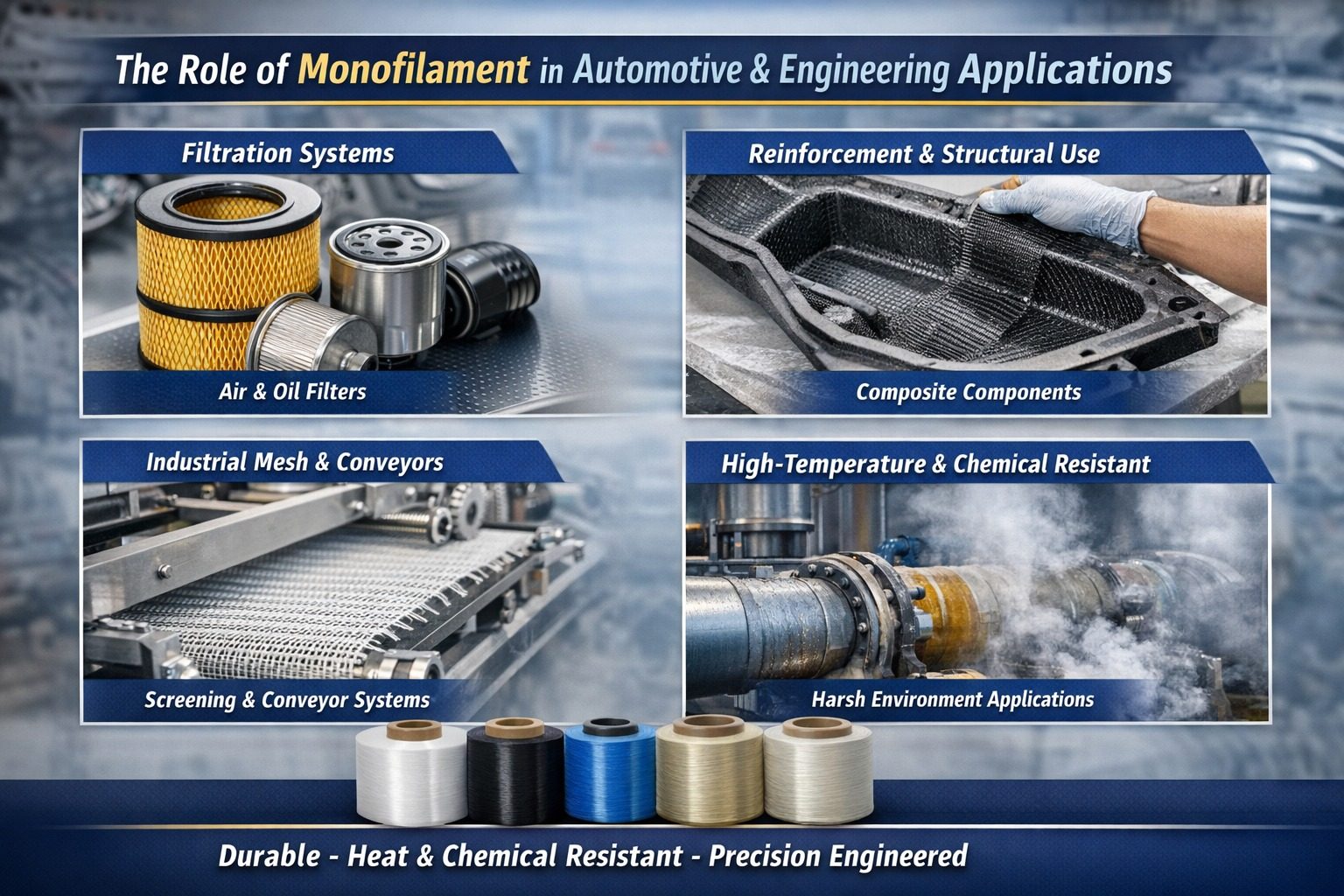
Monofilament yarn is widely used in filtration systems because of its uniform diameter and smooth surface.
Applications include:
- Air filtration
- Liquid filtration
- Industrial screening
3. Technical Textiles
Monofilament yarn for technical textiles enhances structural integrity and durability.
Applications include:
- Reinforcement fabrics
- Industrial mesh
- Protective textile solutions
4. High-Performance Industrial Usage
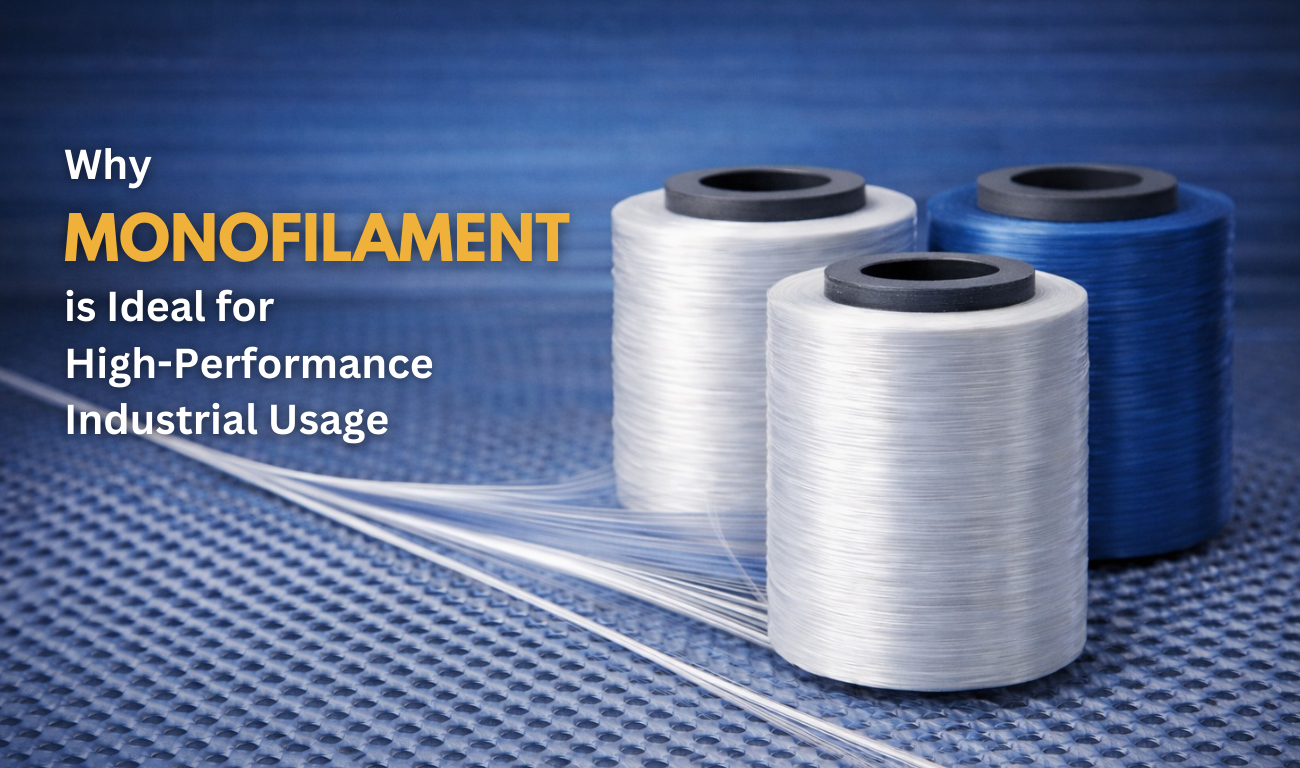
For demanding environments, selecting the right yarn is critical. You can explore more about monofilament for high-performance industrial usage to understand how performance varies based on material and engineering.
Factors to Consider When Choosing Monofilament Yarn
To ensure optimal performance, consider the following:
Application Requirements
Define whether the product needs flexibility, stiffness, or high durability.
Polymer Selection
Different polymers provide different mechanical and chemical properties.
Environmental Conditions
Evaluate exposure to:
- Heat
- Moisture
- Chemicals
- UV light
Manufacturing Consistency
The impact of precision engineering on monofilament performance is crucial in ensuring uniformity and reliability.
Benefits of Choosing the Right Monofilament Yarn
Selecting the correct monofilament yarn offers several advantages:
- Improved product durability
- Consistent performance
- Reduced maintenance costs
- Enhanced efficiency
- Better product quality
These benefits make engineered monofilament solutions essential for modern manufacturing.
Frequently Asked Questions (FAQ)
What is monofilament yarn used for?
Monofilament yarn is used in brush manufacturing, filtration systems, technical textiles, automotive components, and industrial applications.
How do I choose the right monofilament yarn?
Consider material type, filament diameter, tensile strength, and environmental conditions to select the best monofilament yarn for your application.
Which monofilament yarn is best for industrial applications?
Nylon monofilament yarn is often preferred due to its strength, flexibility, and abrasion resistance.
Why is filament diameter important?
Filament diameter determines stiffness, flexibility, and durability, making it a key factor in product performance.
Conclusion
Choosing the right monofilament yarn for your product is essential for achieving optimal performance, durability, and cost efficiency. By evaluating material types, filament diameter, and application requirements, manufacturers can ensure reliable and consistent results.
Need Help Choosing the Right Monofilament Yarn?
Selecting the correct monofilament yarn can be complex, especially when balancing performance, cost, and durability.
At Shanthi Industries, we provide customized monofilament yarn solutions tailored to your specific product requirements—whether for household, industrial, or oral care applications.
Why Choose Shanthi Industries?
- Precision-engineered monofilament yarn
- Customizable diameter and stiffness
- Reliable bulk supply
- Expertise across multiple industries
📞 Contact us today to find the perfect monofilament yarn for your product.
📧 Email: info@shanthiindustries.com
🌐 Website: https://shanthiindustries.com/