Introduction
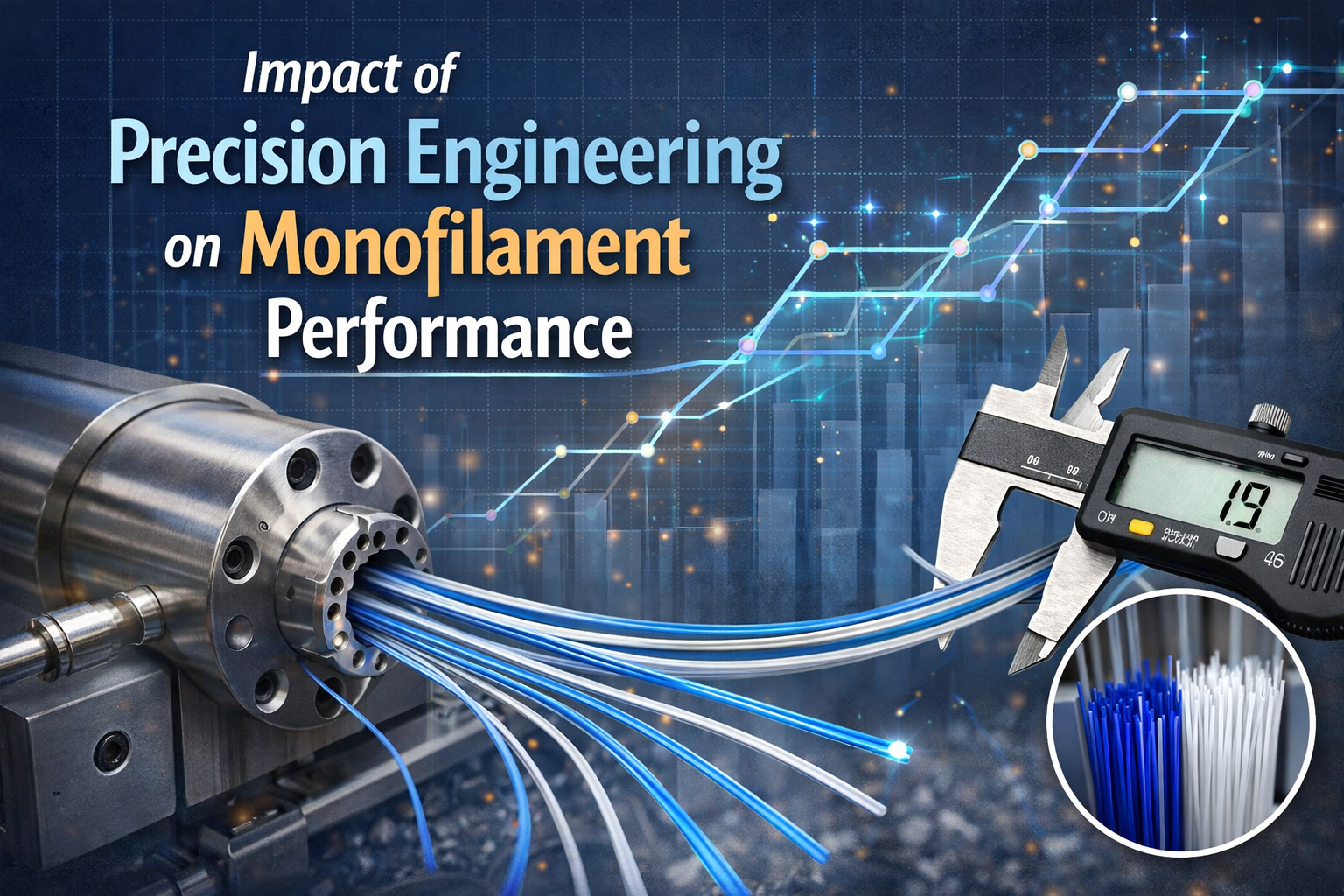
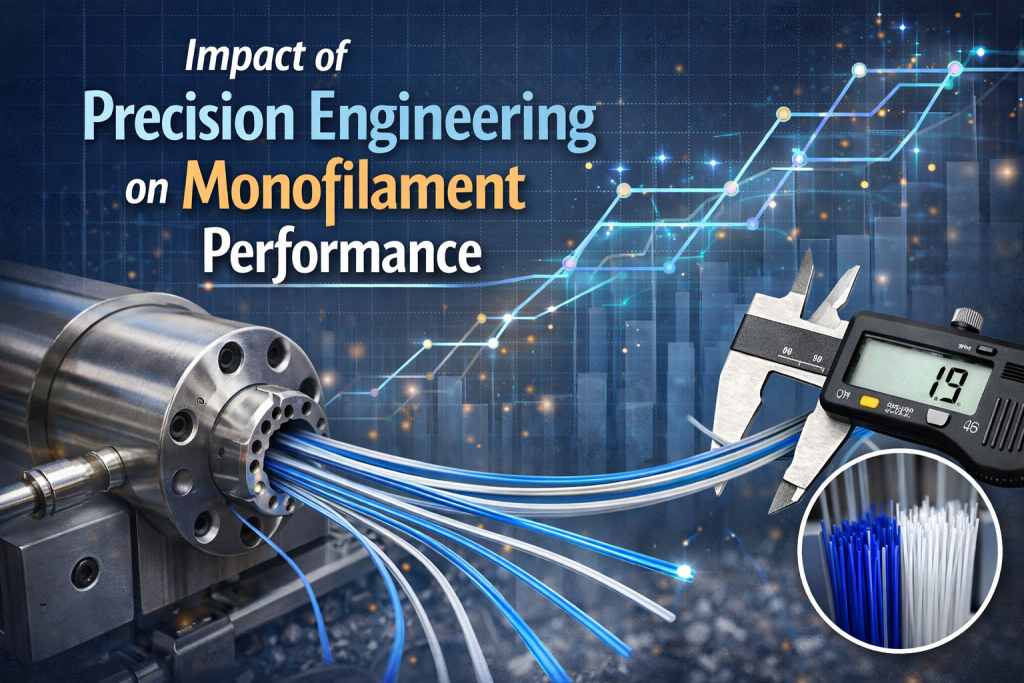
In industrial and technical textile applications, monofilament performance is not defined by raw material alone. The true differentiator lies in precision engineering—the controlled manufacturing processes that determine consistency, strength, durability, and reliability.
As industries demand higher efficiency, longer lifespan, and tighter tolerances, precision engineering has become central to producing high-quality monofilament. From filtration and automotive components to brushes and industrial fabrics, engineered accuracy directly impacts real-world performance.
This blog explores the impact of precision engineering on monofilament performance, why it matters, and how it benefits manufacturers and end users alike.
What Is Precision Engineering in Monofilament Manufacturing?
Precision engineering refers to the accurate control of every stage in the monofilament manufacturing process to achieve consistent physical and mechanical properties.
In monofilament production, this includes:
- Polymer selection and formulation
- Controlled extrusion temperature
- Accurate die design
- Precise filament diameter control
- Uniform cooling and stretching
- Strict quality testing and inspection
Each step directly influences how the monofilament performs in demanding applications.
Why Precision Engineering Matters for Monofilament
Monofilament is used in environments where failure is not an option. Even small variations in diameter or strength can lead to reduced efficiency, increased wear, or product failure.
Key Reasons Precision Is Critical
- Ensures consistent product quality
- Enhances mechanical strength
- Improves dimensional stability
- Reduces breakage and deformation
- Increases product lifespan
Precision engineering transforms monofilament from a basic filament into a high-performance industrial component.
Impact of Precision Engineering on Key Monofilament Properties
1. Diameter Consistency
One of the most critical parameters in monofilament yarn performance is uniform diameter. Polyester and nylon variants designed for consistent diameter deliver reliable performance
Precision-engineered benefits:
- Stable stiffness across the filament
- Predictable performance in brushes, filters, and fabrics
- Reduced vibration and imbalance in rotating systems
Consistent diameter ensures reliable behavior in both manual and automated applications.
2. Tensile Strength and Load Capacity
Through controlled extrusion and stretching, precision engineering optimizes molecular alignment within the filament.
Resulting advantages:
- Higher tensile strength
- Improved load-bearing capacity
- Resistance to snapping under stress
This is essential for applications such as industrial filtration, conveyor belts, and mechanical brushes.
3. Flexibility and Shape Memory
Precision control allows manufacturers to balance flexibility and stiffness based on application needs.
- Softer monofilaments for delicate cleaning or filtration
- Stiffer monofilaments for heavy-duty industrial use
Engineered shape memory ensures the filament returns to its original form after repeated bending, improving long-term performance.
4. Abrasion and Wear Resistance
Precision engineering improves surface smoothness and internal structure, directly affecting wear resistance.
Benefits include:
- Reduced surface friction
- Slower material degradation
- Longer operational life
This is particularly important for brushes, brooms, and sweeping tools exposed to constant friction.
5. Chemical and Environmental Resistance
By precisely controlling polymer composition and processing conditions, monofilament can be engineered to resist:
- Cleaning chemicals
- Oils and solvents
- Moisture and humidity
- UV exposure
This ensures consistent performance in harsh industrial environments.
Role of Precision Engineering in Industrial Applications
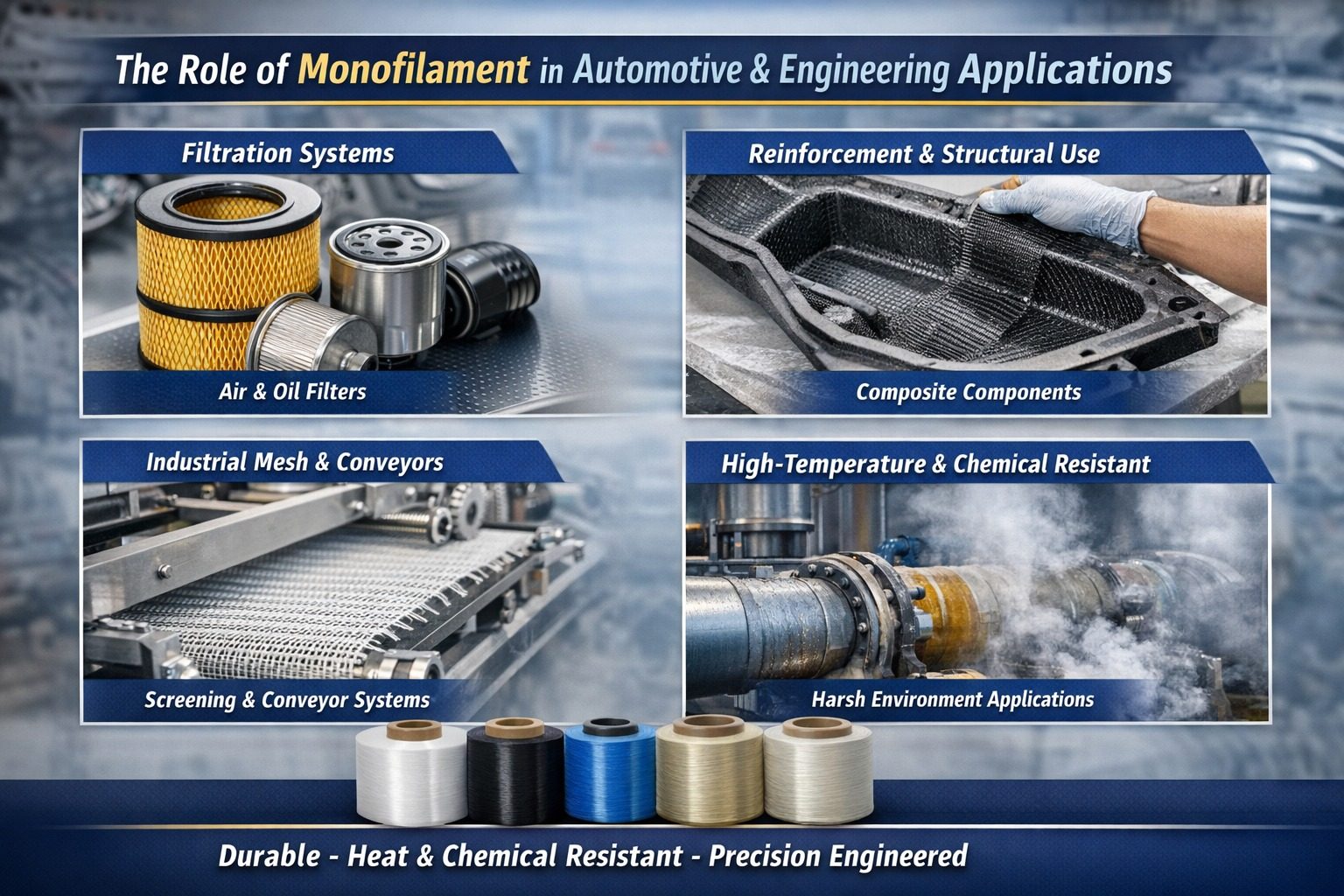
Filtration Systems
Precision-engineered monofilament ensures:
- Uniform pore size
- Consistent filtration efficiency
- Reduced clogging
This is critical for air, liquid, and industrial filtration fabrics.
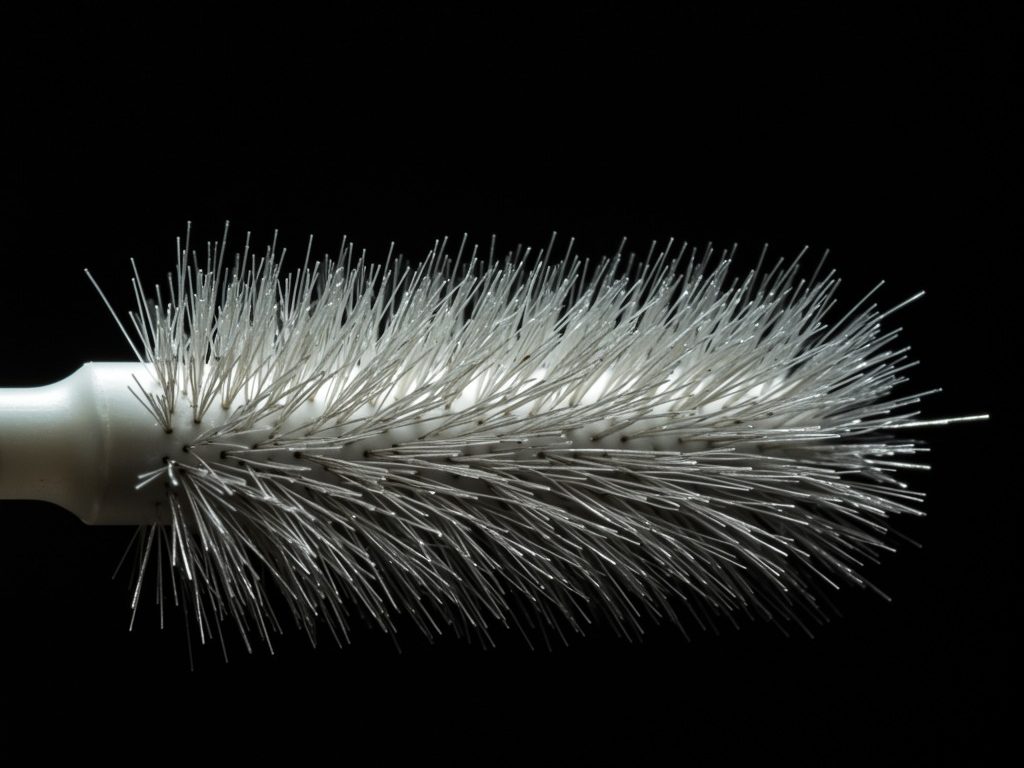
Brushes, Brooms, and Cleaning Tools
In cleaning tools, precision-engineered monofilament provides:
- Uniform bristle stiffness
- Balanced sweeping and scrubbing action
- Extended product life
This leads to better cleaning performance and reduced replacement costs.
Automotive and Technical Textiles
Precision monofilament is used in:
- Automotive interiors
- Reinforcement fabrics
- Technical meshes
Dimensional accuracy ensures fit, safety, and durability.
Quality Control: The Backbone of Precision Engineering
Material choice has a direct impact on quality outcomes; for a detailed look at different yarn performance factors, see Why Nylon Yarn Is the Best Choice for Racket Strings. Precision engineering is supported by rigorous quality control systems, including:
- Laser-based diameter measurement
- Tensile and elongation testing
- Surface inspection
- Batch consistency checks
These measures ensure that every monofilament strand meets defined performance standards.
Precision Engineering vs Conventional Manufacturing
| Feature | Precision-Engineered Monofilament | Conventional Monofilament |
| Diameter Control | Highly consistent | Variable |
| Strength | Optimized | Inconsistent |
| Wear Resistance | High | Moderate |
| Performance Stability | Excellent | Limited |
| Industrial Suitability | Ideal | Limited |
Precision engineering delivers predictable, repeatable, and reliable performance.
How Manufacturers Benefit from Precision Engineering
For manufacturers using monofilament, precision engineering offers:
- Reduced product failure rates
- Lower warranty and maintenance costs
- Improved customer satisfaction
- Enhanced brand reputation
It also enables custom monofilament solutions tailored to specific applications.
Sustainability and Precision Engineering
Precision-engineered monofilament contributes to sustainability by:
- Reducing material waste
- Extending product lifespan
- Minimizing fiber shedding
- Supporting recyclable polymer usage
Efficient manufacturing aligns performance with environmental responsibility.
Frequently Asked Questions (FAQ)
How does precision engineering improve monofilament strength?
It controls molecular alignment and filament uniformity, resulting in higher tensile strength and durability.
Why is diameter consistency important in monofilament?
Consistent diameter ensures predictable stiffness, balanced performance, and reduced wear in industrial applications.
Is precision-engineered monofilament more expensive?
While initial cost may be slightly higher, it reduces long-term costs through improved durability and lower replacement rates.
Which industries benefit most from precision-engineered monofilament?
Filtration, cleaning tools, automotive, technical textiles, and industrial manufacturing benefit the most.
Conclusion
The impact of precision engineering on monofilament performance is significant and measurable. From enhanced strength and flexibility to improved durability and consistency, precision engineering ensures monofilament meets the evolving demands of modern industries.
For manufacturers seeking reliability, efficiency, and long-term value, precision-engineered monofilament is not an option—it is a necessity.
About Shanthi Industries
Shanthi Industries specializes in precision-engineered monofilament solutions, delivering consistent quality for industrial, technical, and custom applications.
Contact Shanthi Industries to discuss your precision monofilament requirements.
CTA
If you’re trying to figure out which type of monofilament yarn fits your product, you can always reach out to Shanthi Industries. We’ll help you sort through the options and get the right match.
Contact us: +91 99022 98755
Email id: info@shanthiindustries.com