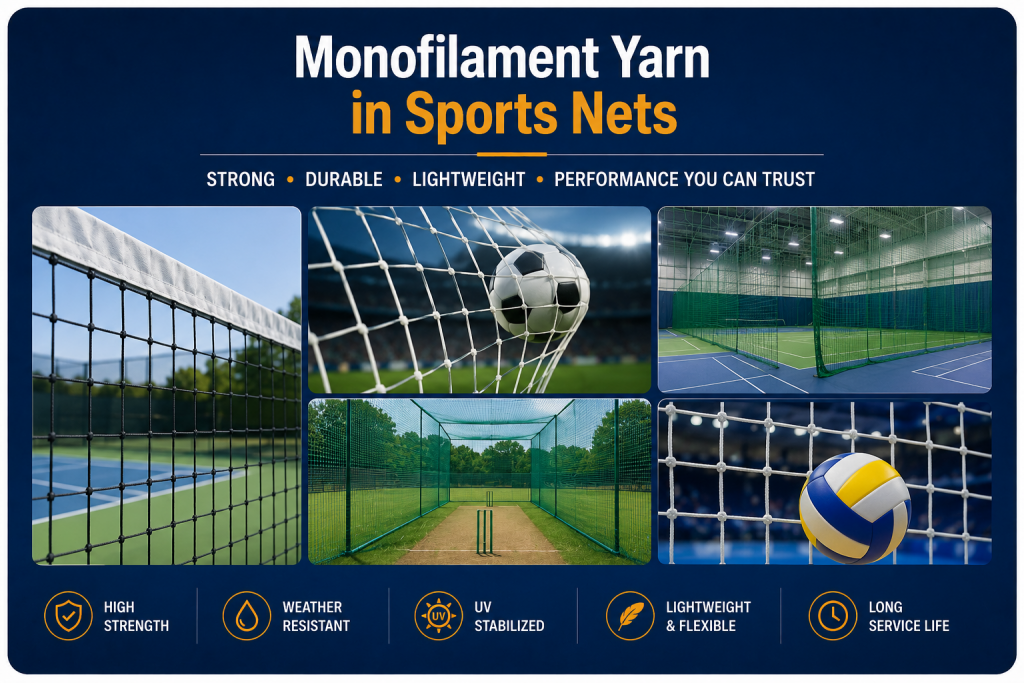
When you watch a tennis ball smack against a net, a badminton shuttle skim just over the tape, or a squash ball ricochet off a wall and drop into netting, you’re witnessing more than athletic skill. You’re also witnessing material engineering at work. Behind every well-made sports net lies a critical decision that manufacturers and sporting goods buyers rarely discuss in public but obsess over in private: the choice of yarn. Increasingly, that choice comes down to monofilament yarn in sports nets, a material that has quietly transformed how nets perform, last, and hold up under real-world conditions.
If you’ve ever wondered why some nets sag, fray, or lose shape within a season while others stay taut and reliable for years, the answer often lies in the yarn construction. This blog post explores the role of monofilament yarn in sports nets, why it has become the preferred choice for high-performance applications, and what buyers should look for when sourcing nets for tennis, badminton, squash, and beyond.
What Is Monofilament Yarn, and Why Does It Matter for Sports Nets?
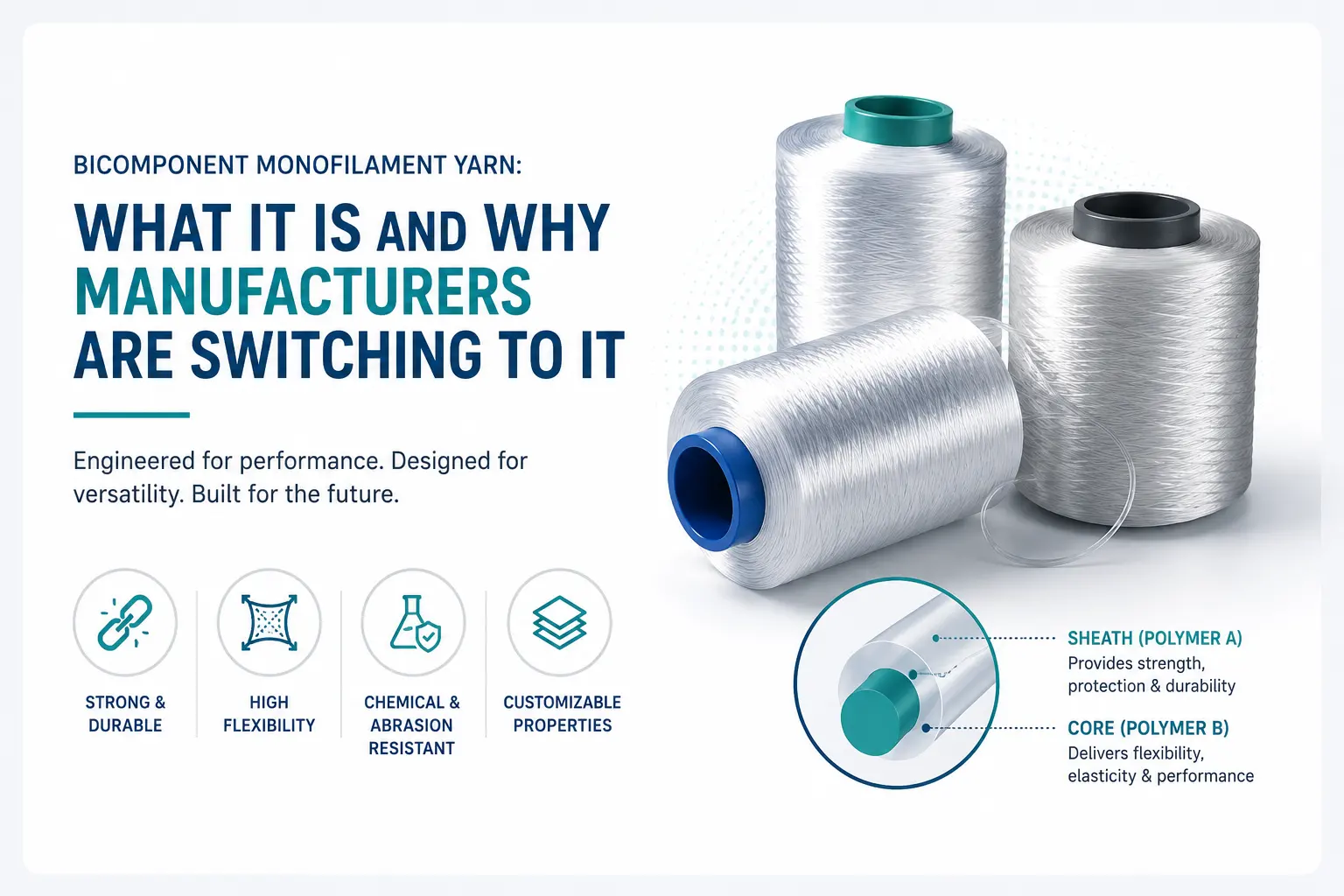
Monofilament yarn is a single, continuous strand of synthetic fiber, typically made from polyethylene, polypropylene, or nylon, extruded as one solid filament rather than twisted from multiple smaller fibers. This is different from multifilament yarn, which bundles many thin strands together to create a single thread.
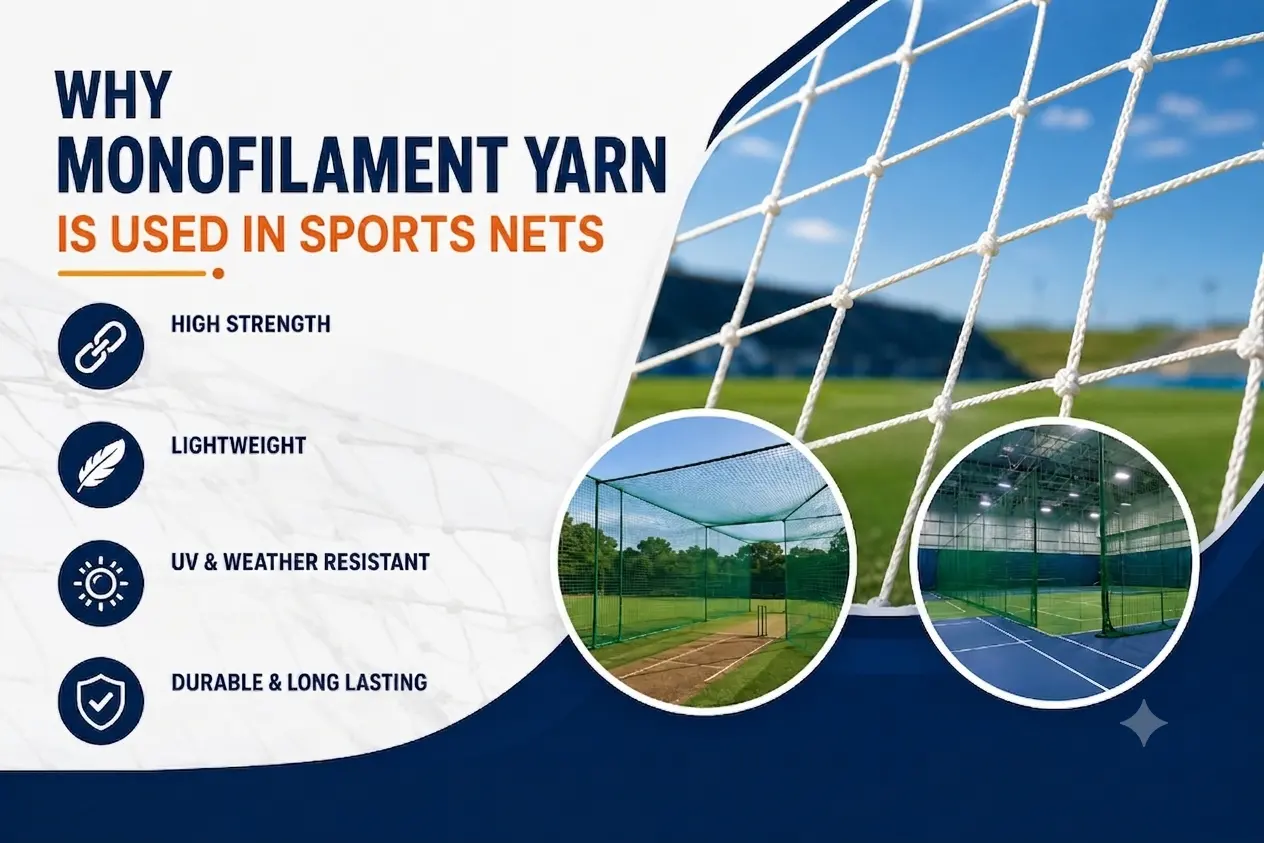
The distinction may sound technical, but it has enormous practical implications. Monofilament yarn in sports nets offers a smoother surface, greater dimensional stability, and superior resistance to moisture absorption compared to multifilament alternatives. Because the yarn is a single strand, it doesn’t trap water, dirt, or microbial growth between fibers the way braided or twisted yarns can. This makes monofilament netting particularly well suited for outdoor sports equipment that faces sun, rain, and humidity throughout its working life.
For manufacturers and facility owners alike, this translates into nets that hold their shape, resist stretching, and require far less maintenance over time. Sports netting is just one of many applications benefiting from this material; you can explore the broader role of monofilament yarn in modern industries to see how the same fiber technology supports everything from agriculture to industrial filtration.
Key Benefits of Monofilament Yarn in High-Performance Sports Nets
1. Exceptional Strength and Durability
One of the biggest advantages of monofilament yarn in sports nets is its impressive tensile strength relative to its weight. A single solid strand distributes stress more evenly than a bundle of thinner threads, which means the netting can absorb repeated impacts, whether from a tennis ball hit at high velocity or a squash ball smashing against a wall, without weakening at stress points. This durability is essential in competitive and commercial settings where nets are used daily and expected to perform match after match. For a deeper look at the science behind this strength, see how monofilament yarn improves product durability across a range of applications beyond sports equipment.
2. Superior Resistance to Weather and UV Exposure
Outdoor sports nets are constantly exposed to sunlight, rain, and temperature fluctuations. Multifilament yarns tend to degrade faster because UV rays and moisture penetrate the gaps between individual fibers. Monofilament yarn, with its smooth, non-porous structure, resists UV degradation more effectively and doesn’t absorb water the way braided yarns do. This is a major reason monofilament yarn in sports nets is favored for tennis nets and other outdoor court equipment installed in clubs, schools, and stadiums that see year-round use.
3. Shape Retention and Reduced Sagging
A net that stretches out of shape after a few months isn’t just an eyesore; it can actually affect gameplay. Monofilament netting maintains its tension and structural integrity far longer than multifilament options, meaning tennis nets stay at the correct height, badminton nets keep their taut center strap, and squash nets don’t develop unsightly bulges near the frame.
4. Low Maintenance and Longer Service Life
Because monofilament strands don’t trap dirt, algae, or mildew the way woven multifilament yarns can, nets made from this material require less frequent cleaning and replacement. For sports facilities managing tight maintenance budgets, this lower total cost of ownership makes monofilament yarn in sports nets a smart long-term investment rather than just an upfront purchase decision.
5. Consistent Visibility and Aesthetic Appeal
Monofilament netting typically has a cleaner, more uniform appearance than multifilament netting, which can look fuzzy or matted over time. This consistency matters not just for aesthetics but also for visibility during play, an important factor in fast-paced sports like squash and badminton, where players need a clear line of sight to track a fast-moving ball or shuttle.
Monofilament Yarn Across Different Sports Nets
1. Tennis Nets
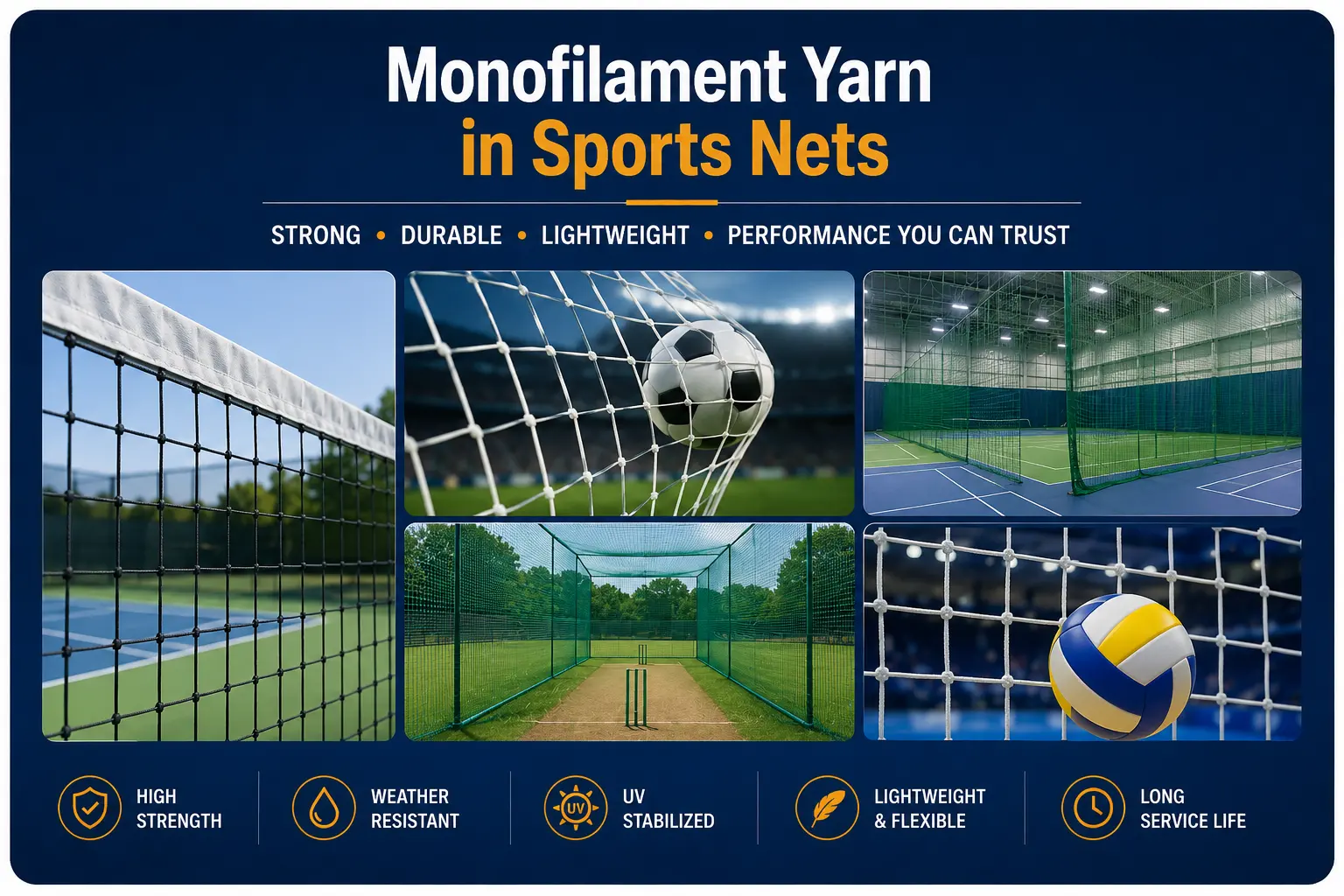
Tennis nets endure constant impact from balls traveling at high speeds, along with prolonged sun exposure on outdoor courts. Monofilament yarn in sports nets designed for tennis provides the tensile strength needed to absorb repeated impact while resisting the sagging that plagues lower-quality multifilament nets. Clubs and academies that invest in monofilament tennis nets typically see fewer replacements and more consistent net height over multiple seasons.
2. Badminton Nets
Badminton nets require a fine balance of lightweight construction and structural stability, since the net must stay taut without adding unnecessary weight to the frame or posts. Monofilament yarn offers this balance well, delivering a net that resists stretching under the constant tension of match play while remaining lightweight enough for easy setup and portability, a feature especially valued in schools, community centers, and recreational facilities.
3. Squash Nets
Though less commonly discussed than tennis or badminton netting, squash nets, particularly those used in practice areas, ball-catching setups, and training equipment, also benefit significantly from monofilament construction. The smooth, snag-resistant surface of monofilament yarn stands up well to the fast, repetitive impacts characteristic of squash training, while its resistance to fraying extends the usable life of the equipment considerably.
What to Look for When Sourcing Monofilament Sports Net
If you’re a sporting goods retailer, facility manager, or manufacturer sourcing netting materials, keep these factors in mind:
- Denier and thickness: Higher denier monofilament yarn generally offers greater strength, though the ideal thickness varies by sport and application.
- UV stabilization: Look for manufacturers who treat their monofilament yarn with UV stabilizers for extended outdoor durability.
- Knot and weave quality: Even the best yarn underperforms if the netting isn’t woven or knotted with precision and consistency. Learn more about the precision engineering on monofilament and why manufacturing tolerances matter as much as raw material quality.
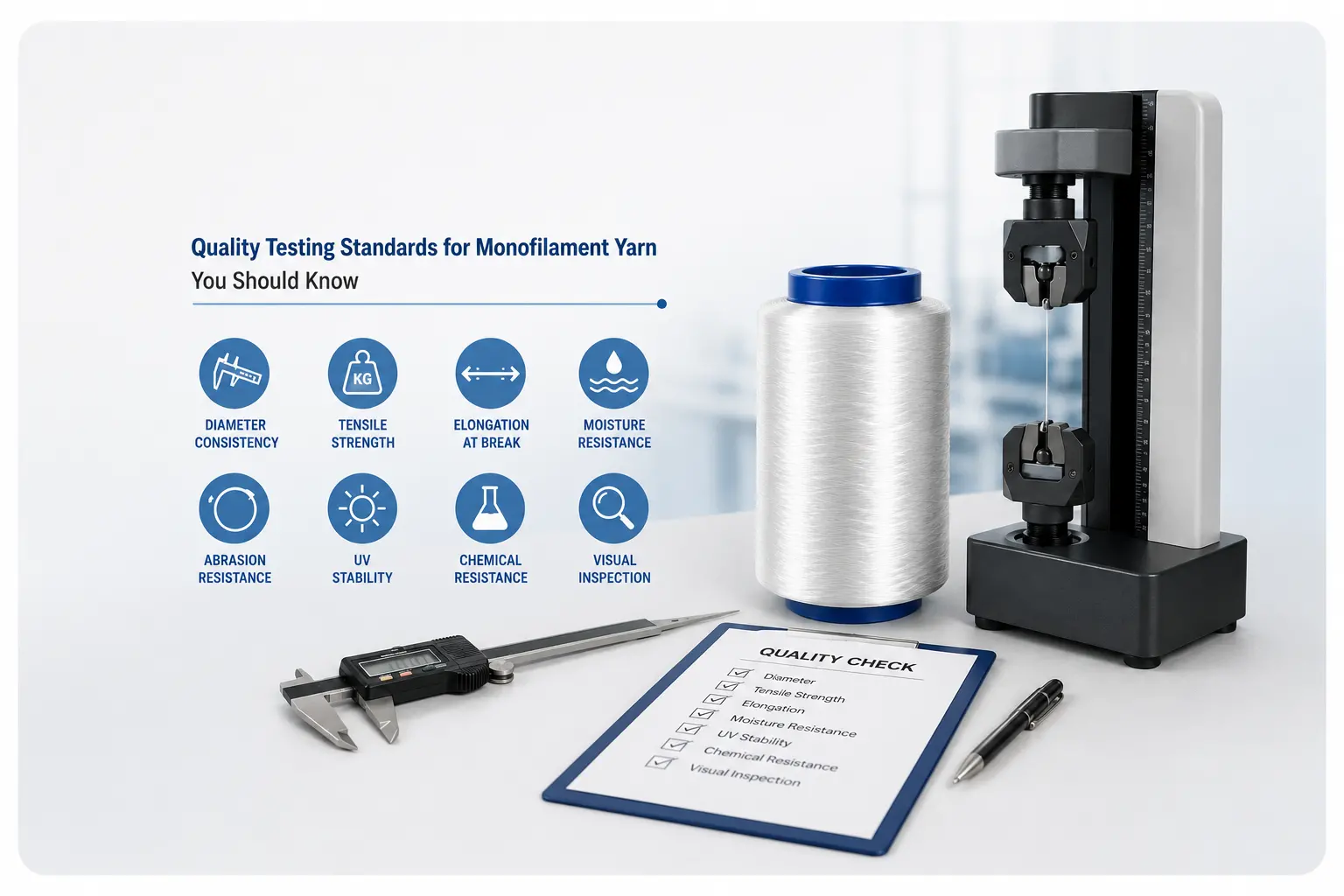
- Certifications and testing: Reputable manufacturers should be able to provide test data on tensile strength, UV resistance, and abrasion resistance. Understanding quality testing standards for monofilament can help buyers evaluate suppliers with confidence.
Working with an experienced netting manufacturer ensures that the quality of monofilament yarn in sports nets is matched by equally rigorous weaving and finishing processes. If you’re unsure where to start, this guide on how to choose right monofilament yarn for your product walks through the key selection criteria in detail.
Conclusion
The next time you step onto a tennis court, badminton court, or squash court, take a moment to appreciate the net. It’s easy to overlook, but its performance directly shapes the game. The growing preference for monofilament yarn in sports nets isn’t a coincidence; it reflects real, measurable advantages in strength, weather resistance, shape retention, and longevity that multifilament alternatives simply can’t match.
Whether you’re outfitting a single court or supplying nets at scale for schools, clubs, and stadiums, choosing monofilament netting is an investment in performance and reliability that pays off season after season. As demand for durable, low-maintenance sports equipment continues to grow, monofilament yarn is set to remain the gold standard for high-performance tennis nets, badminton nets, and squash nets alike. This trend mirrors the wider global demand for monofilament yarn, which continues to rise across industries seeking stronger, longer-lasting synthetic materials.
At Shanthi Industries, we bring decades of expertise in engineering high-quality monofilament yarn for demanding applications, including sports netting that athletes and facilities can depend on. Whether you’re a manufacturer, sporting goods supplier, or facility manager, our team is ready to help you find the right monofilament yarn for your specific requirements.
Frequently Asked Questions (FAQs)
1. What makes monofilament yarn different from multifilament yarn in sports nets?
Monofilament yarn is a single, solid strand of synthetic fiber, while multifilament yarn is made by twisting or braiding several thinner fibers together. This structural difference gives monofilament yarn in sports nets greater resistance to moisture, UV damage, and stretching compared to multifilament alternatives.
2. Are monofilament sports nets suitable for outdoor use?
Yes. Monofilament yarn is particularly well suited for outdoor sports nets because its smooth, non-porous surface resists UV degradation and doesn’t absorb water, making it ideal for tennis nets and other equipment exposed to sun and rain year-round.
3. Do monofilament nets require special maintenance?
Monofilament nets generally require less maintenance than multifilament nets. Because the yarn doesn’t trap dirt, moisture, or mildew between fibers, cleaning is easier and the netting retains its appearance and strength for longer periods.
4. Is monofilament yarn used in both tennis and badminton nets?
Yes. Monofilament yarn in sports nets is widely used across tennis, badminton, and squash netting, though the specific denier, weave, and finishing may vary depending on the sport’s performance and weight requirements.
5. Why should sports facilities invest in monofilament netting over cheaper alternatives?
While monofilament netting can have a higher upfront cost, its durability, shape retention, and low maintenance needs reduce the total cost of ownership over time, making it a more economical choice for facilities that require nets to perform reliably season after season.