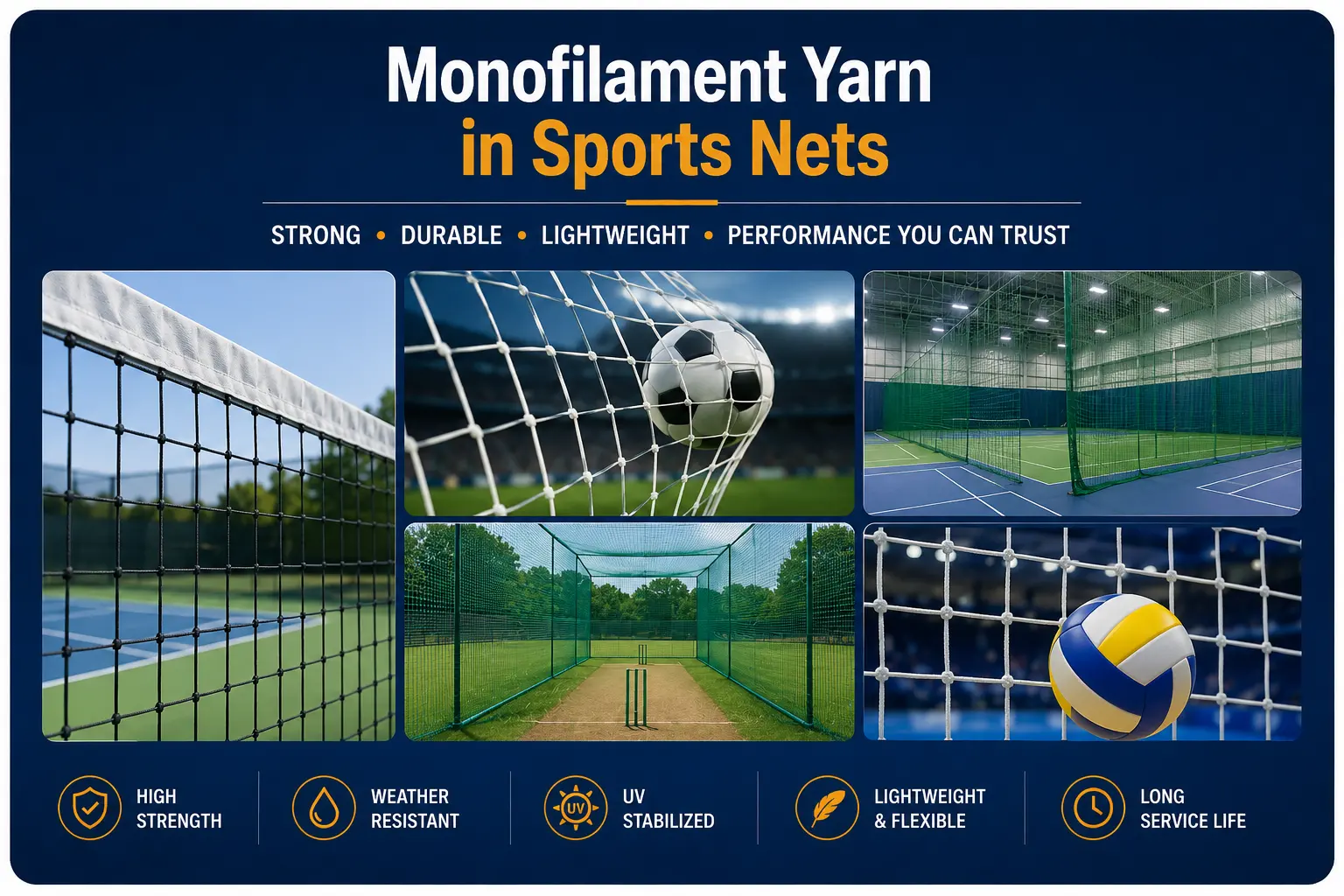
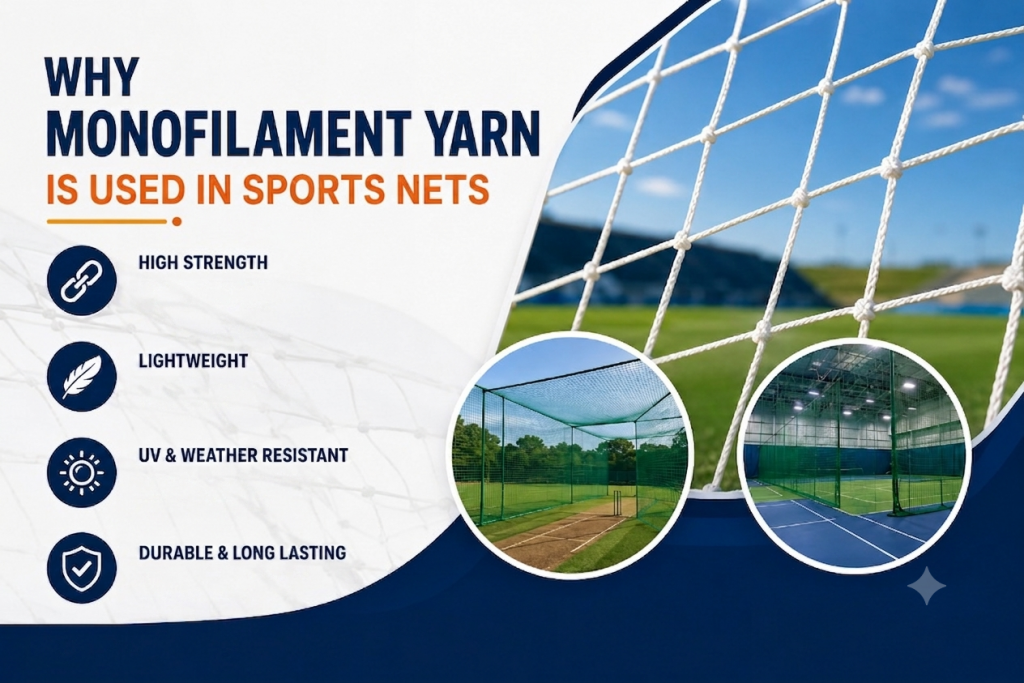
Walk onto any tennis court, football field, or badminton arena and you’ll find a piece of engineering hiding in plain sight: the net. It looks simple, but the material behind it is anything but ordinary. Increasingly, manufacturers and sports facility owners are turning to monofilament yarn in sports nets because of the unmatched strength, longevity, and consistency it offers over traditional multifilament alternatives.
If you’ve ever wondered why this single-strand yarn has become the industry standard, this blog breaks down everything you need to know from its structure to its real-world performance benefits, much like the engineering behind monofilament yarn in sports nets used across professional facilities today.
What Is Monofilament Yarn in Sports Nets?
Monofilament yarn is made from a single, continuous strand of synthetic polymer, typically polyethylene, polypropylene, or nylon, extruded through a fine die to create a smooth, uniform fiber. Unlike multifilament yarn, which is woven from several thinner threads twisted together, monofilament yarn is one solid filament from end to end.
This structural difference is the foundation of why monofilament yarn in sports nets performs so much better under stress. A single strand has no gaps, no fraying points, and no internal friction between fibers, all common weaknesses in multifilament construction.
Top Reasons Behind the Use of Monofilament Yarn in Sports Nets
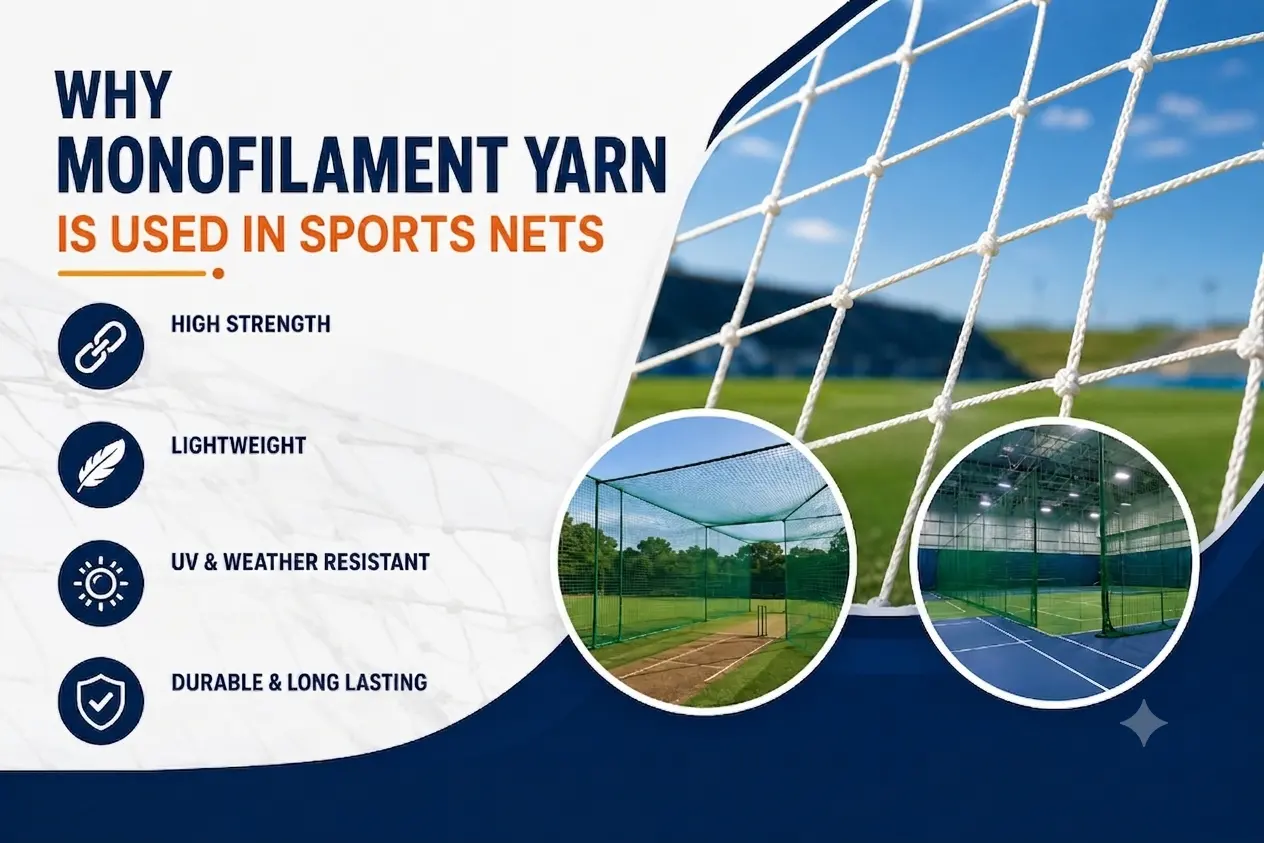
1. Monofilament Yarn in Sports Nets Offers Superior Strength and Durability
Sports nets are subjected to constant impact, from a cricket ball smashing into a boundary net to a football repeatedly striking a goal net. The use of monofilament yarn in sports nets ensures the material can absorb this repeated stress without stretching, tearing, or losing shape. Because the yarn is a single solid fiber, it distributes force evenly across its length, reducing the risk of localized damage. This is a key reason monofilament yarn improves durability across so many high-stress applications.
2. Monofilament Yarn in Sports Nets Provides Excellent Weather and UV Resistance
Outdoor sports nets face relentless exposure to sunlight, rain, humidity, and temperature swings. Monofilament yarn is inherently resistant to UV degradation and moisture absorption, which means nets made from it don’t become brittle, discolored, or weak over time. This is a major reason facility managers prefer monofilament yarn in sports nets installed in open stadiums, playgrounds, and training grounds, thanks to how durable versatile monofilament yarn holds up under constant sun exposure.
3. Monofilament Yarn in Sports Nets Has Low Water Absorption
Unlike multifilament yarns, which can trap moisture between individual threads and become heavy or prone to mildew, monofilament yarn has minimal water absorption. This keeps sports nets lightweight even after rain, prevents sagging, and protects against microbial growth, an essential factor for nets used in humid or coastal regions.
4. Monofilament Yarn in Sports Nets Ensures Consistent Knot Strength
Net performance heavily depends on how well the knots hold under tension. Monofilament yarn offers excellent knot strength and retention because its smooth, non-porous surface allows for tighter, more secure knotting during the net-making process. This consistency is why monofilament yarn in sports nets is preferred for high-tension applications like volleyball and badminton nets, where uneven knots can distort playing dimensions, which is why manufacturers rely on strict quality testing standards for monofilament yarn before it ever reaches production.
5. Monofilament Yarn in Sports Nets Delivers Strong Abrasion Resistance
Sports nets are constantly rubbed, pulled, and stretched whether by players, equipment, or wind. Monofilament yarn’s smooth surface reduces friction-related wear, making it far more resistant to abrasion than twisted or braided multifilament alternatives. This translates directly into a longer product lifespan and fewer replacements.
6. Monofilament Yarn in Sports Nets Is Cost-Effective Over Time
While monofilament nets may have a marginally higher upfront cost compared to some multifilament options, their extended durability significantly reduces the total cost of ownership. Facilities that invest in monofilament yarn in sports nets typically see fewer replacements, lower maintenance costs, and better long-term value for the same reason monofilament yarn improves products across a wide range of industries beyond sports.
Common Applications of Monofilament Yarn in Sports Nets Across Different Games
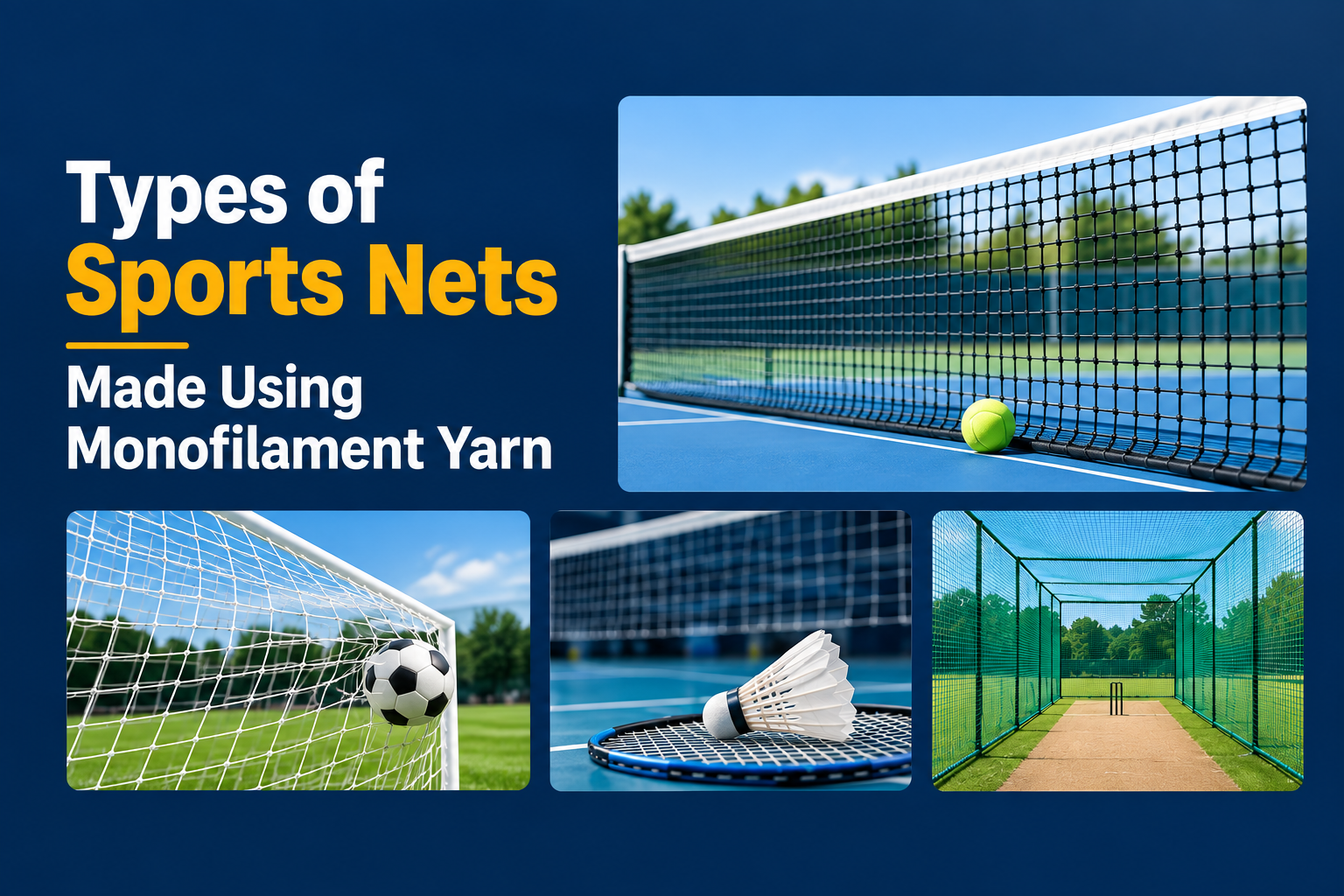
Monofilament yarn isn’t limited to one type of sport. Its versatility makes it suitable across a wide range of applications, including:
- Cricket boundary and practice nets — built to withstand high-speed ball impact
- Football and soccer goal nets — designed for repeated stress and outdoor exposure
- Tennis and badminton nets — requiring precise tension and shape retention
- Volleyball nets — needing consistent height and minimal sagging
- Golf driving range nets — engineered for heavy-duty, repetitive use
- Safety and barrier netting — used in stadiums and training facilities for spectator protection
Each of these applications demands a slightly different yarn thickness, mesh size, and knot pattern, but the underlying material advantage remains the same one that extends well beyond the sports field, as seen inits growing role in automotive and engineering applications.
Monofilament Yarn in Sports Nets vs. Multifilament Yarn: A Quick Comparison
| Feature | Monofilament yarn | Multifilament yarn |
| Structure | Single solid strand | Multiple twisted threads |
| Water Absorption | Very low | Higher |
| UV Resistance | Excellent | Moderate |
| Knot Strength | High and consistent | Variable |
| Abrasion Resistance | High | Lower |
| Weight (when wet) | Stays lightweight | Becomes heavier |
| Long-term Cost | Lower overall lifespan | Higher due to replacements |
This comparison makes it clear why sports equipment manufacturers increasingly specify monofilament yarn in sports nets for professional and long-term installations.
How Manufacturers Choose the Right Monofilament Yarn in Sports Nets
Not all monofilament yarns are created equal. Reputable manufacturers consider several factors before selecting yarn for sports net production:
- Denier (thickness) — Determines strength and net weight; thicker yarns suit high-impact sports.
- Polymer type — Polyethylene offers flexibility and UV resistance, while nylon adds elasticity.
- Mesh size — Affects visibility, wind resistance, and the sport’s specific requirements.
- Color and additives — UV stabilizers and colorfast additives extend outdoor lifespan.
- Knotting technique — Braided or knotted construction affects tension distribution and durability.
Choosing the right combination ensures the final product meets both performance standards and safety regulations for competitive sports, and knowing how to choose the right monofilament yarn for your product makes this selection process far easier.
Why Monofilament Yarn in Sports Nets Matters for Buyers and Facility Owners
If you’re sourcing nets for a stadium, school, sports academy, or commercial facility, understanding the role of monofilament yarn in sports nets helps you make an informed purchasing decision. A net made from quality monofilament yarn will:
- Withstand years of outdoor use without significant degradation
- Maintain consistent tension and shape for fair, accurate gameplay
- Reduce long-term maintenance and replacement costs
- Offer better safety and reliability for players and spectators
Investing in the right material upfront saves both money and hassle down the line, a principle that applies whether you’re outfitting a single practice court or an entire sports complex.
Conclusion
The next time you see a taut, weather-beaten net standing strong on a football field or cricket ground, remember that its resilience isn’t accidental; it’s engineered. The widespread use of monofilament yarn in sports nets comes down to a simple truth: this material combines strength, durability, and weather resistance in a way few alternatives can match.
Whether you’re a sports facility manager, a procurement officer, or simply curious about the materials behind the game, understanding why monofilament yarn dominates the sports netting industry gives you a clearer picture of what makes quality equipment truly last.
Looking for durable, high-performance sports nets built with premium monofilament yarn? Explore synthetic fiber & monofilament experts wide range of sports netting solutions is designed for strength, longevity, and reliable performance across every playing field.
Frequently Asked Questions (FAQs)
1. Why is monofilament yarn preferred over multifilament yarn for sports nets?
Monofilament yarn is preferred because it offers greater strength, lower water absorption, better UV resistance, and more consistent knot retention than multifilament yarn, making sports nets more durable and long-lasting.
2. Is monofilament yarn suitable for outdoor sports nets?
Yes, monofilament yarn is highly suitable for outdoor use because it resists UV degradation, doesn’t absorb much moisture, and maintains its strength and shape even under prolonged sun and rain exposure.
3. Which sports commonly use monofilament yarn nets?
Monofilament yarn is widely used in cricket, football, tennis, badminton, volleyball, and golf driving range nets, as well as safety barrier netting in stadiums.
4. Does monofilament yarn affect the cost of sports nets?
While monofilament nets may cost slightly more upfront, their extended lifespan and reduced maintenance needs make them more cost-effective over time compared to multifilament alternatives.
5. How long do monofilament yarn sports nets typically last?
With proper installation and care, monofilament yarn sports nets can last several years, even in outdoor conditions, thanks to their resistance to UV rays, moisture, and abrasion.
CTA
You can always reach out to Shanthi Industries. We’ll help you sort through the options and get the right match.
Contact us: +91 99022 98755
Email id: info@shanthiindustries.com