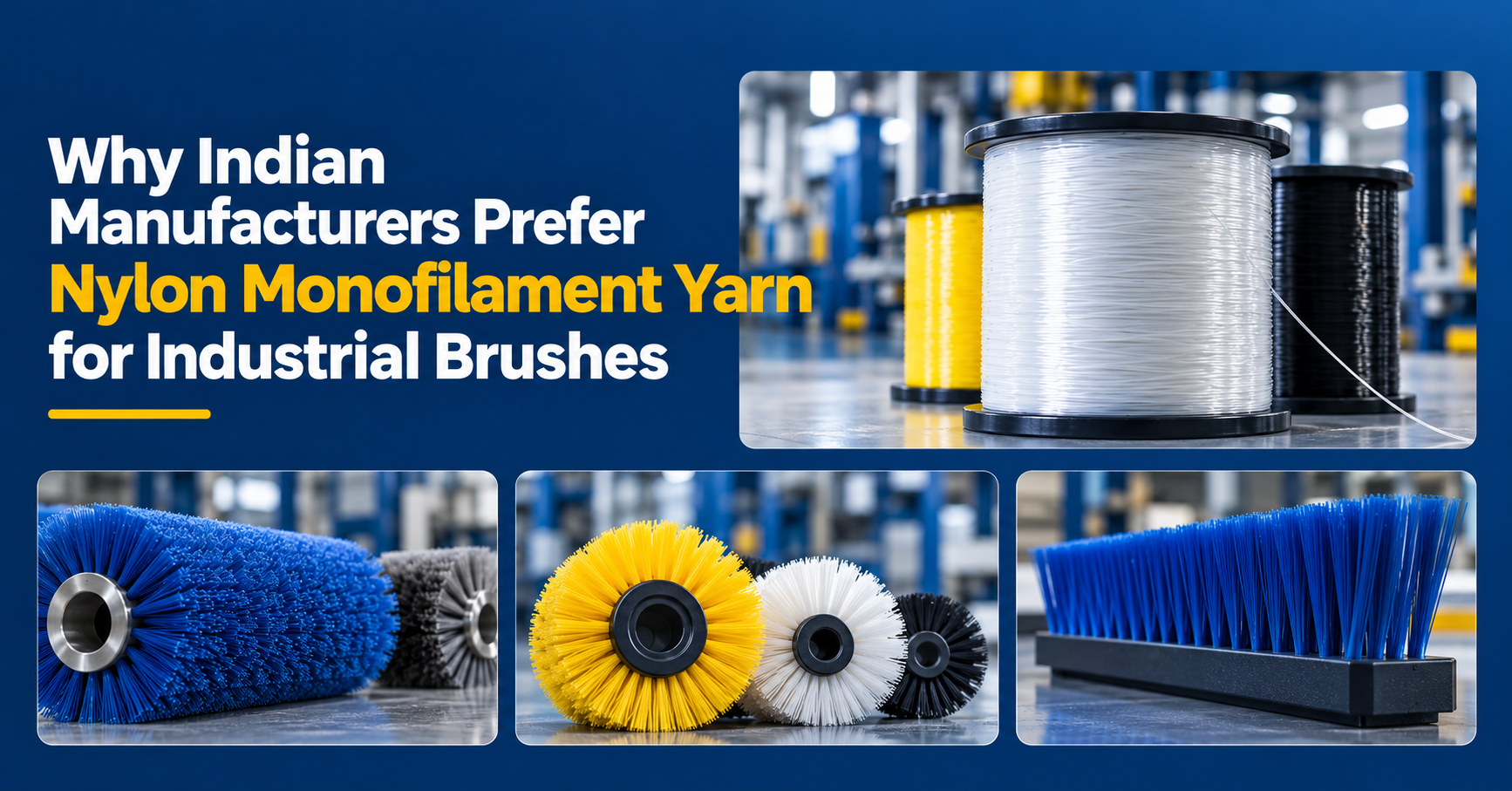
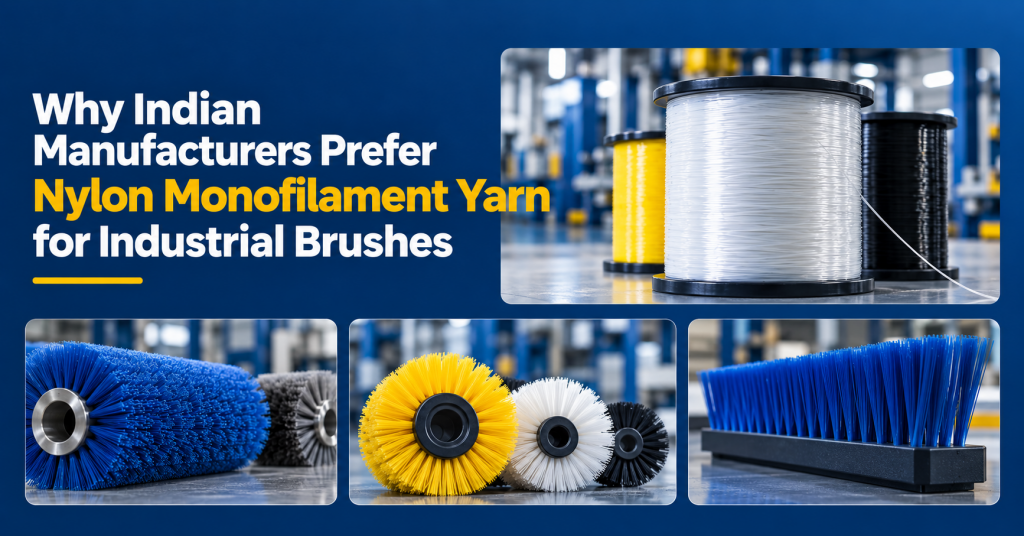
India’s manufacturing sector has grown into one of the largest and most diverse industrial ecosystems in the world, spanning automotive, textiles, food processing, electronics, and heavy engineering. Across nearly all of these industries, one raw material keeps showing up as a quiet enabler of quality and efficiency: nylon monofilament yarn for industrial brushes. Whether it’s a road-sweeping machine in Mumbai, a textile finishing unit in Coimbatore, or an automotive parts cleaning line in Pune, this single filament type has become the backbone of brush manufacturing across the country.
In this post, we’ll explore why nylon monofilament yarn for industrial brushes has become the preferred material for Indian manufacturers, what makes it technically superior to alternatives, and how it directly impacts product performance, cost, and longevity.
What Is Nylon Monofilament Yarn for Industrial Brushes?
Nylon monofilament yarn for industrial brushes is a single, continuous strand of extruded nylon polymer, engineered specifically for use as bristle material in brushes designed for heavy-duty, industrial applications. Unlike multifilament yarns, which are made by twisting several thin fibers together, monofilament yarn is a solid, unified strand. This structural difference gives it exceptional stiffness, uniformity, and resistance to breakage that are critical when a brush is expected to perform under constant mechanical stress, friction, heat, or chemical exposure.
Manufacturers typically customize this yarn by diameter, tip shape, color, and additive composition, tailoring it precisely to applications like street sweeping, industrial cleaning, textile carding, food processing, and automotive detailing. This same base material is prized as a nylon monofilament yarn, which is part of why it has become the default choice across so many industrial and consumer product categories, including monofilament bristle for industrial brushes.
Key Reasons Indian Manufacturers Prefer Nylon Monofilament Yarn for Industrial Brushes
1. Exceptional Durability Under Harsh Conditions
Indian industries operate in demanding environments, from dusty construction sites to high-humidity textile mills. Nylon monofilament yarn for industrial brushes is engineered to withstand abrasion, repeated flexing, and exposure to oils, solvents, and moisture without losing its shape or bristle strength. This durability translates directly into longer brush life, which means fewer replacements and reduced downtime on production lines. It’s one of the key reasons this material is considered monofilament yarn for industrial usage across such a wide range of demanding sectors.
2. Superior Flexibility and Resilience
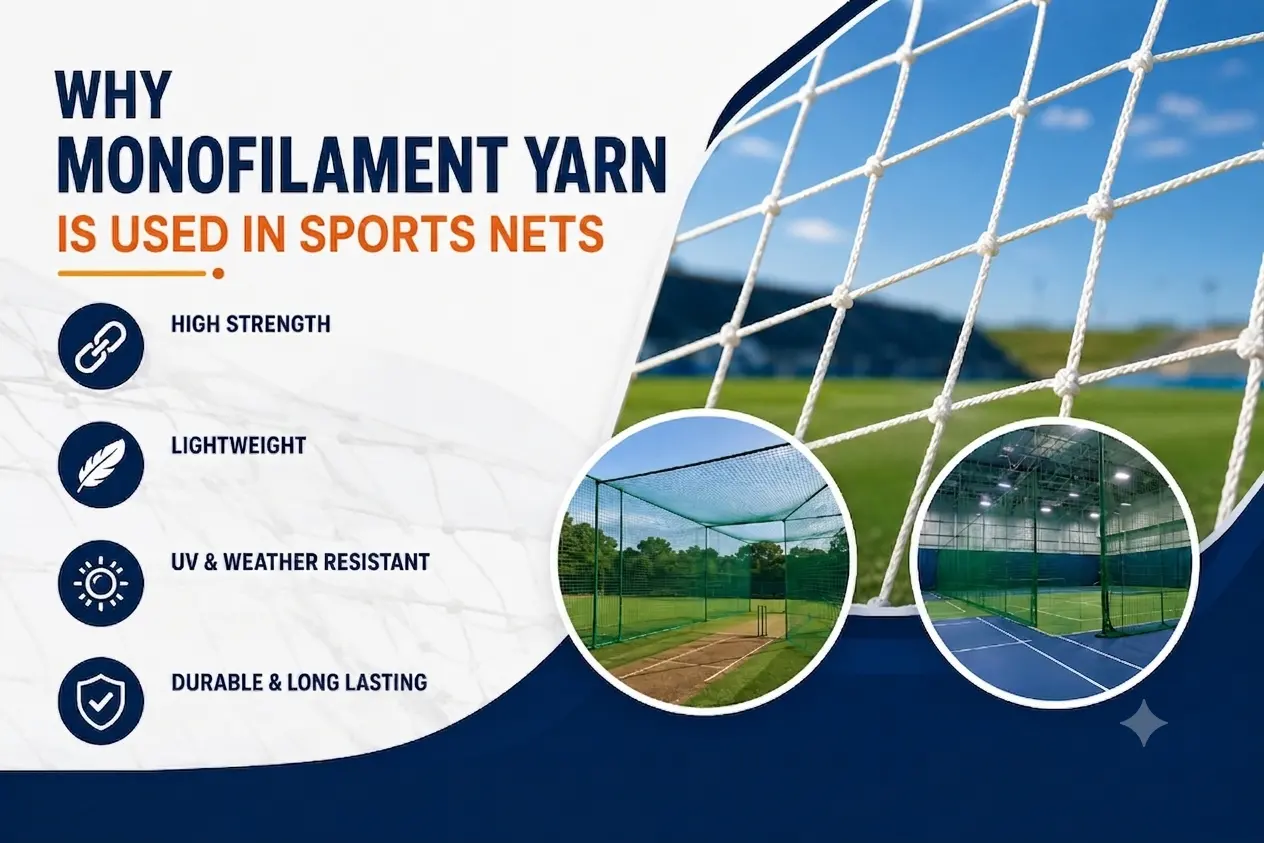
One of the standout properties of nylon monofilament yarn for industrial brushes is its ability to bend under pressure and instantly spring back to its original shape. This “memory” characteristic ensures that brushes maintain consistent sweeping or scrubbing performance over thousands of operating cycles, rather than becoming permanently deformed like natural fiber or cheaper synthetic alternatives. This same resilience is exactly why nylon yarn best choice for racket strings, a completely different application that relies on the very same elastic recovery properties.
3. Cost-Effectiveness for Large-Scale Manufacturing
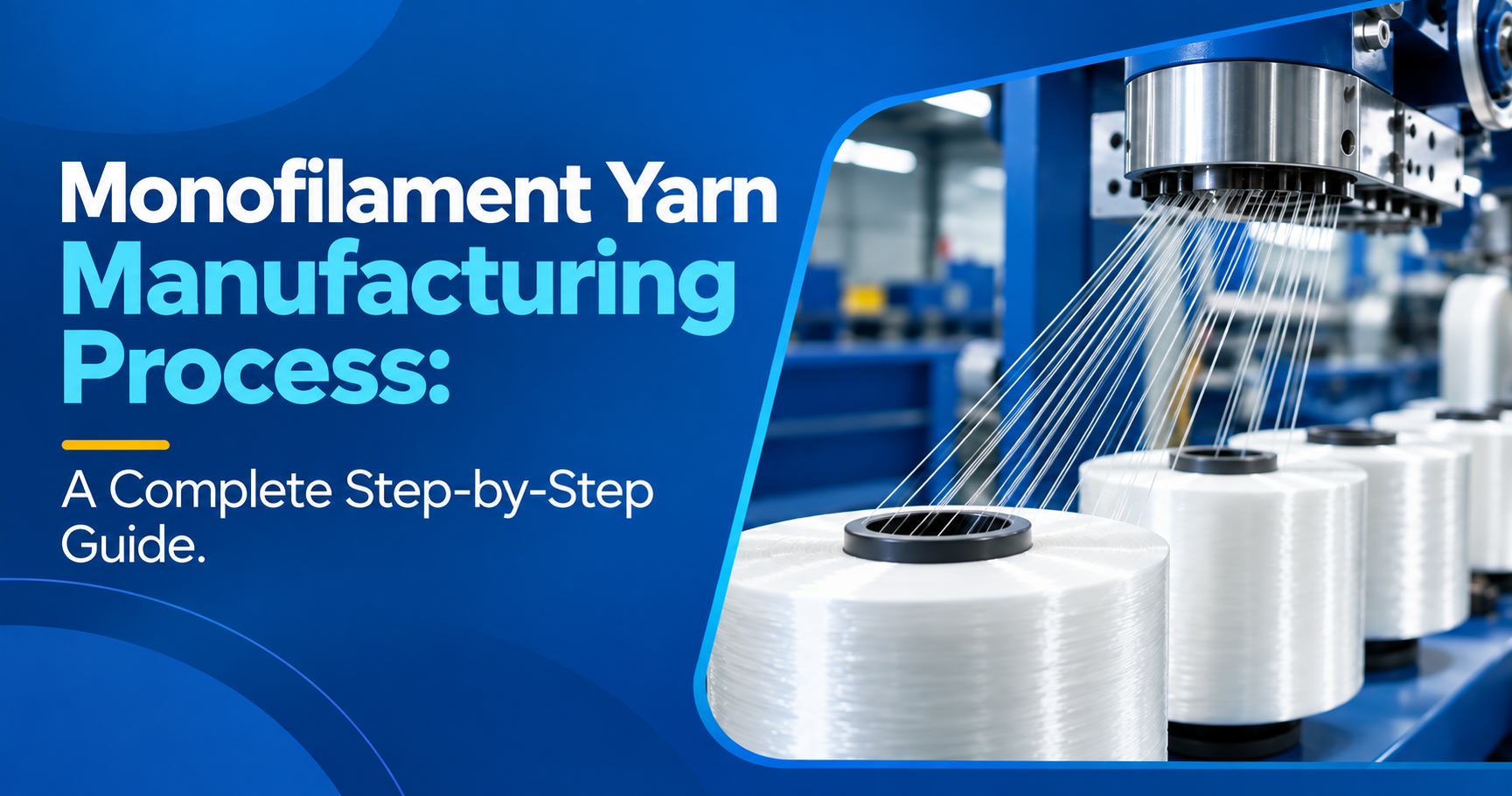
For manufacturers producing brushes at scale, cost efficiency matters as much as performance. Nylon monofilament yarn is produced through a controlled extrusion process, allowing for consistent quality at competitive price points. Compared to natural fibers like coir or tampico, nylon offers a far better cost-to-lifespan ratio, making it the economically sound choice for bulk industrial brush production in India’s price-sensitive but quality-conscious market.
4. Resistance to Chemicals and Moisture
Many industrial applications such as metal finishing, automotive parts washing, and food-grade equipment cleaning expose brushes to detergents, oils, and water on a daily basis. Nylon monofilament yarn for industrial brushes resists swelling, softening, or degrading when exposed to most common industrial chemicals, ensuring the brush retains its stiffness and cleaning efficiency over extended use.
5. Customization for Diverse Industrial Needs
India’s manufacturing base is incredibly diverse, and no single brush specification fits every application. Nylon monofilament yarn can be engineered in varying diameters (from fine, soft filaments to thick, rigid ones), colors, and tip finishes, allowing brush manufacturers to precisely match the yarn to the end-use, whether it’s a delicate textile brush or a heavy-duty road sweeper. This flexibility in customization is a major reason nylon monofilament yarn for industrial brushes remains the go-to material across sectors.
6. Consistent Quality and Manufacturing Precision
Because nylon monofilament yarn is manufactured through a precise extrusion process, each strand maintains uniform diameter and consistent mechanical properties. This predictability is essential for manufacturers who need to guarantee performance standards across every batch of brushes they produce. Something that’s harder to achieve with natural fibers, which vary from batch to batch based on source and processing.
Applications Driving Demand in India
The widespread adoption of nylon monofilament yarn for industrial brushes in India is closely tied to the growth of key sectors:
- Road and Municipal Sweeping: Heavy-duty road sweeper brushes rely on thick nylon monofilament for abrasion resistance and long service life.
- Automotive Manufacturing: Used in car wash systems, parts-cleaning brushes, and surface finishing tools.
- Textile Industry: Fine nylon monofilament yarns are used in carding and napping brushes for fabric finishing.
- Food Processing: FDA-compliant nylon variants are used in brushes for cleaning conveyor belts and food-contact surfaces.
- Construction and Infrastructure: Utilized in strip brushes and seals for machinery and equipment protection.
Beyond heavy industry, the same base filament technology extends into everyday products as well. The same fundamental properties are used in monofilament bristle for household brushes and even in monofilament bristle for oral care brushes, where a finer, softer version of the same nylon technology is engineered for gentle, everyday use. This versatility is a clear demonstration of just how central monofilament yarn is in modern industries, spanning everything from heavy machinery to personal care.
As these sectors continue to expand under India’s growing manufacturing and infrastructure push, the demand for high-quality nylon monofilament yarn for industrial brushes is expected to rise steadily.
Why This Matters for Brush Manufacturers and Buyers
For manufacturers sourcing raw materials, choosing the right nylon monofilament yarn for industrial brushes isn’t just a technical decision; it’s a business decision. The right yarn improves end-product performance, strengthens brand reputation for durability, and reduces warranty and replacement costs. In fact, understanding exactly why high strength monofilament yarn is essential for modern brush manufacturing. For buyers and procurement teams, understanding why this material dominates the industrial brush segment helps in making informed sourcing decisions and setting realistic quality benchmarks when evaluating suppliers.
Conclusion
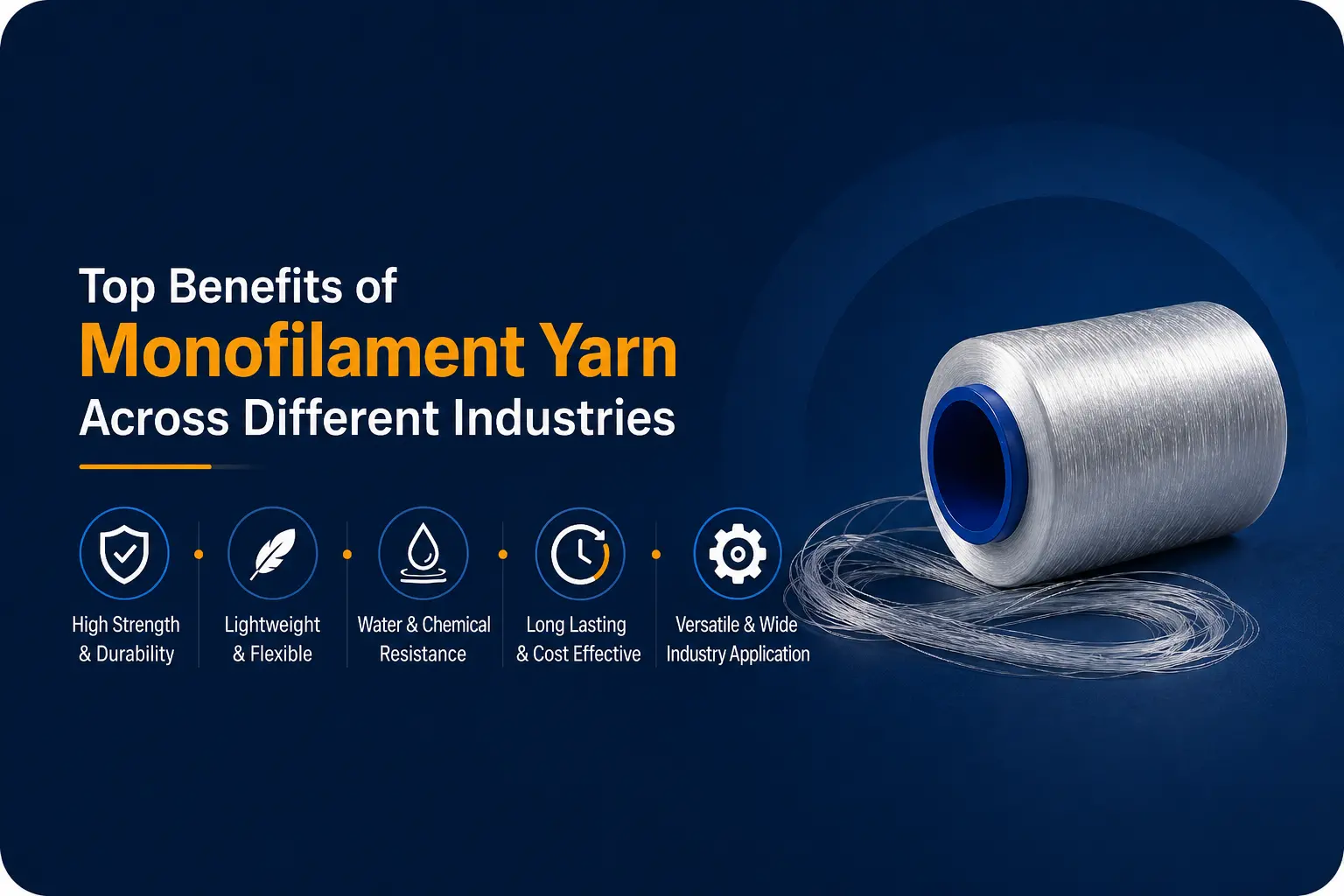
Nylon monofilament yarn for industrial brushes has earned its place as the material of choice for Indian manufacturers because it consistently delivers on the properties that matter most: durability, flexibility, chemical resistance, and cost efficiency. As Indian industries continue to scale and modernize, the demand for reliable, high-performance brush materials will only grow, and nylon monofilament yarn is well-positioned to remain at the center of that growth.
If you’re a manufacturer or procurement professional looking for consistent, high-quality nylon monofilament yarn for industrial brushes, partnering with an experienced and quality-focused supplier can make all the difference in your product’s performance and your business’s bottom line.
As Synthetic Fiber & Monofilament Experts, we bring decades of expertise to manufacturing precision-engineered nylon monofilament yarn for industrial brushes and other applications. With a strong focus on quality and customization, we help manufacturers across India get the right yarn for their specific needs. Get in touch with us to discuss your requirements.
Frequently Asked Questions (FAQs)
1. What makes nylon monofilament yarn better than natural fibers for industrial brushes?
Nylon monofilament yarn offers greater durability, consistent quality, and resistance to moisture and chemicals compared to natural fibers like coir or tampico, which tend to degrade faster and vary in quality between batches.
2. Which industries in India use nylon monofilament yarn for industrial brushes the most?
Road sweeping, automotive manufacturing, textile finishing, food processing, and construction industries are among the largest users of nylon monofilament yarn for industrial brushes in India.
3. Can nylon monofilament yarn be customized for specific brush applications?
Yes, nylon monofilament yarn can be customized by diameter, color, tip shape, and stiffness to suit specific applications, from fine textile brushes to heavy-duty road sweeper brushes.
4. Is nylon monofilament yarn resistant to chemicals and water?
Yes, nylon monofilament yarn for industrial brushes is highly resistant to common industrial chemicals, oils, and moisture, which helps it maintain performance in demanding environments.
5. How does nylon monofilament yarn improve the lifespan of industrial brushes?
Its high abrasion resistance, flexibility, and shape memory allow brushes made with nylon monofilament yarn to withstand repeated use without deforming or wearing out quickly, significantly extending their operational lifespan.