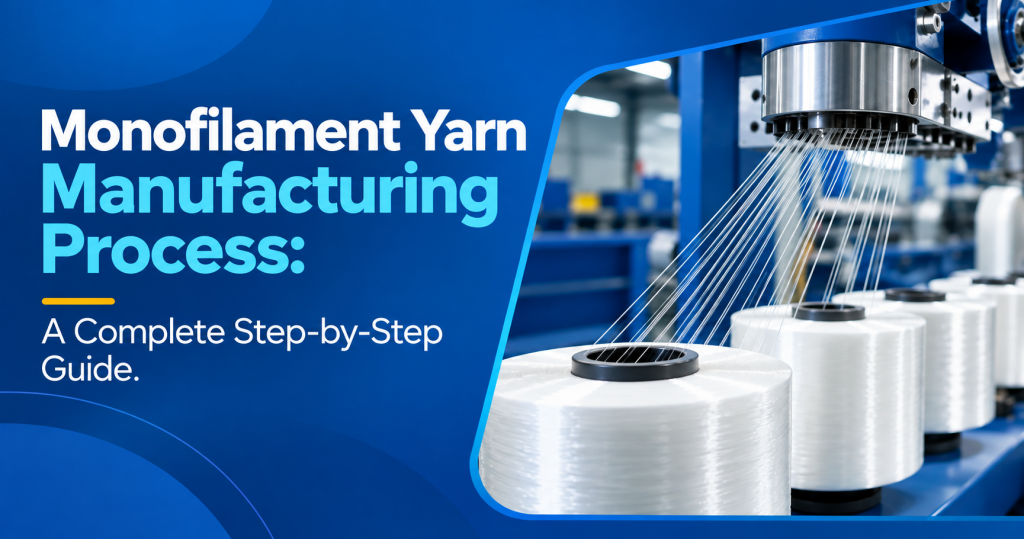
If you have ever wondered how a single, unbroken strand of synthetic fiber becomes strong enough to hold a fishing net, form the bristle of an industrial brush, or reinforce a geotextile fabric, the answer lies in one word: extrusion. The monofilament yarn manufacturing process transforms raw polymer chips into a continuous, uniform filament engineered for strength, flexibility, and consistency.
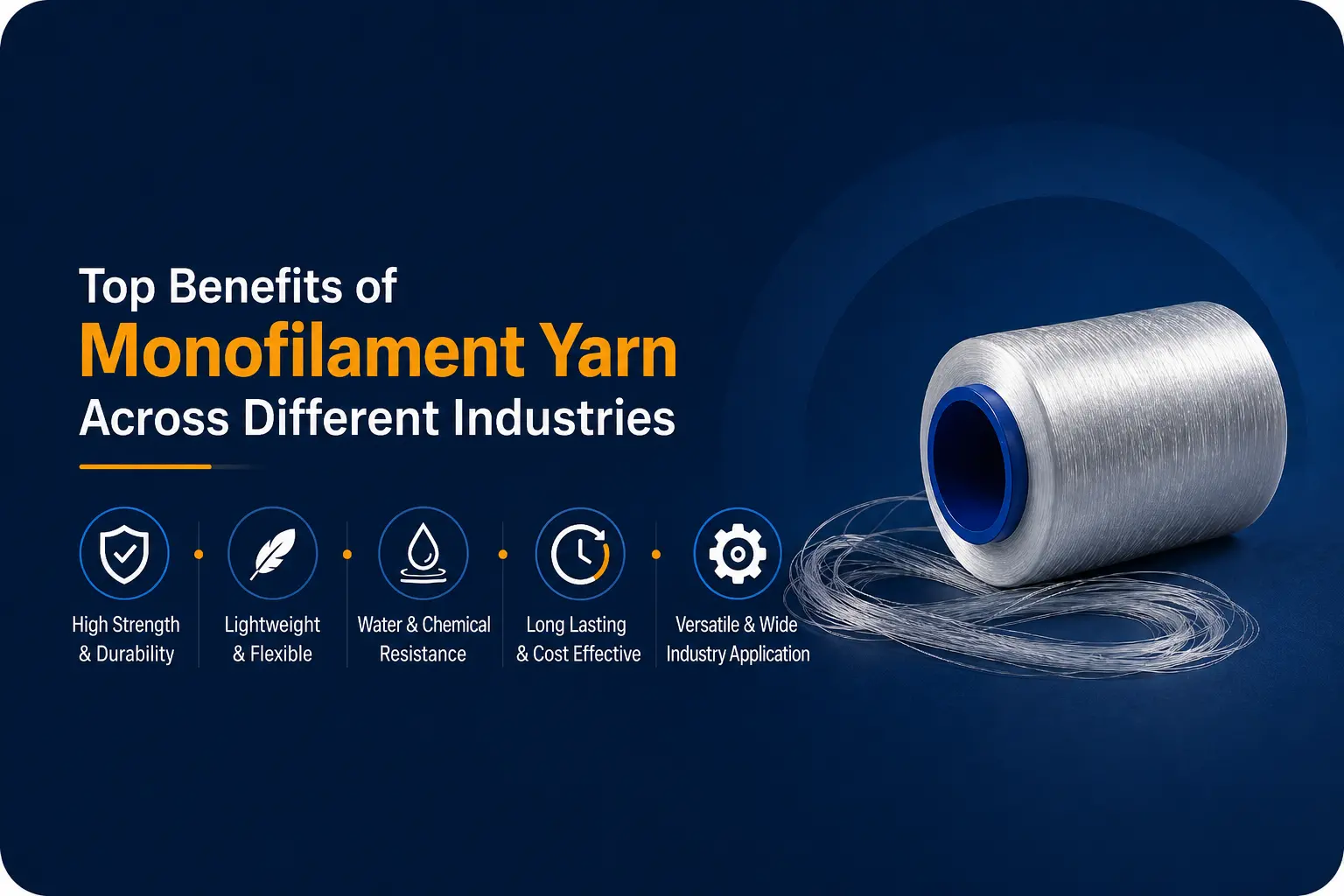
In this guide, we walk you through every stage of the monofilament yarn manufacturing process, so you understand exactly what goes into the yarn powering your products and why quality control at each step matters so much. If you’re weighing whether this material fits your product line, it’s worth first reviewing the benefits of using monofilament yarn in your products.
What Is Monofilament Yarn?
Before diving into the monofilament yarn manufacturing process, it helps to understand what makes monofilament yarn different from other synthetic fibers. Unlike multifilament yarn, which is made by twisting together many thin strands, monofilament yarn is a single, solid filament extruded as one continuous strand. This structural simplicity is what gives it uniform strength, consistent diameter, and predictable performance qualities that make it ideal for usage across fishing lines, trimmer lines, geotextiles, filtration fabrics, artificial turf, brushes, and zipper teeth.
Because there is no twist or weave involved, there is no weak point where fibers separate under stress. That single-strand design is the foundation the entire manufacturing process is built around, and it’s a major reason behind the broader benefits of monofilament yarn over twisted or woven alternatives.
Raw Materials Used in the Monofilament Yarn Manufacturing Process
Every batch of monofilament yarn begins with polymer resin selection. The most common raw materials include:
- Polyester yarn: dimensionally stable, low moisture absorption, ideal for zipper teeth and technical textiles
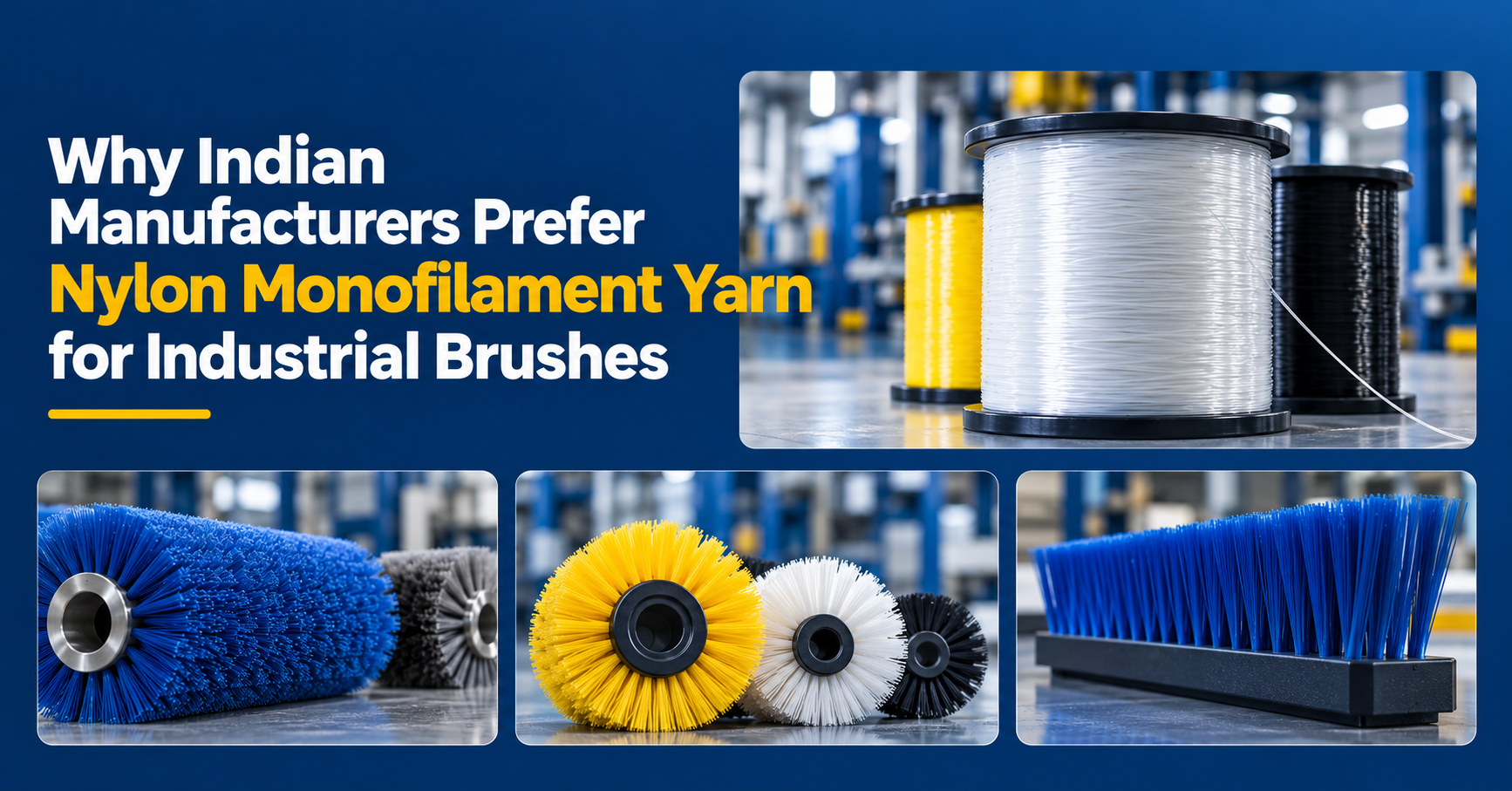
- Nylon yarn: elastic, abrasion-resistant, commonly used in brushes and fishing lines
- Polyethylene yarn: flexible and durable, suited for nets and ropes
- Specialty polymers: including conductive, biocomponent, and heat-resistant grades for niche industrial uses
The choice of polymer at this stage shapes every downstream step of the monofilament yarn manufacturing process, since each material behaves differently under heat, tension, and cooling.
Step-by-Step Monofilament Yarn Manufacturing Process
Step 1: Polymer Drying and Preparation
Polymer chips are hygroscopic to varying degrees, meaning they absorb moisture from the air. Before extrusion, the resin is dried in a controlled hopper dryer to remove residual moisture. Skipping this step causes bubbles, weak spots, and inconsistent diameter later in the process, so drying is treated as a non-negotiable first stage in any reliable monofilament yarn manufacturing process.
Step 2: Melting and Extrusion
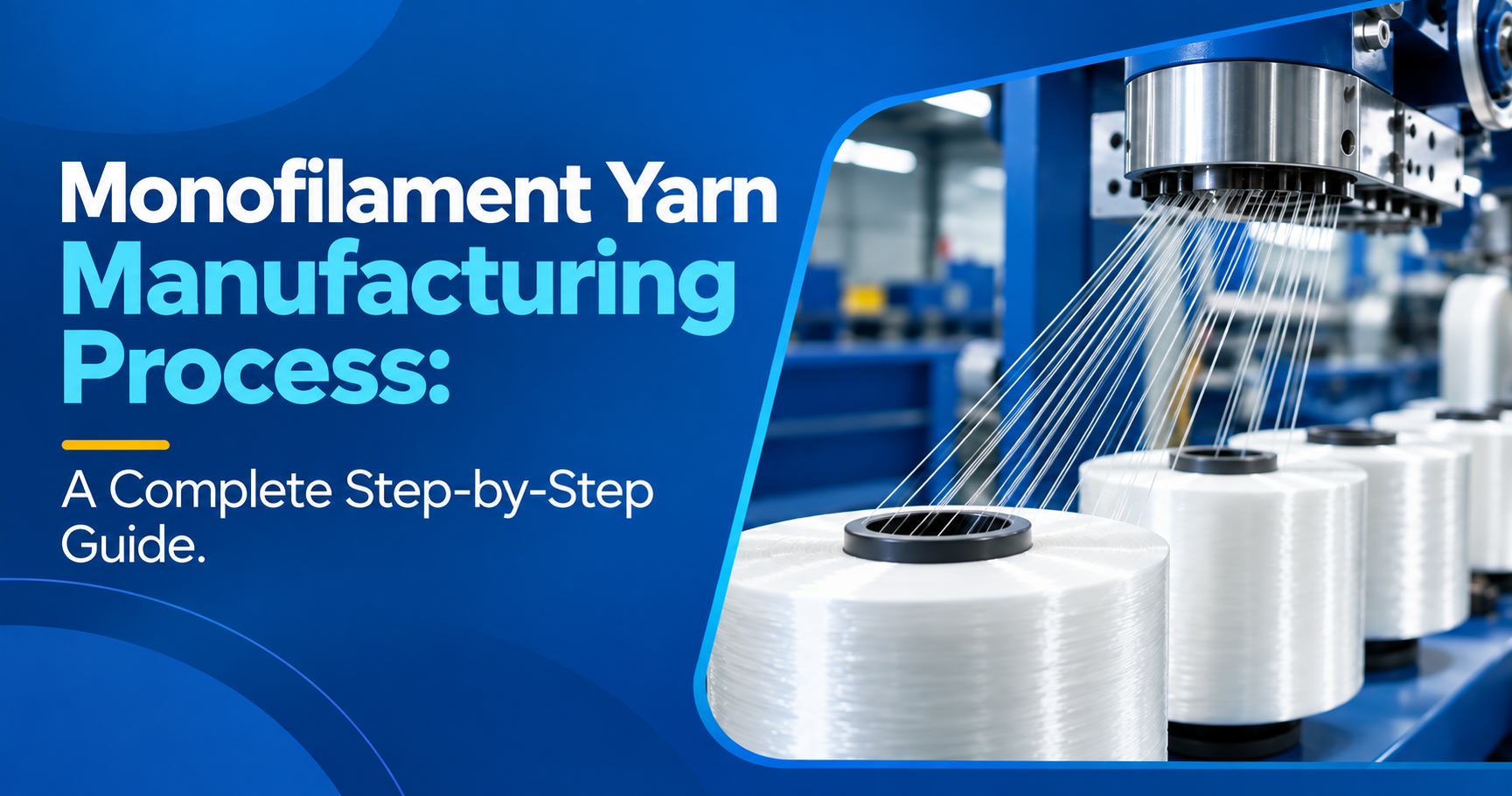
The dried polymer chips are fed into a heated extruder, where they are melted into a viscous, homogeneous liquid. A precision screw pushes the molten polymer through a metal die called a spinneret, which shapes it into continuous round strands. Temperature control here is critical: too hot and the polymer degrades; too cool and the strand won’t extrude evenly. This extrusion stage is the true heart of the monofilament yarn manufacturing process, defining the initial diameter and consistency of the filament. Read more about the impact of precision engineering on monofilament yarn at this stage.
Step 3: Quenching (Cooling the Filament)
As soon as the molten strands exit the spinneret, they pass through a water bath for rapid cooling, known as quenching. This solidifies the filament almost instantly, locking in its round cross-section and preventing sagging or deformation. Quenching temperature and speed directly influence the yarn’s clarity, flexibility, and surface finish.
Step 4: Drawing (Stretching for Strength)
Freshly extruded filament is soft and lacks tensile strength. In the drawing stage, the yarn is stretched often to several times its original length over heated rollers running at increasing speeds. This process aligns the polymer molecules in the direction of the filament, dramatically increasing tensile strength, reducing elongation, and improving dimensional stability. Drawing is where raw filament becomes genuinely load-bearing yarn, and it’s one of the most technically demanding stages of the entire monofilament yarn manufacturing process. This is also the stage most closely tied to how monofilament yarn improves durability in the finished product.
Step 5: Heat Setting (Annealing)
After drawing, the filament passes through a heat-setting or annealing oven. This step relieves internal stresses created during stretching and stabilizes the molecular structure. Heat setting ensures the yarn won’t shrink or deform later when exposed to heat, sunlight, or repeated mechanical stress in its end application.
Step 6: Cooling and Relaxation
The heat-set filament is cooled again under controlled tension, allowing it to relax slightly without losing the strength gained during drawing. This balances stiffness with the flexibility needed for winding and downstream handling.
Step 7: Winding and Spooling
Finally, the finished monofilament yarn is wound onto bobbins, cones, or spools at a consistent tension. Automated winding systems ensure even layering, preventing tangles and maintaining spool integrity for shipping and further processing, whether that’s weaving, braiding, or direct use as bristles or fishing line.
Step 8: Quality Control and Testing
Throughout the monofilament yarn manufacturing process, samples are tested for tensile strength, elongation, diameter tolerance, and surface uniformity. Reputable manufacturers also test UV resistance, chemical resistance, and colorfastness depending on the yarn’s intended application. This final checkpoint is what separates export-grade monofilament yarn from inconsistent, low-grade output, and you can explore the specific benchmarks in our overview of quality testing standards for monofilament yarn.
Why the Manufacturing Process Determines Yarn Quality
Every stage of the monofilament yarn manufacturing process compounds into the final product’s performance. Poor drying leads to weak spots. Inconsistent extrusion temperature causes uneven diameter. Under-drawn yarn lacks tensile strength, while over-drawn yarn becomes brittle. This is precisely why working with an experienced, quality-focused supplier matters; the difference between a batch that performs reliably for years and one that fails prematurely often comes down to control at each of these steps.
Consistent, standards-driven production means every spool of monofilament yarn, whether polypropylene, polyester, or nylon, can meet the tight tolerances that industrial and technical textile manufacturers depend on. This consistency is increasingly important as demand shifts; see our breakdown of global monofilament yarn market trends for a closer look at where the industry is heading.
Common Applications of Monofilament Yarn
Understanding the monofilament yarn manufacturing process also explains why this material shows up across so many industries:
- Geotextiles and filtration fabrics
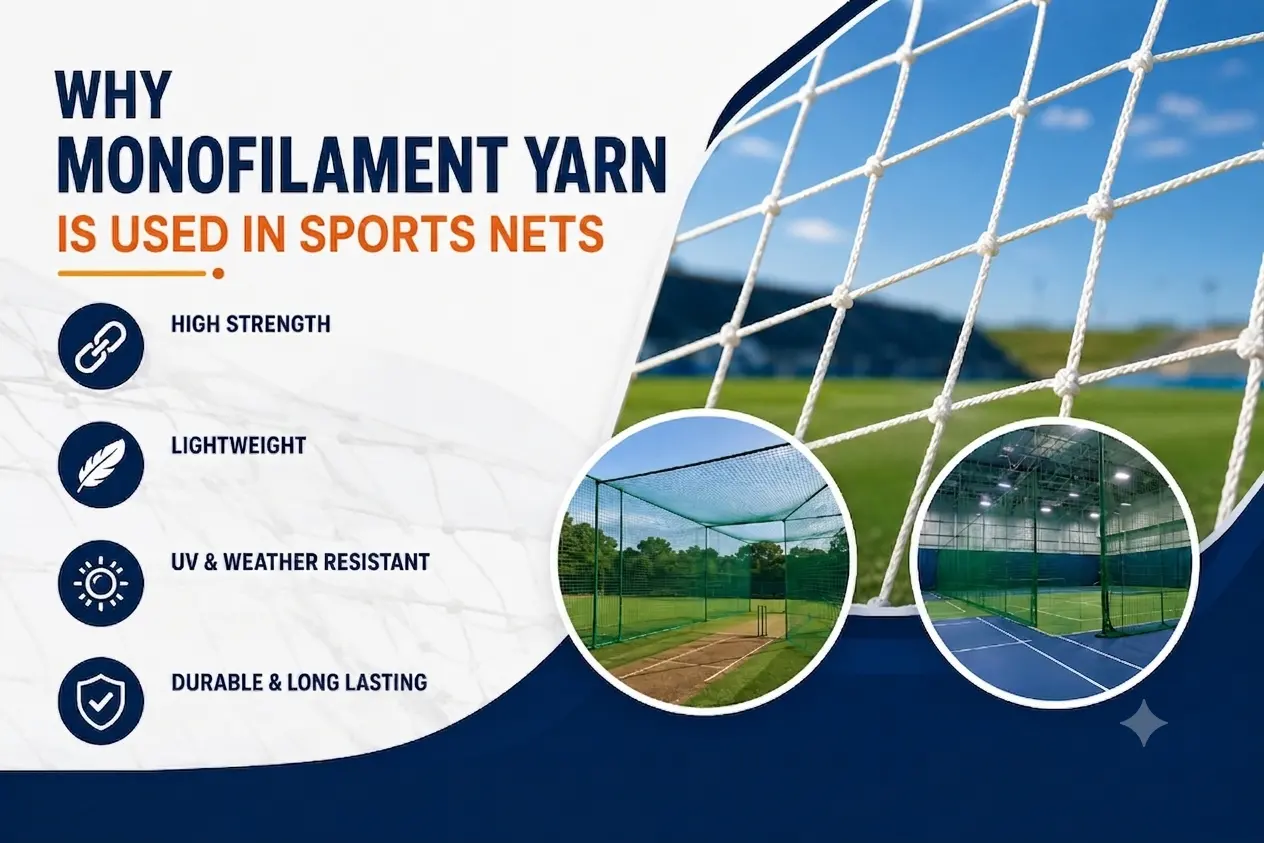
- Artificial turf and sports surfaces
- Industrial and household brushes
- Fishing lines and nets
- Zipper teeth and technical textiles
- Trimmer lines and cordage
- Automotive reinforcement components
To see the bigger picture of how each of these end-use benefits from precision manufacturing, read how monofilament yarn improves product durability across these industries.
Conclusion
The monofilament yarn manufacturing process is a precise sequence of drying, extrusion, quenching, drawing, heat setting, and winding, each step engineered to produce a single, continuous strand with dependable strength and consistency. Whether you manufacture brushes, filtration fabrics, or technical textiles, understanding this process helps you make smarter sourcing decisions and set realistic quality expectations.
At Shanthi Industries, we work with this process daily, sourcing and exporting monofilament yarns to manufacturers across the USA, Europe, the Middle East, and Africa. Our focus on consistent, standards-driven production means every spool we deliver, whether polypropylene, polyester, or nylon, meets the tight tolerances that industrial and technical textile manufacturers depend on. If you’re looking for a reliable partner who understands every stage of the monofilament yarn manufacturing process and offers premium-grade monofilament yarns tailored to your application. Reach out to discuss bulk orders, custom specifications, or export partnerships.
Frequently Asked Questions
1. What is the monofilament yarn manufacturing process?
The monofilament yarn manufacturing process is a series of steps—polymer drying, melt extrusion, quenching, drawing, heat setting, and winding—that convert raw synthetic resin into a single, continuous, strength-optimized filament.
2. What raw materials are used in monofilament yarn production?
The most common raw materials are polypropylene, polyester, nylon (PA6 and PA6,6), and polyethylene, with specialty polymers used for conductive, biocomponent, or heat-resistant applications.
3. Why is the drawing stage important in monofilament yarn manufacturing?
Drawing stretches the filament to align its molecular structure, which significantly increases tensile strength and dimensional stability. Without proper drawing, the yarn would remain weak and prone to stretching or breaking.
4. How is monofilament yarn different from multifilament yarn?
Monofilament yarn is a single, solid extruded strand, while multifilament yarn is made by twisting multiple thin fibers together. This gives monofilament yarn more uniform strength and no weak points from twisting.
5. What industries use monofilament yarn the most?
Monofilament yarn is widely used in geotextiles, filtration fabrics, artificial turf, brushes, fishing lines, nets, zipper teeth, and technical or industrial textiles due to its strength, consistency, and chemical resistance.