
The global yarn and fiber industry is undergoing a significant transformation. Among the many materials making waves in industrial and technical applications, monofilament yarn stands out as one of the most in-demand materials of our time. From filtration systems to automotive components, from agricultural nets to oral care brushes, the versatility of monofilament yarn is driving its adoption across a wide spectrum of industries worldwide.
As we step into 2026 and look ahead to 2027, manufacturers, procurement managers, and supply chain professionals are asking a critical question: Where is the global monofilament yarn market heading, and what trends should businesses be prepared for?
This blog takes a deep, informed look at the market dynamics, growth drivers, regional demand shifts, and forecasts shaping the global monofilament yarn industry.
What Is Driving Global Demand for Monofilament Yarn?
Before diving into numbers and forecasts, it is important to understand why monofilament yarn has become such a critical industrial material.
Monofilament yarn is a single, continuous synthetic filament typically made from nylon, polyester, polypropylene, or polyethylene and special polymers like PBT, PEEK, ETFE, and PPS. Its uniform diameter, high tensile strength, chemical resistance, and excellent durability make it a go-to material for precision-driven applications.
If you want to understand how these physical properties directly translate into better products, our earlier blog on how monofilament yarn improves product durability and performance offers a detailed breakdown.
The global demand surge is being powered by several interconnected factors:
1. Rapid Industrialization in Emerging Markets Countries across Southeast Asia, South Asia, and Africa are scaling up manufacturing output. This industrialization creates enormous demand for technical textiles, filtration systems, and brush manufacturing, all sectors that rely heavily on monofilament yarn.
2. Growth in the Filtration Industry Clean water, air purification, and food processing are global priorities. The filtration industry is one of the largest consumers of monofilament yarn globally, and as regulatory standards tighten across the world, manufacturers are turning to high-precision monofilament mesh fabrics to meet compliance requirements.
3. Agricultural Expansion and Innovation Agricultural nets, shade fabrics, fishing nets, and crop protection systems all rely on durable monofilament fibers. As the global population grows and food security becomes a priority, the agricultural sector continues to invest in advanced materials, and monofilament yarn is at the heart of these solutions.
4. Increased Demand from the Brush and Cleaning Tools Market Household, industrial, and oral care brush manufacturing is one of the fastest-growing application segments for monofilament yarn. Rising hygiene awareness globally, especially after the pandemic, has pushed demand for quality brushes through the roof.
Key Market Trends to Watch in 2026–2027
1. Sustainability and Eco-Friendly Monofilaments Are Going Mainstream
One of the most significant trends reshaping the monofilament yarn market in 2026 is the shift toward sustainable materials. Buyers and brands are now demanding bio-based or recycled filaments, and manufacturers are responding.
PLA (Polylactic Acid) yarn, derived from plant-based sources, is gaining traction as an eco-friendly alternative to petroleum-based monofilaments. Recycled polyester and nylon filaments are also seeing increased interest from companies looking to meet ESG (Environmental, Social, and Governance) commitments.
This trend is not just ethical; it is commercial. Businesses that invest in sustainable monofilament solutions today will be better positioned to serve premium markets and meet tightening global environmental regulations tomorrow.
2. Technical Textiles Are a Growing Frontier
The global technical textiles sector is expanding rapidly, with monofilament yarn playing a pivotal role in composites, geotextiles, medical fabrics, and protective clothing. In 2026, investments in infrastructure, roads, waterways, and construction are driving demand for geotextile materials, many of which are based on monofilament structures.
3. Automation in Manufacturing Is Demanding Higher Consistency
As manufacturing processes become increasingly automated, the tolerance for inconsistency in raw materials is shrinking. Monofilament yarn is being chosen over multifilament options because its uniform diameter and predictable behavior make it more compatible with precision machinery.
This demand for consistency is also pushing manufacturers toward precision-engineered filaments, a topic we have explored in depth in our post on the impact of precision engineering on monofilament performance.
4. The Asia-Pacific Region Is Leading Demand Growth
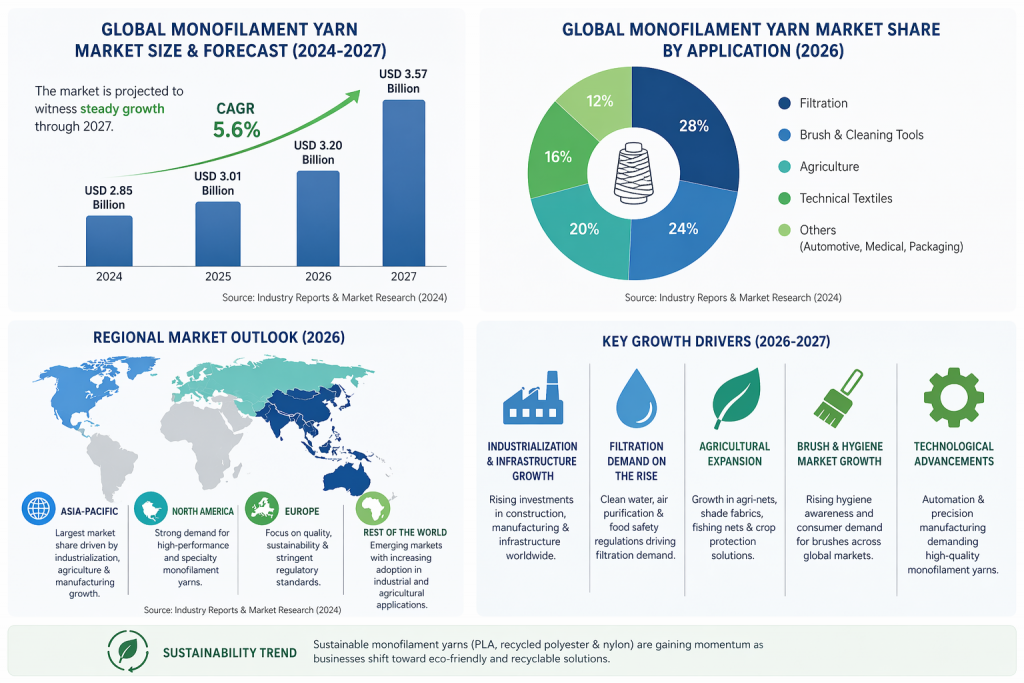
In 2026, the Asia-Pacific region, particularly India, China, Vietnam, and Indonesia, is expected to account for the largest share of global monofilament yarn demand. Strong growth in textile manufacturing, fisheries, agriculture, and industrial sectors makes this region the key growth engine for the global market.
India, in particular, is emerging as both a leading consumer and producer of monofilament yarn. Government-led initiatives in technical textiles, combined with a robust domestic manufacturing base, are fueling local demand while also enabling exports.
5. North America and Europe Remain Quality-Focused Markets
While volume growth is centered in Asia, North America and Europe remain critical markets for high-performance, specialty monofilament yarns. These regions tend to prioritize quality, certifications, and traceability, making them ideal target markets for premium manufacturers.
Sectors like medical textiles, automotive filtration, and specialty industrial applications are where Western markets continue to show strong demand.
Market Forecast: 2026–2027 Outlook
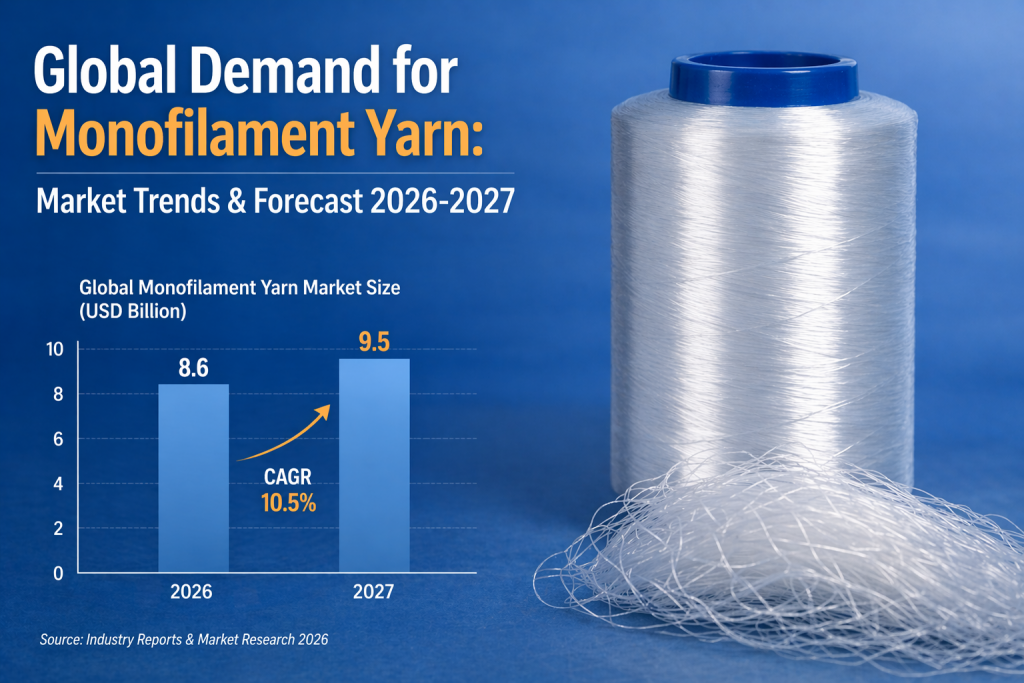
Global market data and industry indicators point toward consistent growth in the monofilament yarn sector through 2026 and 2027.
Several factors support this outlook:
- Infrastructure spending globally is increasing demand for geotextiles and filtration materials.
- Food and water safety regulations are driving filtration market growth.
- E-commerce and consumer goods manufacturing are pushing demand for brush filaments and packaging materials.
- Healthcare expansion is creating new opportunities in medical-grade monofilament applications.
- Automotive sector recovery and electrification are opening doors for new monofilament applications in EV components and filtration systems.
The market is expected to see compound annual growth driven particularly by demand from India, Southeast Asia, and Sub-Saharan Africa. Specialty applications in filtration, medical, and agriculture are expected to grow faster than commodity segments. For manufacturers, the message is clear: this is the right time to strengthen supply chains, invest in quality, and scale capacity to meet rising global demand.
Challenges That Could Affect Market Growth
While the overall picture is positive, businesses should be aware of a few headwinds:
Raw Material Price Volatility: Monofilament yarn is made from petroleum-based polymers like nylon and polyester. Fluctuations in crude oil prices can significantly affect production costs and pricing strategies.
Environmental Regulations: As governments around the world tighten restrictions on plastics and synthetic materials, manufacturers will need to adapt by investing in recyclable or bio-based filaments.
Supply Chain Complexity: Global disruptions from shipping bottlenecks to raw material shortages continue to pose risks. Companies that localize sourcing or diversify suppliers will be better positioned to navigate these challenges.
Skilled Labor and Machinery: Producing consistent, high-performance monofilament yarn at scale requires advanced extrusion technology and skilled technicians. Capacity constraints could limit growth for some manufacturers.
What This Means for Buyers and Manufacturers
If you are a manufacturer sourcing monofilament yarn for your production lines, the forecast for 2026–2027 holds important implications:
- Plan procurement ahead. Demand is rising, and supply constraints are real. Early planning and long-term supplier relationships will give you a competitive edge.
- Prioritize quality over price. As global competition intensifies, product quality will be your differentiator. Investing in premium monofilament yarn now pays dividends in reduced rejection rates and better end-product performance.
- Explore sustainable options. Eco-friendly monofilaments are no longer just a niche choice; they are fast becoming a business requirement. Evaluate PLA and recycled filament options now.
- Partner with an experienced manufacturer. Working with a supplier who has deep expertise in monofilament production across materials, diameters, and applications ensures consistent quality and reliable delivery.
Conclusion
The global demand for monofilament yarn is on a strong and sustained upward trajectory heading into 2026 and 2027. Driven by industrialization, filtration requirements, agricultural expansion, and growing brush and technical textile markets, this versatile material has never been more relevant.
For businesses that depend on monofilament yarn, whether for brushes, filters, agriculture, or engineering, understanding these market trends is not just helpful; it is essential for strategic planning.
At Shanthi Industries, we have been at the forefront of monofilament yarn manufacturing for years, delivering precision-engineered filaments across nylon, polyester, polypropylene, PLA, and polyethylene, tailored to your specific application requirements.
If you are looking to source high-quality monofilament yarn that meets global performance standards, we are here to help.
Get in touch with Shanthi Industries today:
- Email: info@shanthiindustries.com
- Call: +91 99022 98755
- Website: shanthiindustries.com