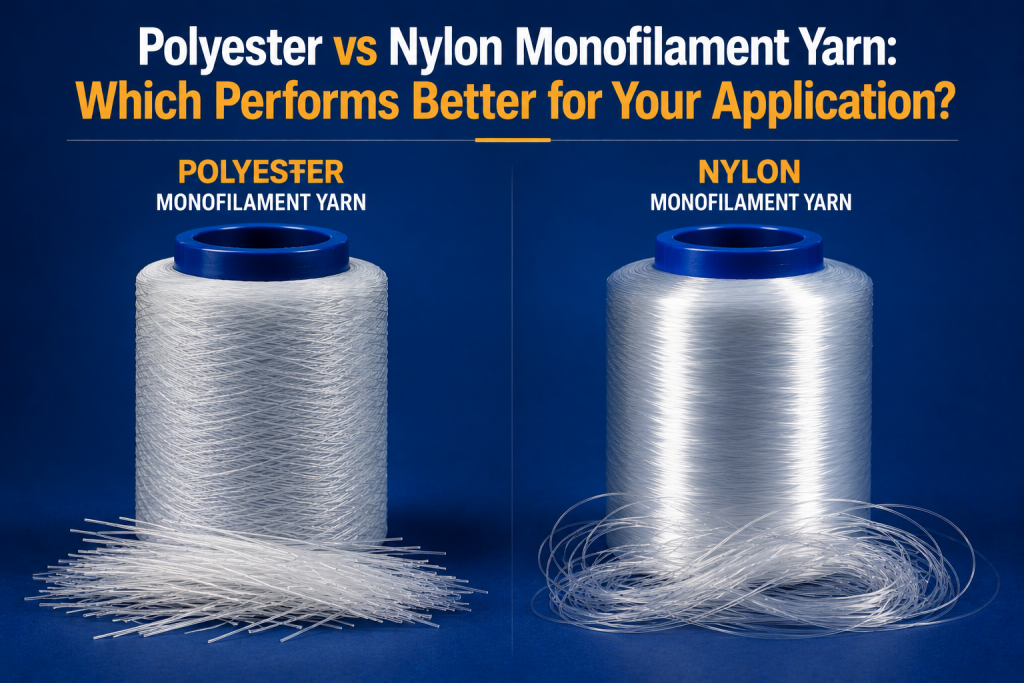
In the world of technical textiles and industrial manufacturing, selecting the right polymer can be the difference between a high-performing product and a costly failure. Two of the most widely used synthetic materials, polyester and nylon, often dominate the conversation. While they may look similar to the naked eye, their chemical compositions and physical properties are vastly different.
At Shanthi Industries, we specialize in engineering high-performance monofilament yarns tailored to specific industrial needs. Understanding the nuances of polyester vs nylon monofilament yarn is essential for engineers and procurement managers looking to optimize their product’s lifespan and efficiency.
In this comprehensive guide, we will break down the mechanical properties, environmental resistance, and ideal applications for both materials to help you decide which performs better for your specific needs.
Understanding the Basics: Polyester vs Nylon Monofilament Yarn
Before diving into the performance metrics, it is important to understand what these materials are. Monofilament yarn consists of a single, solid continuous strand of synthetic fiber. Unlike multifilament yarns, which are composed of many tiny fibers twisted together, monofilaments offer exceptional smoothness, stiffness, and diameter consistency.
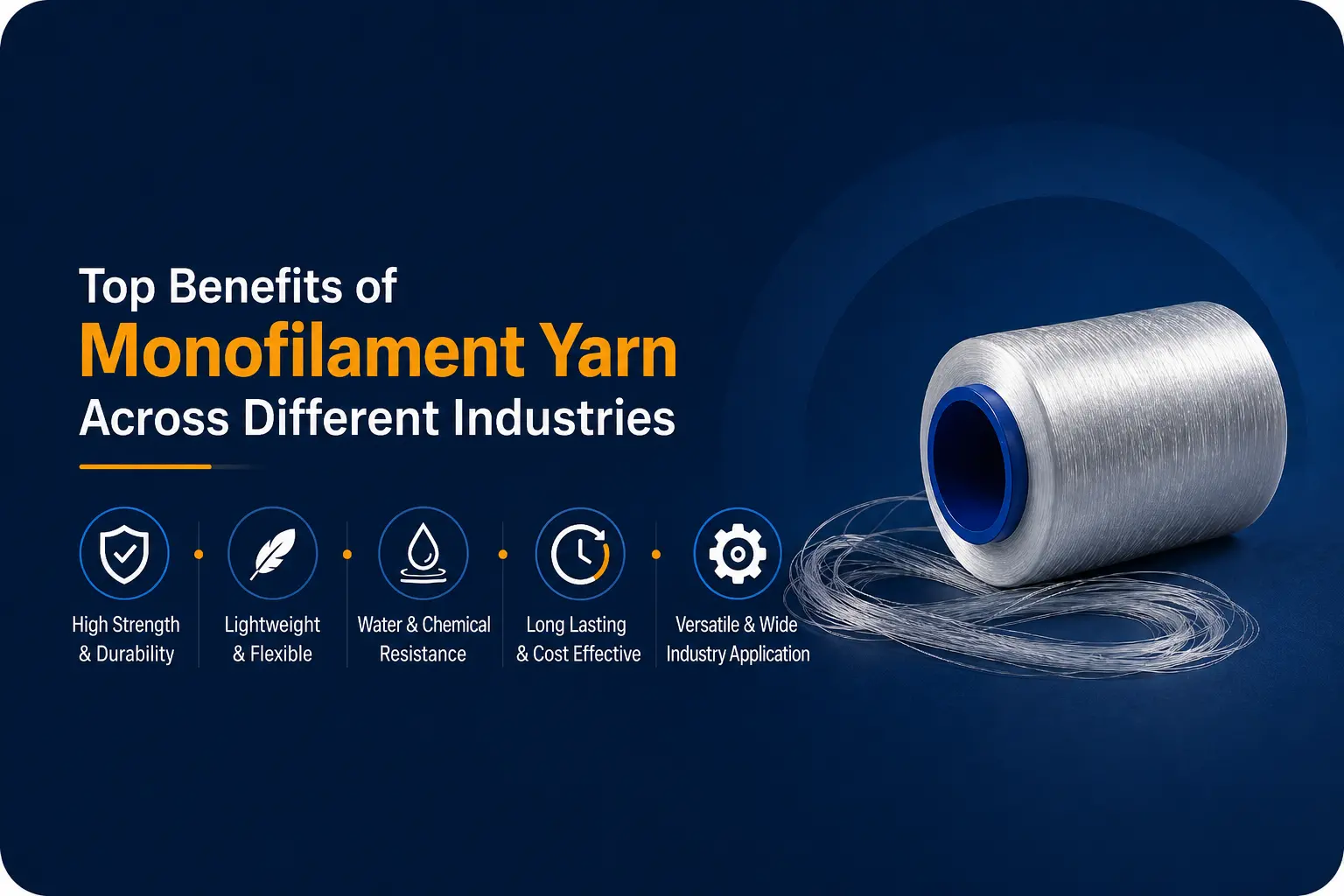
There are numerous benefits of using monofilament yarn in your products, including superior surface uniformity and high tensile strength, which make them indispensable across various sectors.
What is Polyester Monofilament?
Polyester yarn (specifically polyethylene terephthalate, or PET) is a thermoplastic polymer known for its incredible dimensional stability and low moisture absorption. In the context of polyester vs nylon monofilament yarn, polyester is often the “steady” choice; it doesn’t stretch much and maintains its shape even when wet. It is widely regarded as polyester monofilament yarn because of this inherent rigidity.
What is Nylon Monofilament?
Nylon yarn (polyamide) is prized for its elasticity and abrasion resistance. At Shanthi Industries, we produce various grades of nylon, such as nylon 6 and nylon 6,6. It is a nylon monofilament for high-performance diverse applications, ranging from heavy-duty industrial uses to delicate consumer goods, thanks to its “tough” impact resistance.
Key Performance Factors: Polyester vs Nylon Monofilament Yarn
To determine which material is superior, we must evaluate them across several critical performance categories.
1. Tensile Strength and Elasticity
When comparing polyester vs nylon monofilament yarn, elasticity is the most immediate differentiator.
- Nylon: It is highly elastic. Nylon can stretch significantly before reaching its breaking point and has excellent “elastic recovery,” meaning it returns to its original length after the load is removed.
- Polyester: It has much lower elongation. While it is very strong, it is also relatively stiff. If your application requires a material that will not sag or stretch over time, polyester is the better candidate.
2. Moisture Absorption and Dimensional Stability
This is where the debate over polyester vs nylon monofilament yarn becomes technical.
- Polyester: It is hydrophobic. It absorbs less than 0.5% of its weight in water. This means its strength and dimensions remain almost identical whether it is bone-dry or submerged in the ocean.
- Nylon: It is hydrophilic. Depending on the grade, nylon can absorb up to 8% of its weight in water. As it absorbs moisture, it swells (increasing in diameter), and its tensile strength decreases.
3. UV Resistance and Weathering
For outdoor applications, UV degradation is a major concern.
- Polyester: Inherently possesses superior UV resistance. It can withstand prolonged exposure to sunlight without significant loss of strength or yellowing.
- Nylon: Generally more sensitive to UV light. Without specific UV stabilizers added during the extrusion process, nylon will become brittle and lose its integrity much faster than polyester when used outdoors.
4. Chemical and Heat Resistance
- Polyester: Offers excellent resistance to acids and bleaches but can be degraded by strong alkalis. It also has a higher melting point, making it more stable at elevated temperatures.
- Nylon: Resistant to many alkalis and organic solvents but is highly susceptible to mineral acids.
Application Breakdown: Which One Do You Need?
The “better” material depends entirely on the environment in which the yarn will operate. Below are the most common industrial applications and our recommendations for the polyester vs nylon monofilament yarn choice.
When to Choose Polyester Monofilament Yarn
Because of its stiffness and low water absorption, polyester is the industry standard for:
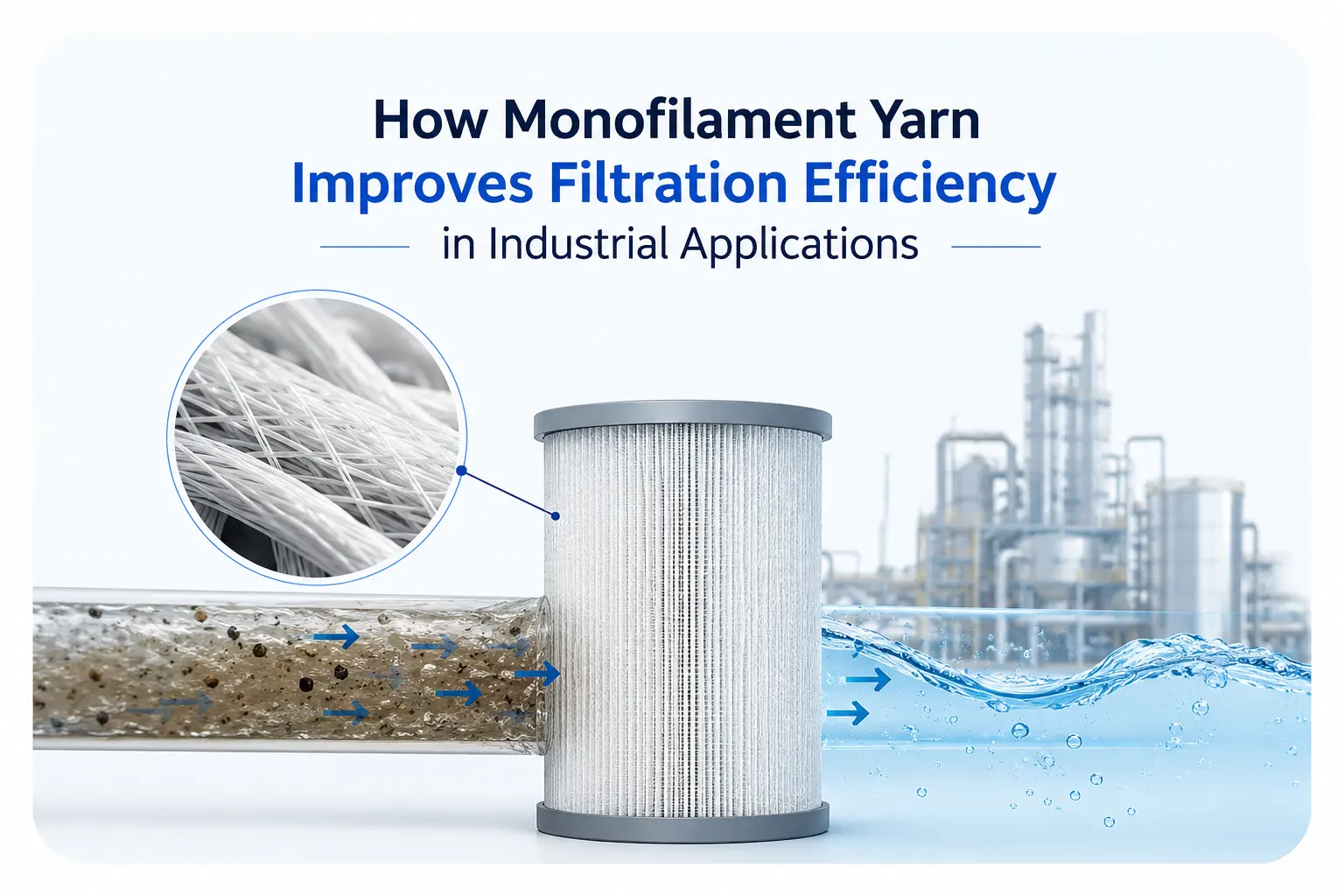
- Filter Fabrics: Maintaining a precise mesh opening is critical for industrial filtration. Polyester’s dimensional stability ensures the filter remains accurate even under pressure and moisture.
- Conveyor Belts: Low stretch is essential for high-tension conveyor systems.
- Zipper Teeth: High-quality zippers require the rigid, consistent shape that only polyester monofilament can provide.You can learn more about how this works in our detailed look at polyester monofilament for zipper teeth.
- Screen Printing: The high tension required for screen printing frames makes polyester the preferred choice.
When to Choose Nylon Monofilament Yarn
Nylon’s toughness and flexibility make it ideal for:
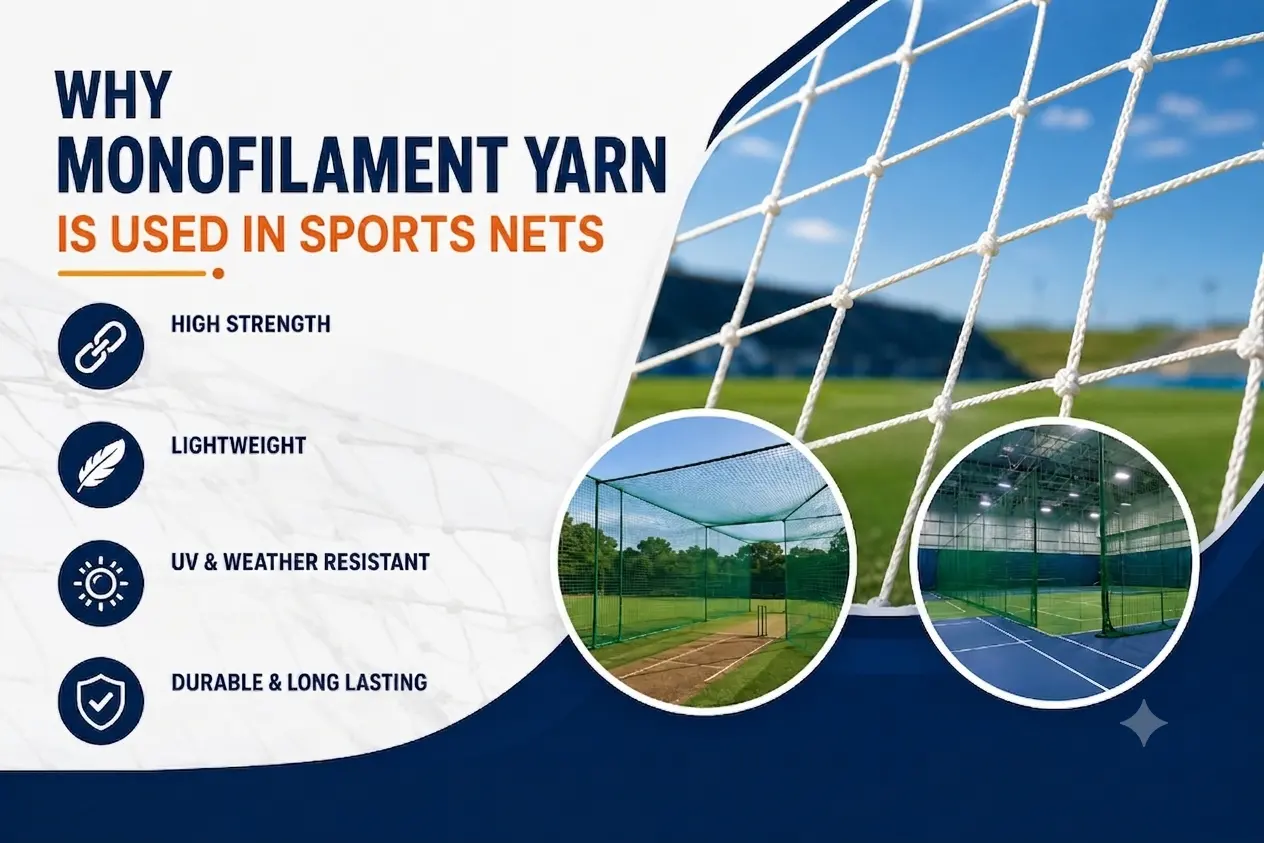
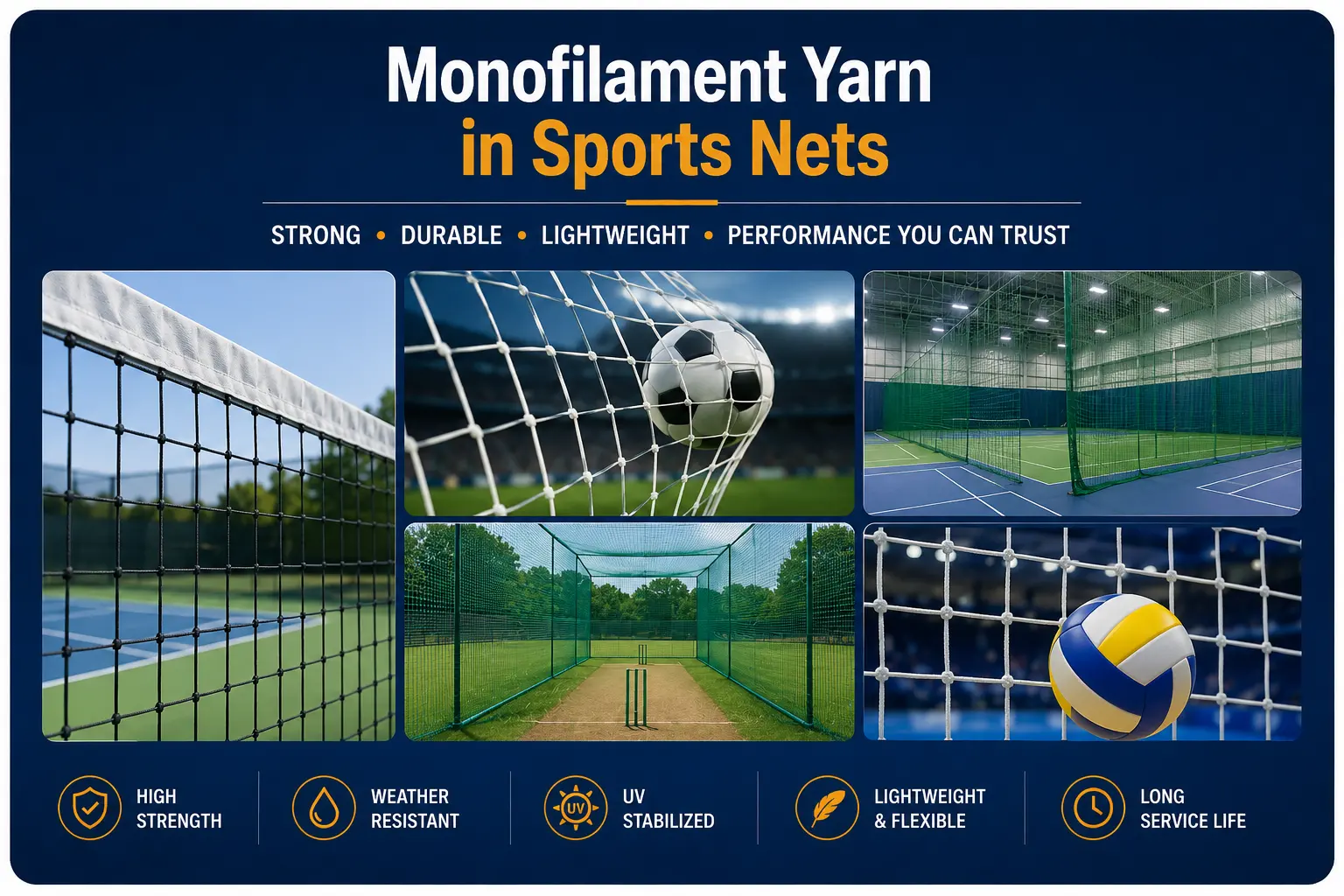
- Fishing Lines and Nets: The elasticity of nylon helps absorb the shock of a sudden strike by a fish, preventing the line from snapping.
- Industrial Brushes: Whether for oral care or industrial machinery, the “bend recovery” of nylon ensures the bristles return to their upright position after use.
- Velcro and Hook-and-Loop Fasteners: The durability and flexibility of nylon are perfect for repeated mechanical fastening.
- Automotive Components: Nylon’s resistance to oils and impact makes it a staple in automotive seat suspension and safety components.
Technical Comparison Table: Polyester vs Nylon Monofilament Yarn
| Feature | Polyester Monofilament | Nylon Monofilament |
| Moisture Regain | Very Low (0.4%) | High (4% – 8%) |
| Elasticity | Low (Stiff) | High (Flexible) |
| UV Resistance | Excellent | Moderate to Low |
| Abrasion Resistance | Good | Excellent |
| Melting Point | Approx. 250°C-260°C | Approx. 220°C-255°C |
| Dimensional Stability | Superior | Fair (Changes with humidity) |
Making the Final Decision for Your Application
When choosing between polyester vs nylon monofilament yarn, ask yourself these three questions:
- Will the product be used outdoors? If yes, polyester is likely your best bet due to its UV stability.
- Is consistent tension/shape critical? If the material must not stretch or sag (like in a filter or a screen), choose polyester.
- Does the application involve high friction or impact? If the yarn will be subjected to heavy rubbing or needs to “snap back” (like a brush bristle or a fishing line), nylon is the superior choice.
At Shanthi Industries, we understand that every industrial application has unique constraints. Whether you are developing advanced technical textiles, industrial brushes, or specialized filtration systems, our team is here to provide precision-engineered monofilament solutions.
Why Partner with Shanthi Industries?
As a leader in synthetic fiber manufacturer, we don’t just provide raw materials; we provide engineering expertise. Our monofilament yarns are produced under strict quality controls (ISO 9001:2015) to ensure that whether you choose polyester or nylon, you are receiving a product that meets the highest global standards.
We offer:
- Customization: Tailored diameters, colors, and performance additives (UV stabilizers, flame retardants, etc.).
- Global Reach: Serving the Bangalore market and international clients with reliable export capabilities.
- Innovation: Continuous R&D into biocomponent and conductive yarns for next-generation applications.
Contact Us Today
Still undecided on the polyester vs nylon monofilament yarn debate for your specific project? Let our experts guide you. Shanthi Industries – Where innovation meets high-performance synthetic fibers.