If you’ve ever wondered how a single, unbroken strand of synthetic fiber ends up in fishing nets, surgical sutures, car interiors, and industrial filters, the answer almost always comes back to one material: monofilament yarn. It’s not the flashiest product on a factory floor, but it may well be one of the most dependable. Understanding the benefits of monofilament yarn across different industries helps explain why so many manufacturers, exporters, and product designers keep coming back to it project after project.
In this post, we’ll walk through what makes monofilament yarn so valuable, where it’s used, and why its role keeps expanding across sectors that demand strength, consistency, and reliability.
What Makes Monofilament Yarn Different?
Unlike multifilament yarns, which are made by twisting together many thin strands, monofilament yarn is extruded as a single continuous fiber. That structural simplicity is exactly what gives it an edge. A single strand means fewer weak points, a smoother surface, and more predictable performance under stress. It also means the yarn can be engineered precisely, adjusting diameter, polymer type, and finish to match the exact demands of an application.
This is the foundation for understanding the benefits of monofilament yarn across different industries: one core structure, endless customization.
Key Benefits of Monofilament Yarn Across Different Industries
1. Outstanding Strength and Durability
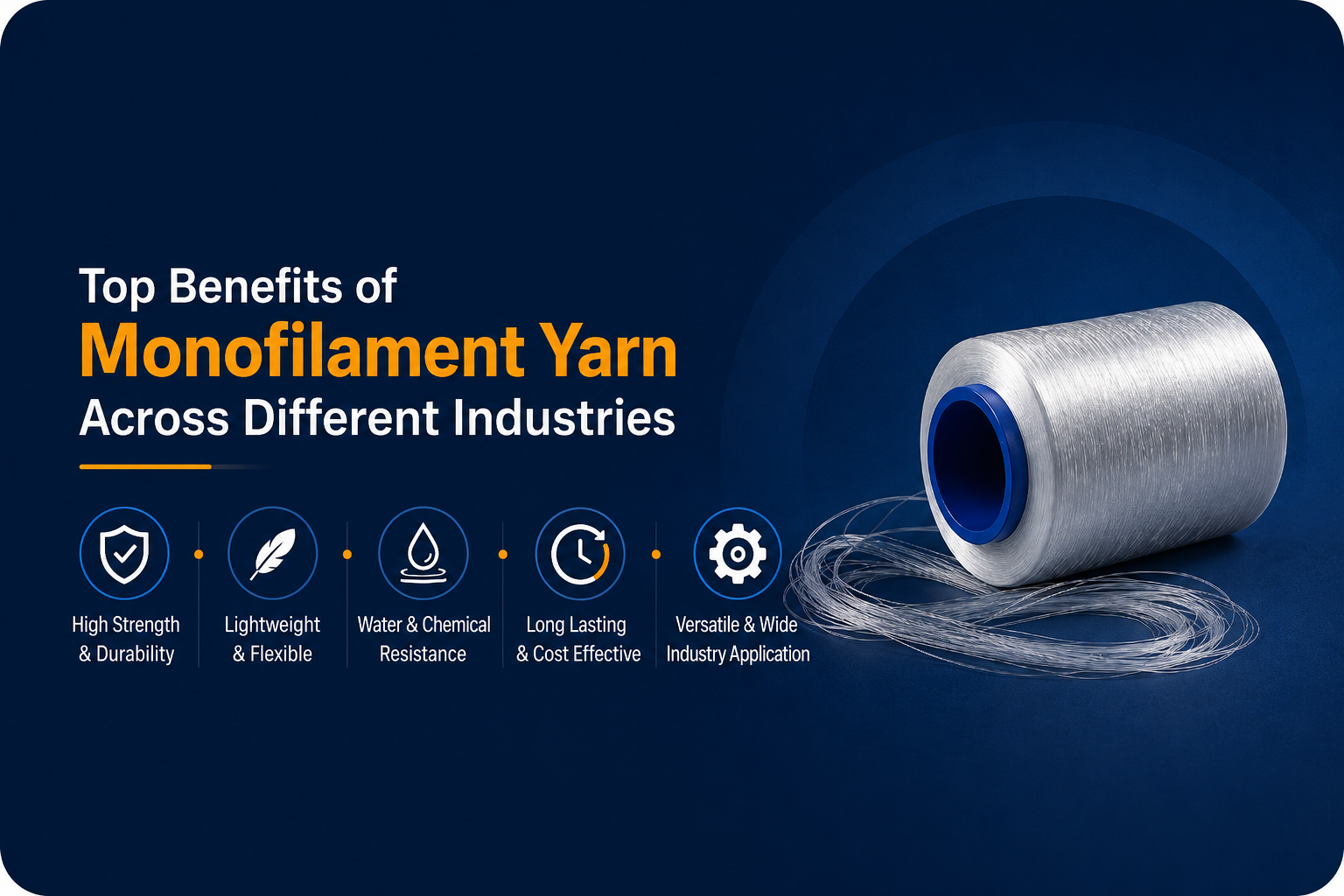
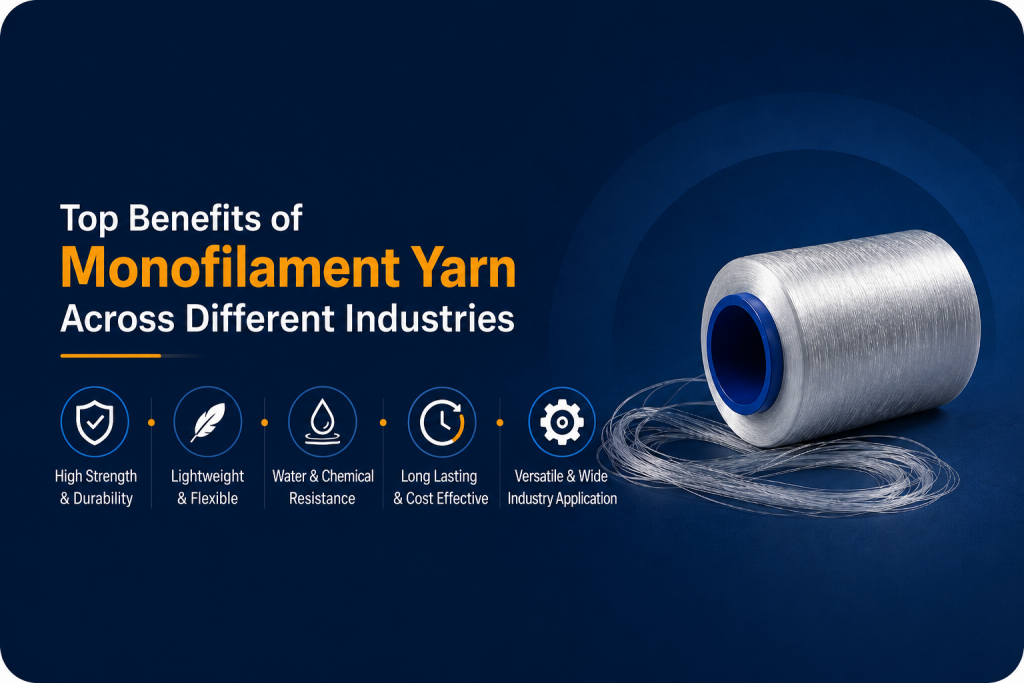
Among the most talked-about benefits of monofilament yarn across different industries is its tensile strength. Because it’s a single, solid strand rather than a bundle of fine fibers, monofilament yarn resists stretching, fraying, and breaking far better than many alternatives. This durability translates directly into longer product life, whether it’s a fishing net repeatedly hauled from the water or a conveyor belt running continuous shifts on a factory floor.
For manufacturers, this means fewer replacements, less downtime, and lower long-term costs, a compelling reason the material remains a staple in heavy-duty applications. To understand this in more depth, see how monofilament yarn improves durability in demanding, everyday use.
2. Resistance to Heat, Chemicals, and UV Exposure
Depending on the polymer used, nylon, polyester, polypropylene, or PPS monofilament yarn can be engineered to withstand extreme heat, aggressive chemicals, and prolonged sun exposure without breaking down. This resilience is one of the standout benefits of monofilament yarn across different industries that rely on outdoor or harsh-environment performance, such as agriculture, automotive, and industrial filtration.
Shade nets, crop covers, filter fabrics, and cable sheathing all benefit from this resistance, staying functional and stable long after ordinary materials would have degraded.
3. Versatility Across Polymers and Applications
One of the most practical benefits of monofilament yarn across different industries is how adaptable it is. Simply changing the polymer opens the door to a completely different use case, and each variant brings its own set of strengths to the table:
- Nylon monofilament is prized for its flexibility, abrasion resistance, and knot strength, which is why it’s the go-to choice for fishing nets, technical textiles, and other applications where the yarn needs to flex repeatedly without losing integrity.
- Polyester monofilament holds its shape and dimensional stability even under sustained tension, making it a natural fit for filtration fabrics and, more specifically, polyester monofilament for zipper teeth, where consistent sizing and smooth movement matter every single time the zipper is used.
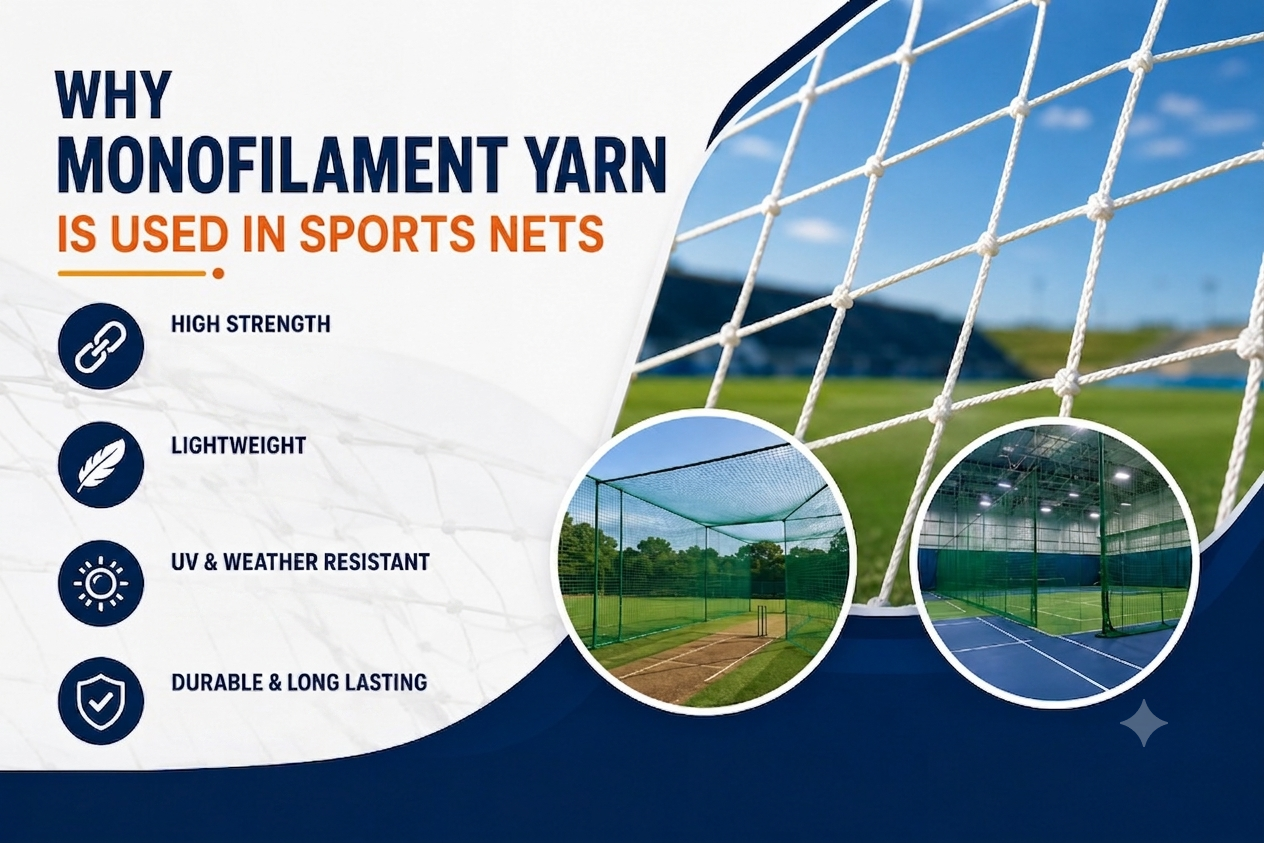
- Polypropylene monofilament is lightweight and resistant to moisture absorption, so it performs well in ropes, shade netting, and other outdoor applications where the yarn is constantly exposed to the elements.
- PPS monofilament is engineered to handle extreme heat, which makes it especially valuable in high-temperature filtration systems used in industrial and manufacturing settings.
- PBT and blended yarns offer a balance of flexibility and stiffness, and they’re commonly used in brushes and bristle products where a controlled, springy feel is essential.
This flexibility means a single manufacturing process can serve textile mills, filtration plants, agricultural suppliers, and automotive component makers all from the same fundamental technology.
4. Precision and Consistency in Manufacturing
Consistency matters enormously to buyers who reorder the same product month after month. The extrusion process used to produce monofilament yarn keeps diameter, color, and strength remarkably uniform from batch to batch. This is one of the quieter but most valued benefits of monofilament yarn across different industries, particularly for exporters and manufacturers who need every shipment to perform identically to the last.
Predictable quality reduces production issues downstream, whether the yarn is being woven into filtration mesh or shaped into bristles for industrial brushes.
5. Lightweight Yet High-Performing
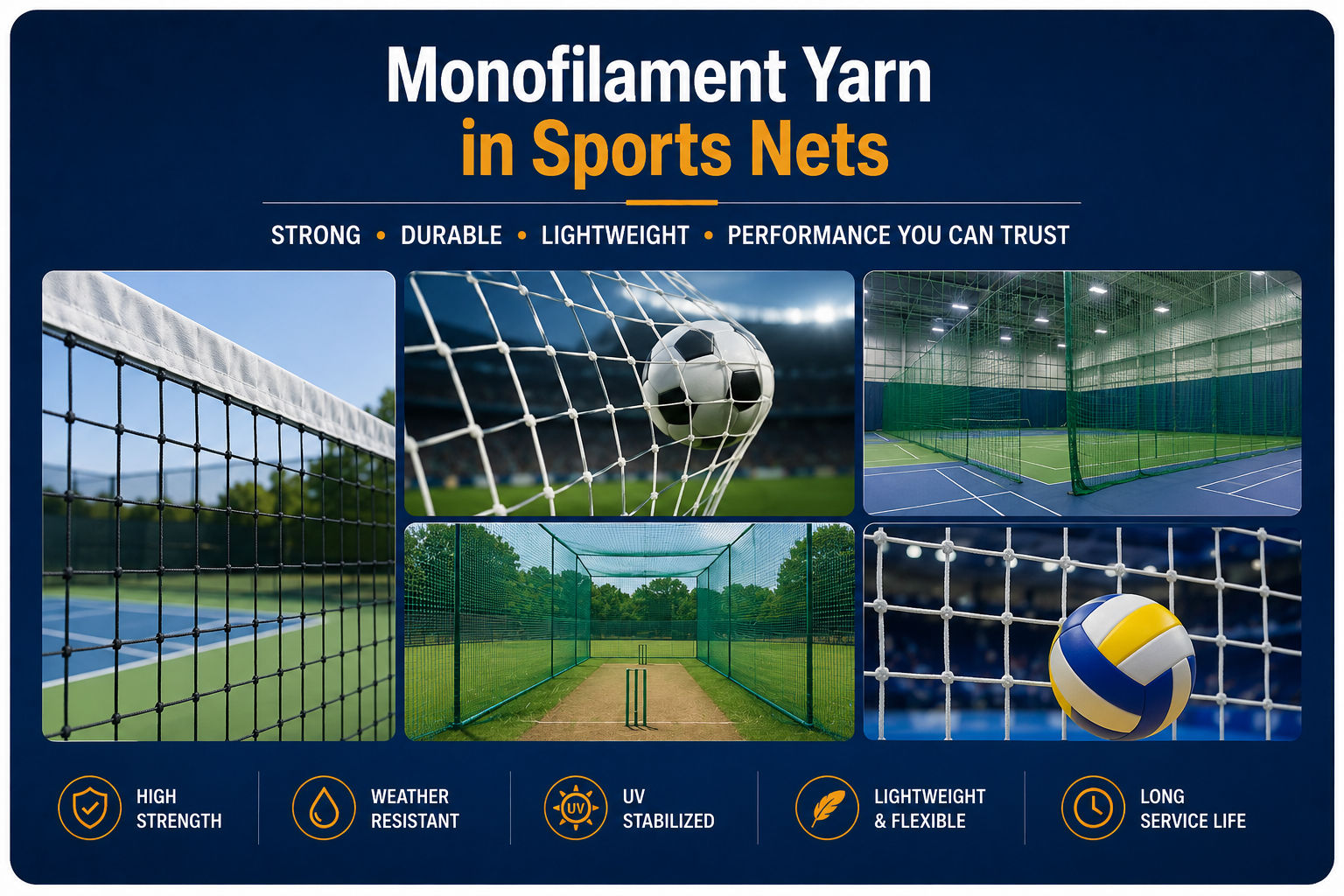
Despite its strength, monofilament yarn remains lightweight and easy to handle. This combination of low weight and high performance is especially valuable in applications like sports equipment, 3D printing filament, and technical textiles, where excess bulk or weight can compromise the final product. It’s also easier and more cost-effective to transport, package, and process at scale.
6. Hygienic and Safe for Sensitive Applications
In the medical field, it is used to produce surgical sutures because its smooth, single-strand structure doesn’t harbor bacteria the way woven or braided materials can. This property lowers infection risk and supports better healing outcomes, making it a trusted choice in operating rooms worldwide. It’s a powerful reminder that the benefits of monofilament yarn across different industries extend well beyond industrial and outdoor use into applications where precision and safety are non-negotiable.
7. Cost-Efficiency Over the Product Lifecycle
While monofilament yarn may not always be the cheapest raw material upfront, its durability and resistance to wear significantly extend the lifespan of finished goods. Agricultural netting reinforced with UV-resistant monofilament, for instance, can last considerably longer than untreated alternatives, reducing replacement costs for farmers. Multiply that across filtration systems, automotive components, and industrial equipment, and the long-term savings become one of the most persuasive benefits of monofilament yarn across different industries.
Applications of Monofilament Yarn Across Different Industries
- Textiles: Woven into functional and decorative fabrics, curtains, and technical textiles. Its flexibility, durability, and consistent performance make it suitable for a variety of textile applications. Learn more about monofilament yarn in modern industries.
- Fisheries: Formed into nets, ropes, and seine nets that hold up against constant moisture and strain. Monofilament yarn provides the strength and resistance required for demanding fishing and aquatic applications.
- Agriculture: Used for crop netting, fencing, and shade structures that need UV resistance. These properties make monofilament yarn particularly useful for agricultural environments where materials are exposed to sunlight, weather, and continuous outdoor use. Explore more about monofilament yarn in agriculture and its applications in crop protection and farming systems.
- Automotive: Applied in filter fabrics and interior components requiring heat and chemical resistance. Its dimensional stability and durability allow it to perform reliably in demanding automotive environments.
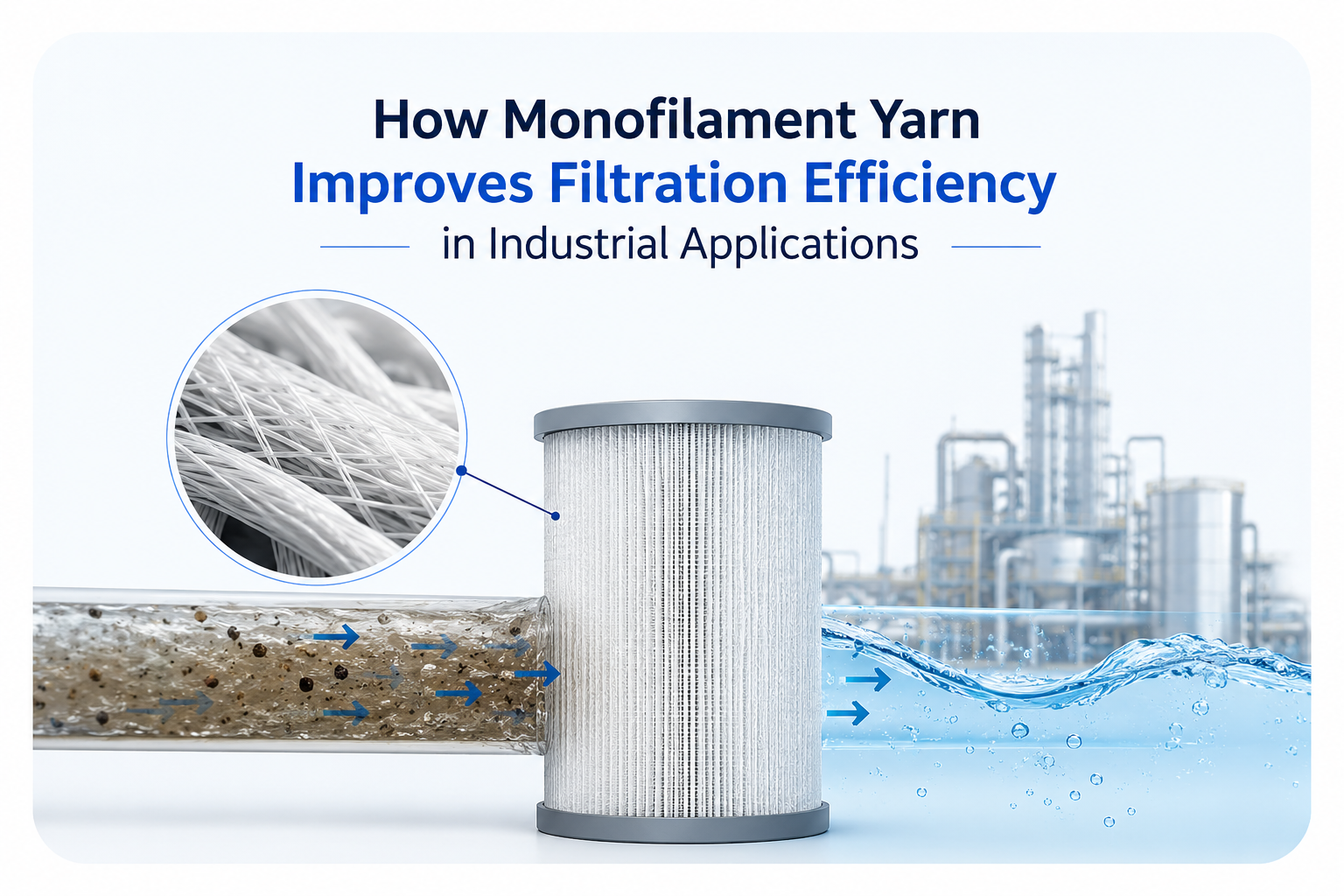
- Filtration: Essential for maintaining uniform pore size and consistent flow in industrial filters. The precise structure of monofilament yarn helps manufacturers produce filtration media with controlled openings and reliable separation performance. Read more about how monofilament yarn improves filtration in industrial applications.
- Medical: Manufactured into sutures where sterility and precision are critical. Medical-grade monofilament yarn can provide the consistency, smooth surface, and controlled performance required for specialized medical applications. Learn more about monofilament yarn in medical grade applications.
- Consumer Goods: Found in brushes, bristles, zippers, and sporting goods. Its strength, flexibility, abrasion resistance, and ability to maintain its shape make it useful across a broad range of everyday products.
Seeing the material through this lens makes the benefits of monofilament yarn across different industries easier to appreciate; it’s less about one killer feature and more about a rare combination of strength, adaptability, and reliability that few other materials can match.
Why Manufacturers and Exporters Choose Monofilament Yarn
For companies supplying global markets, reliability isn’t optional; it’s expected. Overseas buyers who reorder monofilament yarn products need the same quality, color, and performance every single time. Because the extrusion process is so controllable, manufacturers can deliver that consistency at scale, which builds long-term trust between suppliers and their customers.
This is ultimately why the benefits of monofilament yarn across different industries continue to expand its footprint: it solves real, recurring problems—durability, environmental resistance, hygiene, and consistency—without adding complexity to the manufacturing process.
Conclusion
From fishing boats to operating rooms, from farm fields to automotive assembly lines, monofilament yarn quietly does its job without demanding much attention, and that’s precisely its strength. The benefits of monofilament yarn across different industries come down to a simple formula: one continuous strand, engineered strength, and the flexibility to adapt to nearly any polymer or application. As industries continue to look for materials that combine performance with cost-efficiency, monofilament yarn is well positioned to remain a go-to solution for years to come.
If your business is exploring which type of monofilament yarn best fits your product line, our guide on how to choose the right monofilament yarn for your product can help you match the right polymer, diameter, and finish to your exact requirements. Have questions or need a custom solution? Contact synthetic fiber & monofilament experts today, and our team will help you find the right fit.
Frequently Asked Questions
1. What is monofilament yarn made of?
Monofilament yarn is typically made from synthetic polymers such as nylon, polyester, polypropylene, PBT, or PPS, each chosen based on the strength, flexibility, and resistance properties required for a specific application.
2. Which industries use monofilament yarn the most?
Monofilament yarn is widely used in textiles, fisheries, agriculture, automotive, filtration, medical, and consumer goods manufacturing, thanks to its strength, durability, and adaptability.
3. How is monofilament yarn different from multifilament yarn?
Monofilament yarn is a single continuous strand, while multifilament yarn is made of multiple thinner fibers twisted together. This gives monofilament yarn greater strength, a smoother surface, and more consistent performance.
4. Is monofilament yarn resistant to weather and chemicals?
Yes. Depending on the polymer used, monofilament yarn can resist UV exposure, heat, moisture, and various chemicals, making it suitable for outdoor and industrial environments.
5. Why do manufacturers prefer monofilament yarn for long-term projects?
Its durability, consistent quality from batch to batch, and resistance to wear reduce the need for frequent replacements, making it a cost-efficient choice over the lifespan of a product.