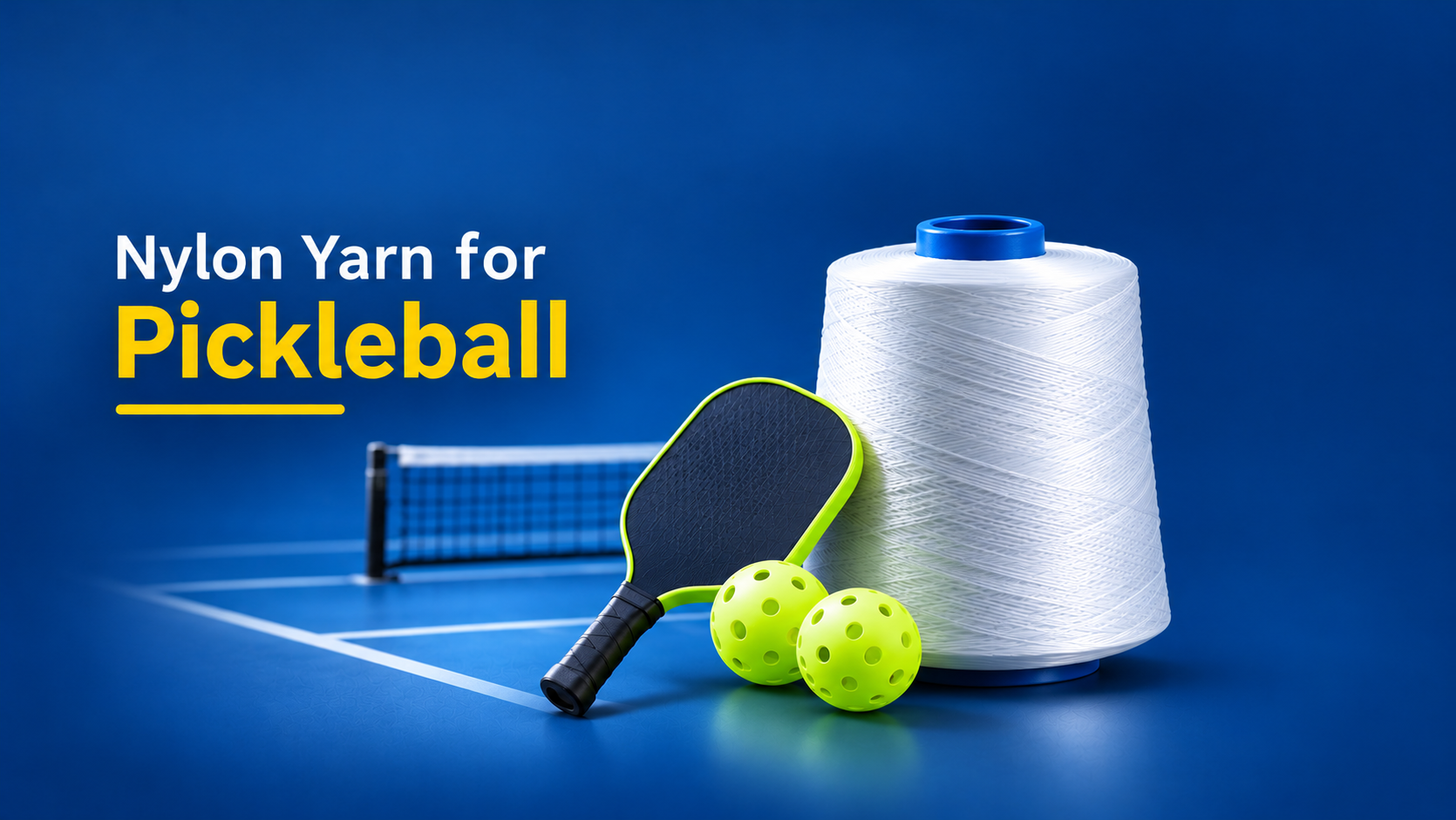
Pickleball has rapidly evolved from a recreational activity into a widely played sport, creating growing demand for reliable, durable, and high-performance sports accessories. As manufacturers develop equipment and accessories for players, material selection becomes an important consideration. The right yarn or filament can influence durability, flexibility, abrasion resistance, appearance, and overall product performance. One material that has attracted attention for sports accessory manufacturing is nylon yarn for pickleball. Known for its strength, flexibility, abrasion resistance, and versatility, nylon can be incorporated into different textile-based and accessory applications associated with pickleball equipment. This guide explores the key reasons behind the growing use of nylon yarn for pickleball, its important properties, potential applications, and the factors manufacturers should consider when selecting the right nylon yarn.
What Makes Nylon Yarn Suitable for Pickleball Accessories?
Pickleball accessories are frequently exposed to repeated handling, movement, friction, outdoor conditions, and regular wear. Materials used in these products therefore need to withstand everyday use without compromising functionality or appearance.
Nylon yarn for pickleball applications is valued because nylon yarn offers a combination of mechanical and textile properties that can be adapted to different product requirements. Its strength allows it to handle repeated stress, while its flexibility helps manufacturers create products that need bending, stretching, weaving, or movement. Nylon's abrasion resistance is another advantage for accessories that experience frequent contact with hands, equipment, courts, bags, or other surfaces.
For manufacturers looking for a more specialized filament solution, nylon monofilament provides further insight into how nylon-based filaments can be engineered for demanding uses.
Key Properties of Nylon Yarn for Pickleball
Depending on the nylon type, yarn construction, denier, and manufacturing process, important characteristics can include:
High tensile strength
Good abrasion resistance
Excellent flexibility
Good elasticity and recovery
Lightweight construction
Smooth surface characteristics
Good fatigue resistance
Versatile processing capabilities
Availability in different specifications and colors
These properties make nylon a versatile material for manufacturers developing sports-related textile products.
Why Manufacturers Prefer Nylon Yarn for Pickleball Accessories
Material selection is rarely based on a single characteristic. Manufacturers need to balance performance, production requirements, durability, aesthetics, and product specifications.
1. Strength and Durability
One of the primary reasons manufacturers consider nylon yarn for pickleball accessories is its strength-to-weight performance. Sports accessories can experience repeated pulling, stretching, bending, and impact during normal use. A suitably specified nylon yarn can withstand these mechanical stresses while maintaining the structural integrity of the finished product. This is particularly useful for products such as straps, bags, nets, and other accessories that need to withstand repeated handling. For a broader look at nylon's performance in demanding applications, manufacturers can also explore nylon monofilament yarn for industrial applications.
2. Excellent Abrasion Resistance
Pickleball accessories may experience significant friction during regular use. Bags may rub against surfaces, straps can move repeatedly across clothing or equipment, and textile components can experience continuous contact. Nylon is well known for its abrasion resistance. This can help extend the useful life of products where repeated surface contact is expected. For manufacturers, this can translate into more durable accessories that maintain their functional characteristics through regular use.
3. Flexibility for Sports Accessories
Sports accessories are not rigid components. Many need to bend, fold, stretch, or conform to different shapes. Nylon's flexibility makes it suitable for applications requiring movement and repeated deformation. A properly engineered nylon yarn for pickleball can therefore be incorporated into textile structures where flexibility is an important design consideration. This is particularly valuable when manufacturers need to combine durability with a comfortable and practical finished product.
4. Lightweight Performance
Weight can influence the usability of sports accessories. Players generally prefer equipment and accessories that are convenient to carry and handle. Nylon offers a useful balance between strength and relatively low weight. This allows manufacturers to develop strong textile components without unnecessarily increasing the weight of the finished accessory. For products such as pickleball bags, straps, covers, and lightweight textile components, this characteristic can be particularly useful.
5. Versatile Manufacturing Options
Another advantage of nylon is its versatility during textile manufacturing. Depending on the application, nylon can be processed into different yarn constructions and specifications. Manufacturers can select appropriate yarn characteristics based on the intended product, weaving or knitting process, required strength, texture, and appearance. This flexibility makes nylon suitable for manufacturers producing multiple types of sports accessories rather than relying on a material designed for only one application.
Applications of Nylon Yarn for Pickleball Accessories
The exact application depends on the yarn specification and the product design. However, nylon yarn for pickleball can be considered for several sports accessory applications.
1. Nylon Yarn for Pickleball Nets
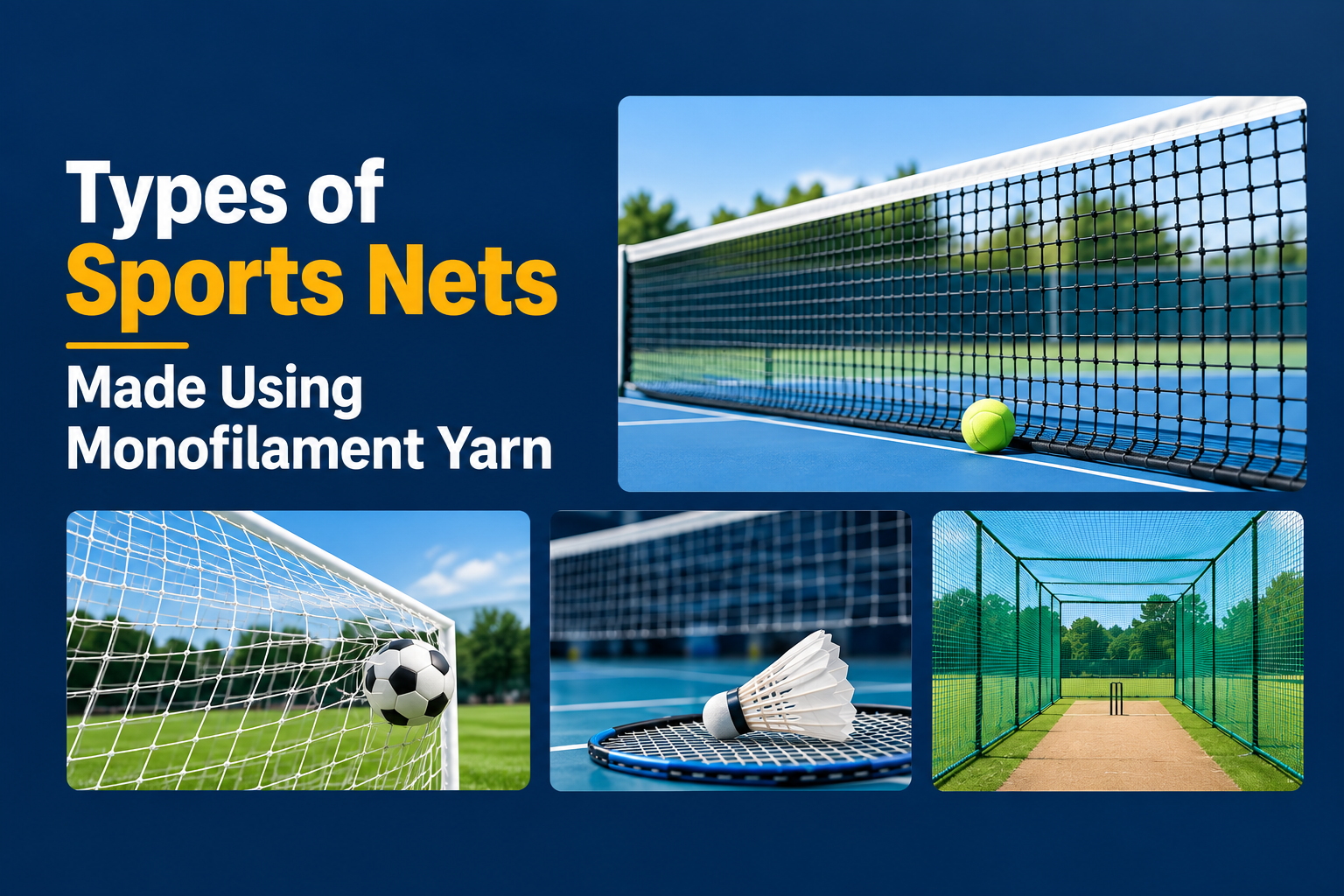
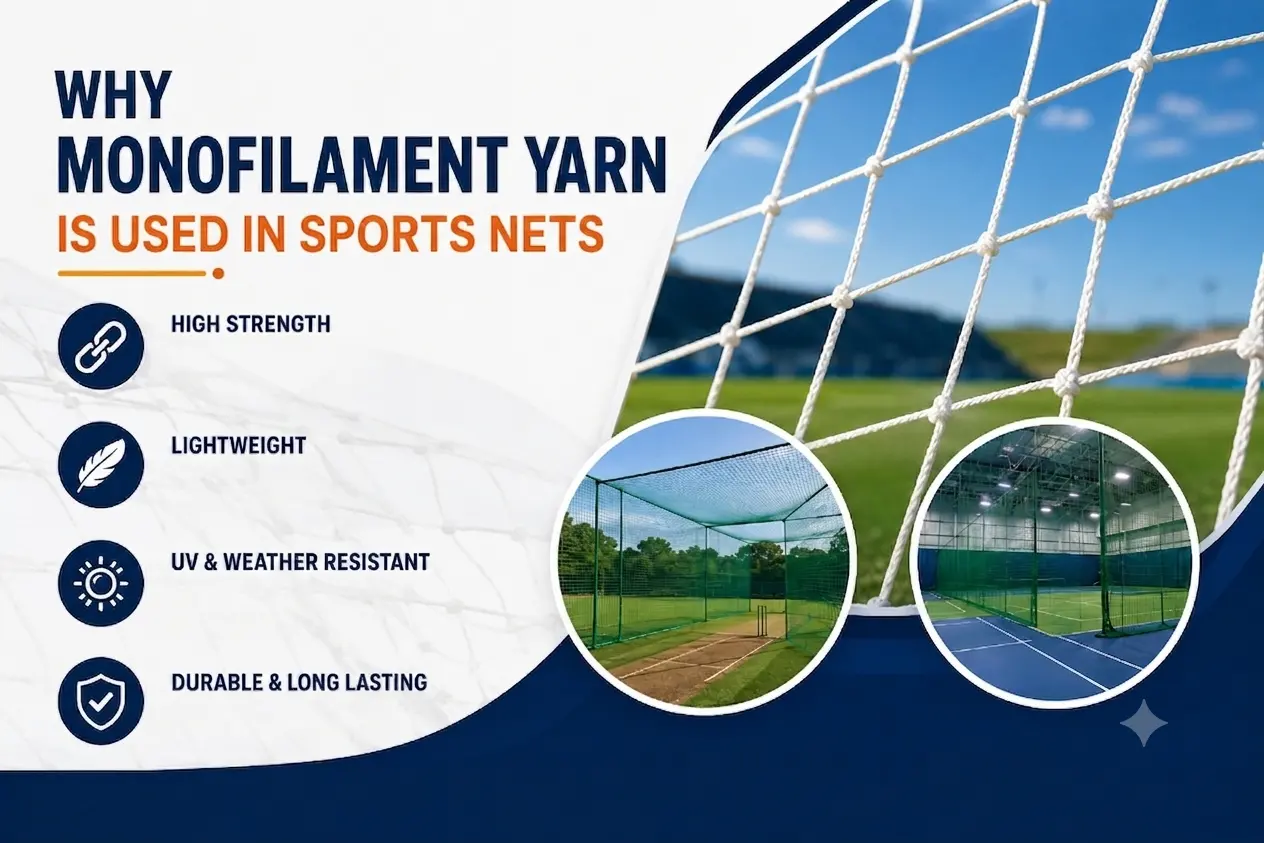
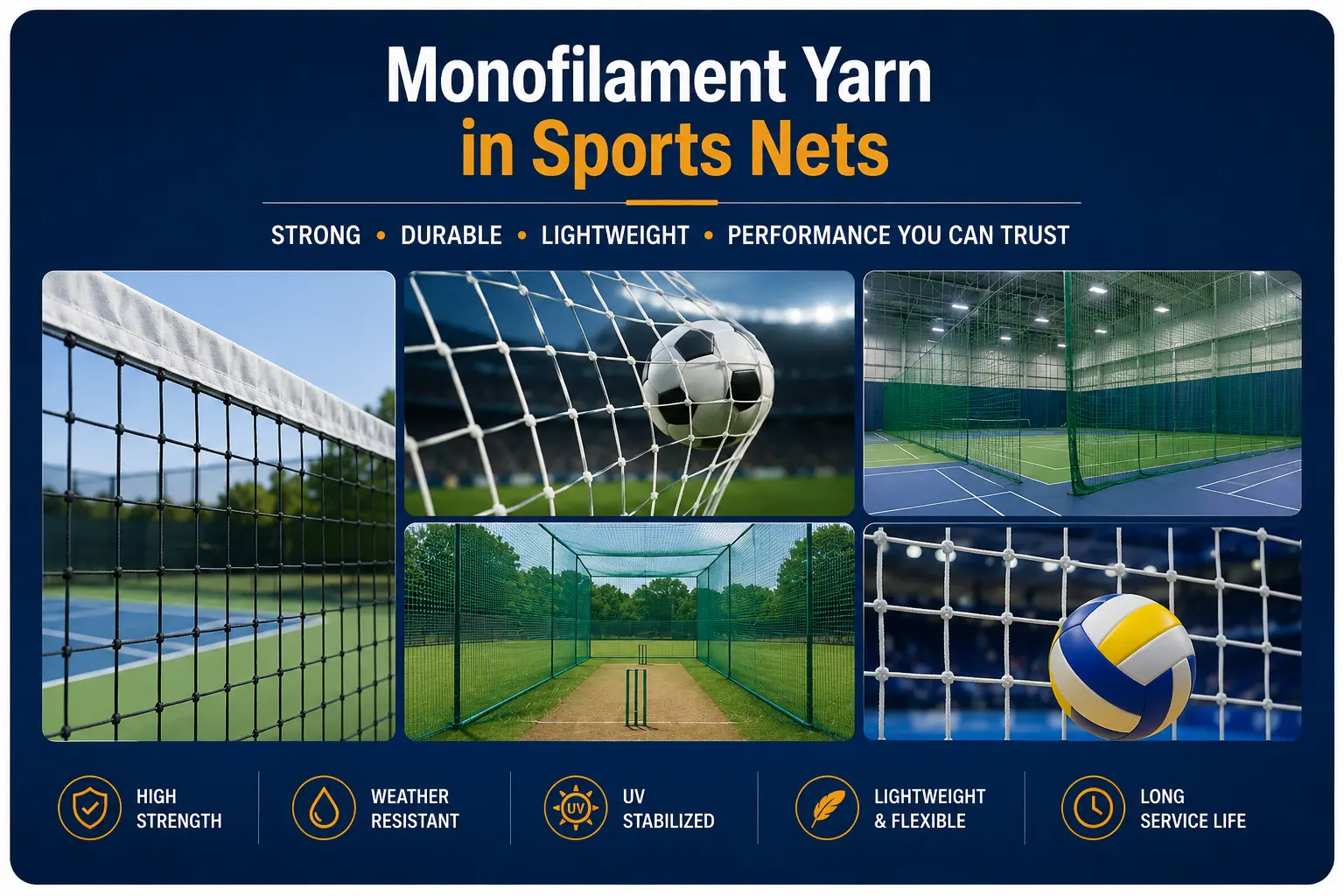
Sports nets require consistent construction and sufficient strength to withstand repeated tension and environmental exposure. Nylon-based yarns can be used in suitable netting structures where strength and flexibility are required. The appropriate yarn specification depends on net construction, mesh size, tension requirements, and intended environment. Manufacturers can also learn more about the role of monofilament yarn in sports nets and how filament selection contributes to sports-net construction.
2. Nylon Yarn for Pickleball Bags
Pickleball bags need to withstand repeated carrying, loading, unloading, and handling. Nylon yarn can be incorporated into woven or knitted textile components used for bags and storage accessories. Its strength and abrasion resistance can support durable construction while keeping the product relatively lightweight.
3. Nylon Yarn for Pickleball Straps
Straps experience repeated tension and pulling forces. Whether used for carrying bags or securing accessories, they need suitable strength and flexibility.
Nylon yarn can be engineered into textile structures that provide the required combination of strength, flexibility, and comfort.
4. Nylon Yarn for Pickleball Covers and Protective Accessories
Protective covers are designed to shield paddles and other equipment from dust, scratches, moisture, and general handling. Nylon-based textile materials can provide a durable outer structure for suitable protective products.
The final material selection should depend on the specific protection and environmental requirements of the accessory.
Choosing the Right Nylon Yarn for Pickleball Manufacturing
Not every nylon yarn is suitable for every sports accessory. Manufacturers should evaluate the finished product and its operating environment before selecting a specification.
1. Consider Yarn Size and Construction
Yarn size influences strength, weight, texture, and the appearance of the finished product. The ideal specification depends on whether the yarn is intended for a net, strap, bag, cover, or another accessory.
2. Evaluate Strength and Abrasion Requirements
Products exposed to frequent tension or friction may require higher mechanical performance. Manufacturers should consider tensile strength, abrasion resistance, elongation, and fatigue behavior according to the application.
3. Consider Environmental Exposure
Outdoor pickleball accessories may encounter sunlight, moisture, temperature changes, and dirt. The expected environment should therefore be considered when selecting the yarn and designing the finished product.
4. Match the Yarn With the Manufacturing Process
The yarn should be compatible with the intended weaving, knitting, braiding, sewing, or other manufacturing process. Consistency in yarn diameter, quality, and processing characteristics can help manufacturers achieve reliable production results.
Nylon Yarn vs Other Synthetic Yarns for Sports Accessories
Nylon is one of several synthetic materials that can be used in sports accessory manufacturing. Polyester, polypropylene, and specialized synthetic fibers can also be suitable depending on the intended application. Nylon is often considered when a combination of strength, flexibility, abrasion resistance, and lightweight construction is required. Polyester may be preferred for certain applications requiring specific dimensional stability or environmental performance, while polypropylene can be useful where low density and particular chemical resistance characteristics are important. Manufacturers evaluating these two common materials can also read this detailed comparison of polyester vs nylon monofilament yarn before selecting a material for a particular application. The right choice ultimately depends on the technical requirements of the finished product rather than simply selecting the most commonly used material.
Nylon Yarn for Pickleball and Other Sports Equipment
The versatility of nylon extends beyond pickleball accessories. Nylon-based yarns and monofilaments are used in different sports-related products where strength, flexibility, resilience, and consistent performance are required. For example, nylon has also been considered for racket strings because of its combination of flexibility and mechanical performance. Manufacturers interested in this application can explore why nylon yarn is used for racket strings. This wider use across sports applications demonstrates why selecting a carefully engineered nylon yarn can be valuable when developing performance-oriented sporting products.
Why Quality Matters When Selecting Nylon Yarn for Pickleball
For sports accessory manufacturers, yarn consistency can have a direct effect on finished-product quality. Variations in yarn characteristics can influence weaving, knitting, strength, appearance, and overall product performance. Working with an experienced nylon yarn manufacturer can help manufacturers identify an appropriate specification based on their application requirements. Important factors to discuss with a supplier include yarn type, denier, strength, elongation, color requirements, finish, processing compatibility, and expected operating conditions. A well-defined material specification can help reduce production inconsistencies and support reliable performance across batches.
Conclusion
The growing popularity of pickleball continues to create opportunities for manufacturers producing paddles, bags, nets, protective covers, straps, and other accessories. As these products become more performance-focused, material selection becomes increasingly important.
Nylon yarn for pickleball applications offers manufacturers a practical combination of strength, abrasion resistance, flexibility, lightweight construction, and manufacturing versatility. These characteristics make nylon a valuable option for a range of textile-based sports accessories. As pickleball continues to expand globally, high-quality synthetic yarns will remain an important component in developing durable, functional, and user-friendly sports accessories.
For specialized yarn and filament requirements, connect with Synthetic fiber & monofilament experts who can help you identify suitable material solutions for sports accessories and other industrial applications.
FAQs
1. Why is nylon yarn suitable for pickleball accessories?
Nylon yarn offers a combination of strength, abrasion resistance, flexibility, lightweight performance, and manufacturing versatility, making it suitable for various pickleball-related textile accessories.
2. What pickleball accessories can be made using nylon yarn?
Depending on the specification and construction, nylon yarn can be used in products such as pickleball nets, bags, straps, protective covers, and other textile-based sports accessories.
3. Is nylon yarn durable enough for outdoor pickleball accessories?
Nylon can provide good mechanical durability and abrasion resistance. However, manufacturers should consider UV exposure, moisture, temperature, and other environmental conditions when selecting the appropriate nylon specification.
4. How do manufacturers choose the right nylon yarn for pickleball products?
Manufacturers should consider yarn size, construction, tensile strength, elongation, abrasion resistance, environmental exposure, color, finish, and compatibility with the intended manufacturing process.
5. Can nylon yarn be used instead of other synthetic yarns for sports accessories?
Yes. Nylon, polyester, polypropylene, and other synthetic yarns can be considered for sports accessories. The appropriate choice depends on the product's required strength, flexibility, durability, environmental resistance, weight, and manufacturing requirements.