Tennis nets are essential for maintaining consistent gameplay, defining court boundaries, and ensuring reliable performance during practice and competitive matches. The material used to manufacture these nets directly affects their strength, durability, weather resistance, and service life. Choosing the right synthetic fibers for tennis nets helps manufacturers produce nets that can withstand repeated ball impacts, outdoor exposure, and regular tension without compromising performance.
Synthetic materials such as nylon, polyester, and polypropylene are widely used in sports net manufacturing because of their strength, versatility, and adaptability to different environmental conditions. However, each material has distinct characteristics that influence its suitability for indoor and outdoor tennis courts.
In this guide, we explore the best synthetic fibers for tennis nets, compare their properties, and explain the factors manufacturers should consider when selecting suitable materials.
Why Are Synthetic Fibers Used for Tennis Nets?
Synthetic fibers have become the preferred choice for many sports net applications because they offer a combination of mechanical strength, flexibility, and durability. Unlike many natural fibers, engineered synthetic materials can be manufactured with more consistent properties and adapted to specific performance requirements.
Some of the main advantages of synthetic fibers for tennis nets include the following:
High tensile strength: Helps the net withstand tension during installation and regular use.
Abrasion resistance: Supports durability when the net experiences repeated ball contact and handling.
Weather resistance: Suitable material grades can withstand outdoor conditions, including moisture and sunlight.
Dimensional stability: Helps the net retain its intended shape and mesh structure.
Low maintenance: Many synthetic materials require less maintenance than traditional natural-fiber alternatives.
Different synthetic materials provide different combinations of these benefits. Understanding their properties is essential when selecting yarn for tennis nets and other sports applications.
For a broader understanding of these materials, explore how synthetic fibers combine innovation and strength for modern applications.
Best Synthetic Fibers for Tennis Nets
Three commonly considered materials for sports net manufacturing are nylon, polyester, and polypropylene. The best option depends on the net's intended application, environmental exposure, construction, and performance requirements.
1. Nylon: Strength and Flexibility
Nylon yarn is a synthetic polymer known for its tensile strength, toughness, and flexibility. These properties make it useful in applications where materials must tolerate repeated impacts and mechanical stress.
For tennis nets, nylon can offer:
Good mechanical strength for regular use.
Flexibility to accommodate repeated ball impacts.
Abrasion resistance under suitable operating conditions.
Versatility for different yarn sizes and net constructions.
However, nylon absorbs more moisture than polyester, which can affect its dimensions and mechanical behavior under certain conditions. For outdoor installations, manufacturers should evaluate the specific nylon grade, UV stabilization, and expected exposure.
Nylon is also used in other racket-sport applications. Learn more about why nylon yarn is a suitable choice for racket strings and how its properties support demanding sports applications.
2. Polyester: Dimensional Stability and Weather Performance
Polyester yarn is another widely used synthetic material for sports and industrial applications. It absorbs relatively little moisture and generally offers good dimensional stability, making it worth considering for tennis nets exposed to changing environmental conditions.
Key advantages of polyester include
Low moisture absorption.
Good dimensional stability.
Resistance to stretching under appropriate loading conditions.
Potential for good outdoor performance when the material is properly selected and UV-stabilized.
Polyester can be a practical option for tennis nets where maintaining shape and tension is important. Nevertheless, actual performance depends on the polymer grade, yarn construction, manufacturing quality, and exposure to sunlight.
For more details, read about polyester monofilament yarn and its durability in demanding applications. Manufacturers comparing the two materials can also refer to this guide on polyester vs. nylon monofilament yarn to understand their key differences and identify which material better matches their requirements.
3. Polypropylene: Lightweight and Moisture-Resistant
Polypropylene is a lightweight synthetic polymer that absorbs very little moisture. Its low density can make it attractive for applications where reduced material weight and moisture resistance are important.
Potential advantages include:
Low material weight.
Very low moisture absorption.
Resistance to many common chemicals.
Suitability for selected outdoor and recreational netting applications.
However, polypropylene has limitations that manufacturers must consider. Its resistance to heat, abrasion, and prolonged UV exposure depends on the grade and formulation. UV stabilization is particularly important when nets will remain outdoors for extended periods.
Polypropylene may suit certain sports net applications, but its suitability for a particular tennis net should be established through performance testing and an assessment of the expected service conditions.
Nylon vs. Polyester vs. Polypropylene: Which Is Better?
The following table provides a general comparison of the three materials. Actual performance varies according to polymer grade, additives, yarn construction, and manufacturing process.
Property | Nylon | Polyester | Polypropylene |
Tensile strength | Generally good | Generally good | Depends on grade and yarn construction |
Flexibility | Generally high | Moderate to good | Depends on construction |
Moisture absorption | Higher than polyester and polypropylene | Low | Very low |
Dimensional stability | Can be affected by moisture | Generally good | Generally good under suitable conditions |
UV resistance | Depends on grade and stabilization | Depends on grade and stabilization | Requires careful consideration of UV stabilization |
Weight | Lightweight | Lightweight | Very lightweight |
Common consideration | Moisture-related dimensional changes | Suitable grade and UV protection | UV and heat performance |
There is no single material that is best for every tennis net. Manufacturers should assess the complete application, including indoor or outdoor use, required net tension, expected impact frequency, and maintenance requirements.
Important Factors When Selecting Synthetic Fibers for Tennis Nets
Choosing the right synthetic fibers for tennis nets involves more than comparing the basic properties of nylon, polyester, and polypropylene. The yarn must perform reliably as part of the finished net.
1. Tensile Strength and Net Tension
Tennis nets must maintain their intended shape and tension during use. The selected yarn should provide suitable tensile strength and elongation characteristics for the net design.
Manufacturers should consider the yarn's load-bearing capacity, knot strength where applicable, and its ability to withstand repeated mechanical stress. These characteristics should be assessed alongside mesh size and overall net construction.
2. UV and Weather Resistance
Outdoor tennis nets are exposed to sunlight, rain, temperature variations, and humidity. Prolonged UV exposure can weaken certain polymers, causing fading, brittleness, and loss of mechanical strength.
Choosing an appropriate UV-stabilized material can help improve outdoor durability. Manufacturers should also consider drainage, moisture exposure, and the local climate when selecting yarn.
3. Abrasion and Impact Resistance
Tennis nets experience repeated ball impacts and may also be affected by handling, installation, and contact with supporting structures. The selected material should resist wear while maintaining the required mechanical properties.
Abrasion resistance depends on the polymer, filament structure, yarn diameter, and net construction. Testing the complete net can provide a more useful indication of performance than evaluating the raw material alone.
4. Mesh Size and Yarn Construction
The performance of a tennis net depends on both the fiber material and the way the yarn is converted into a net. Mesh dimensions, knotting or knotless construction, yarn thickness, and weaving or netting methods can all affect durability and consistency.
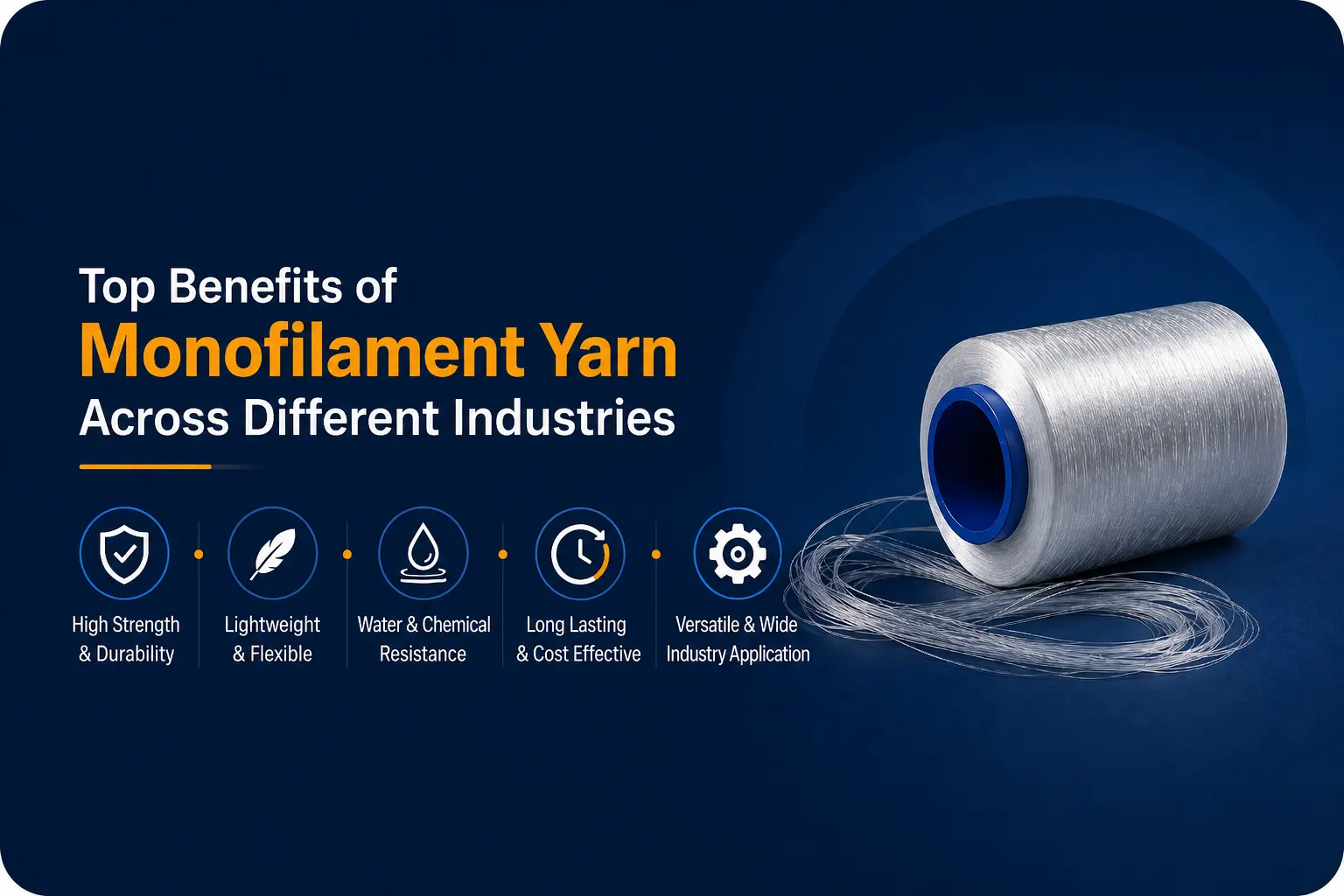
Monofilament yarn is one material format used in sports netting. Its continuous filament structure can support consistent dimensions and surface characteristics when properly manufactured.
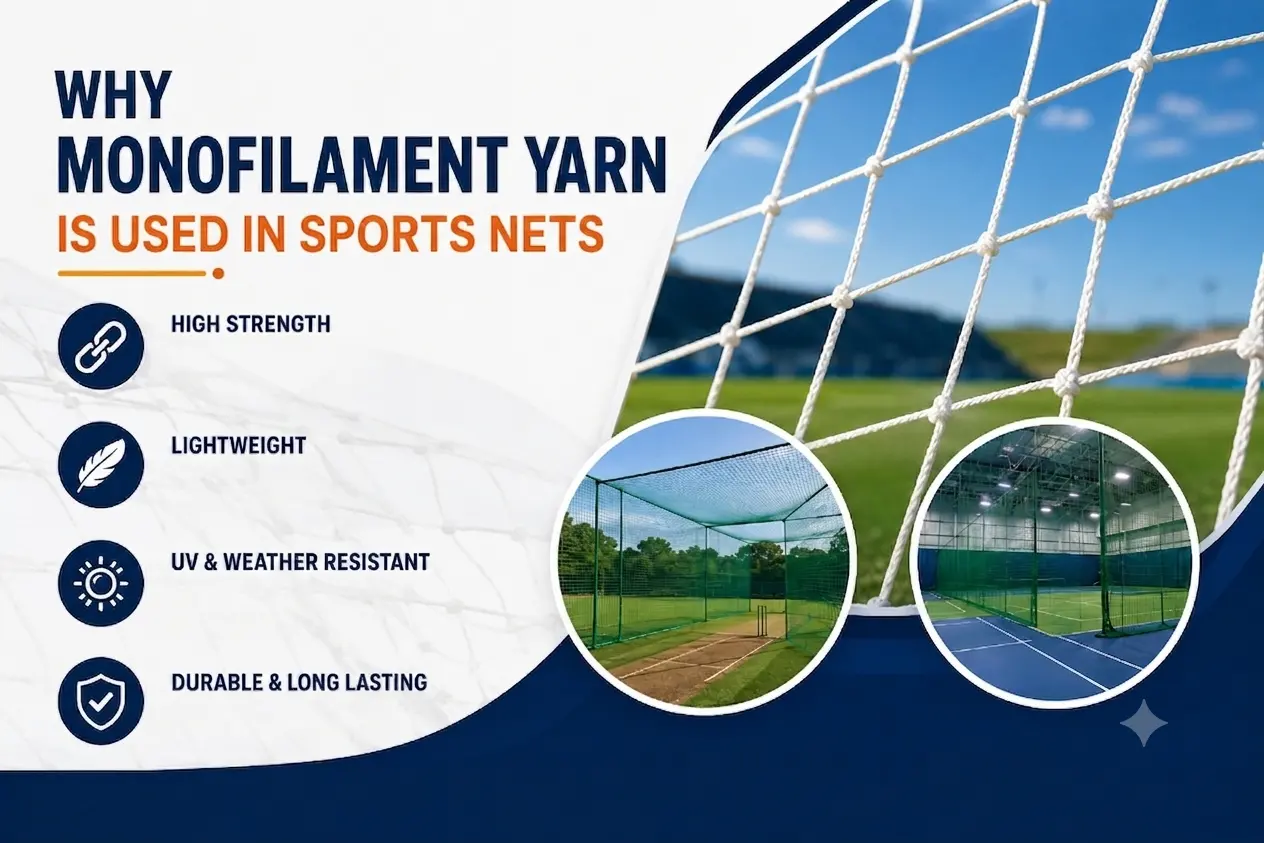
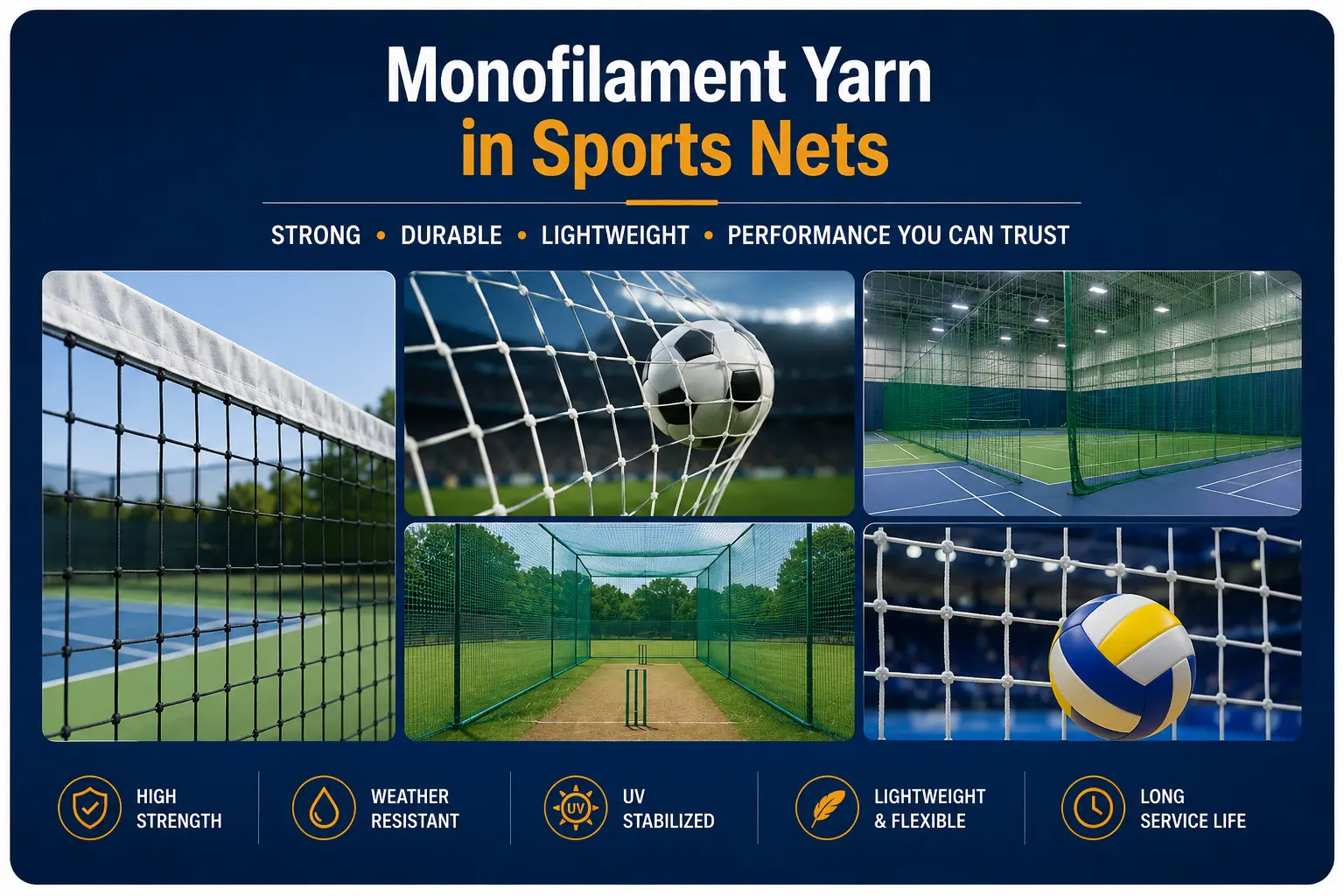
Explore how monofilament yarn is used in sports nets and how material selection contributes to the performance of finished netting products.
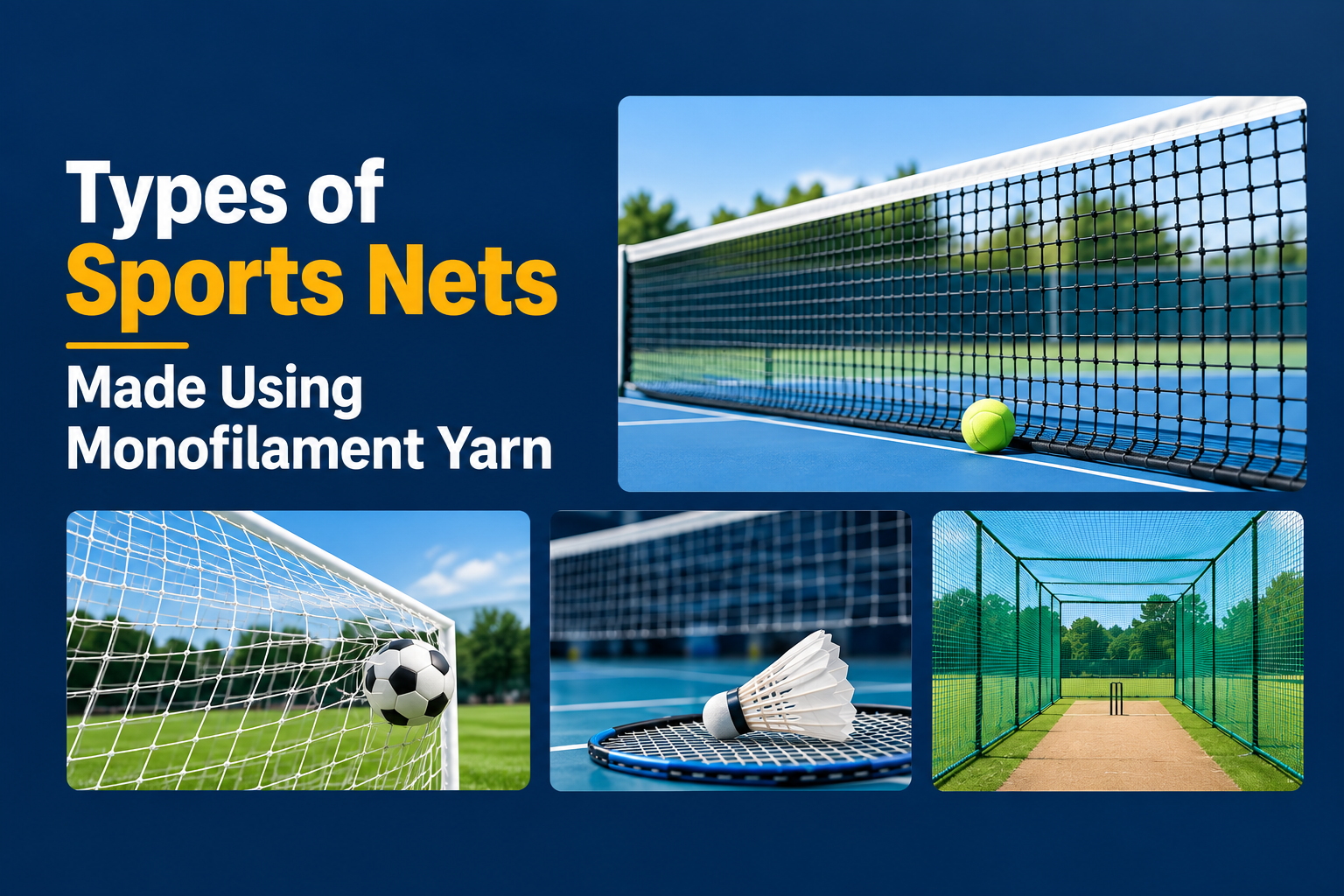
For a broader overview of applications, read about the types of sports nets made using monofilament yarn.
5. Cost and Expected Service Life
The lowest-cost material may not always deliver the best long-term value. A yarn that degrades quickly or requires frequent replacement can increase maintenance and operating costs.
Manufacturers should compare initial material costs with expected durability, production efficiency, maintenance requirements, and replacement frequency. The appropriate choice balances performance requirements with the intended budget and application.
The Role of Monofilament Yarn in Tennis Net Manufacturing
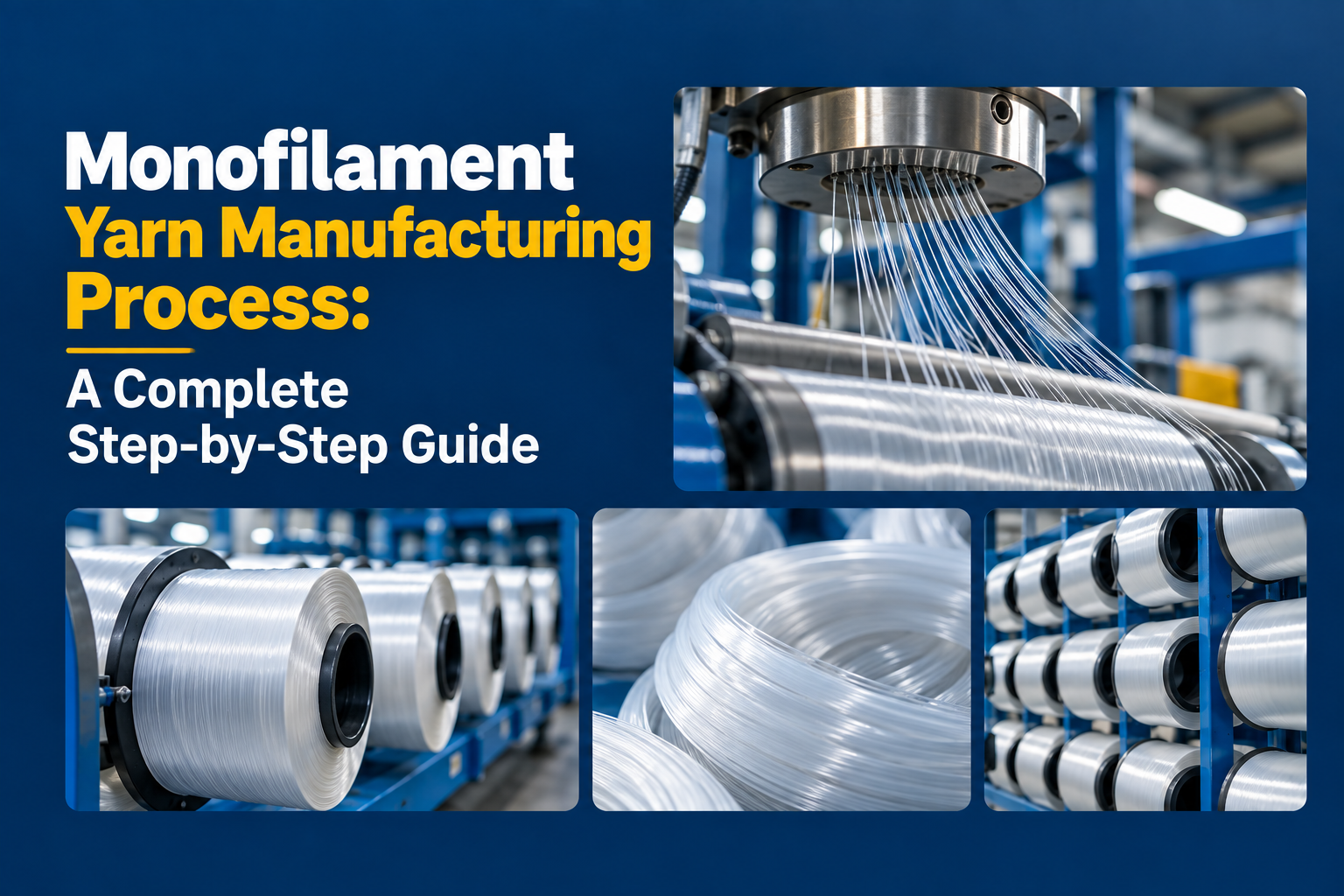
Monofilament yarn is produced as a continuous filament rather than a bundle of shorter staple fibers. Depending on its polymer and specifications, it can provide consistent diameter, controlled mechanical properties, and a uniform structure suitable for selected netting applications.
For tennis nets, the suitability of monofilament depends on the required yarn diameter, tensile strength, flexibility, abrasion resistance, and finished mesh design. Manufacturers should select a grade that meets the intended application rather than assuming that every monofilament type will deliver the same performance.
Monofilament is also used in different industrial and recreational applications because its characteristics can be tailored to specific requirements. To understand its wider role in netting, explore monofilament yarn in sports nets.
The two sports-net articles linked in this guide cover related subject areas. They can help readers explore the application of monofilament yarn in netting and understand how different sports-net designs may require different material specifications.
Why Quality Testing Matters for Synthetic Fibers for Tennis Nets
Even a suitable polymer may not deliver consistent results if the yarn's quality varies between production batches. Quality control helps manufacturers confirm that the material meets the specifications required for the intended net construction.
Important checks may include:
Tensile strength testing: Evaluates the yarn's resistance to breaking under applied force.
Elongation testing: Measures how much the yarn stretches before breaking or under a specified load.
Diameter consistency: Checks whether the yarn maintains the required dimensions.
Abrasion testing: Evaluates resistance to wear under defined test conditions.
UV and weathering evaluation: Helps assess performance under simulated or controlled environmental exposure.
Finished-net inspection: Checks mesh consistency, construction quality, dimensions, and workmanship.
Testing requirements should be selected according to the material, product specifications, and relevant industry standards. Results from a single yarn test do not necessarily establish the performance or service life of a complete tennis net.
For further information, see the guide to quality testing standards for monofilament.
Conclusion
Selecting the best synthetic fibers for tennis nets requires a clear understanding of the intended application, mechanical requirements, environmental conditions, and expected service life. Nylon offers a useful combination of strength and flexibility, polyester provides low moisture absorption and good dimensional stability, and polypropylene offers low weight and very low moisture absorption.
The final choice should consider more than the polymer name. Yarn diameter, mesh construction, UV stabilization, abrasion resistance, manufacturing consistency, and quality testing all influence the performance of the finished net.
Manufacturers looking for suitable synthetic fiber and monofilament solutions should evaluate material specifications alongside the requirements of their intended application. Visit Shanthi Industries to learn more about its synthetic fiber and monofilament products and explore solutions for different industrial and sports-related applications.
Frequently Asked Questions
1. What are the best synthetic fibers for tennis nets?
Nylon and polyester are commonly considered for their mechanical strength and durability, while polypropylene may suit applications requiring low weight and very low moisture absorption. The best option depends on the net design, environmental exposure, and performance specifications.
2. Is nylon or polyester better for tennis nets?
Nylon generally offers good flexibility and toughness, while polyester absorbs less moisture and provides good dimensional stability. The better option depends on the intended conditions of use, UV protection, and required mechanical properties.
3. Are synthetic fibers suitable for outdoor tennis nets?
Yes. Suitable synthetic materials can be used for outdoor tennis nets when their UV resistance, weathering performance, and mechanical properties meet the application requirements. UV stabilization and appropriate maintenance can help extend service life.
4. How does UV exposure affect synthetic fibers used in tennis nets?
Prolonged UV exposure can cause certain polymers to lose strength and become brittle. Selecting an appropriate UV-stabilized grade and evaluating the material's weathering performance can help reduce this risk.
5. What should manufacturers consider when choosing synthetic fibers for tennis nets?
Manufacturers should assess tensile strength, elongation, abrasion resistance, UV stability, moisture absorption, yarn diameter, mesh construction, production consistency, cost, and expected service life. Testing the finished net is also important for evaluating overall performance.