Selecting the right material is essential for manufacturers working in demanding industrial environments. From filtration systems and technical textiles to specialized mesh structures, industrial applications often require materials that can withstand chemical exposure, temperature variations, moisture, and continuous operational stress. Choosing an unsuitable filament can affect product performance, maintenance requirements, and service life.
This is where ETFE monofilament becomes a valuable material option. Manufactured from ethylene tetrafluoroethylene (ETFE), a high-performance fluoropolymer, it offers a combination of chemical resistance, thermal stability, low moisture absorption, and environmental durability.
Understanding the benefits of using ETFE monofilament helps manufacturers evaluate whether this specialized filament is appropriate for their products and operating conditions. In this guide, we explore five important advantages, their practical applications, and the factors businesses should consider before selecting ETFE monofilament.
What Is ETFE Monofilament?
ETFE monofilament is a single, continuous filament produced from ethylene tetrafluoroethylene, a fluoropolymer known for its resistance to many chemicals and environmental conditions.
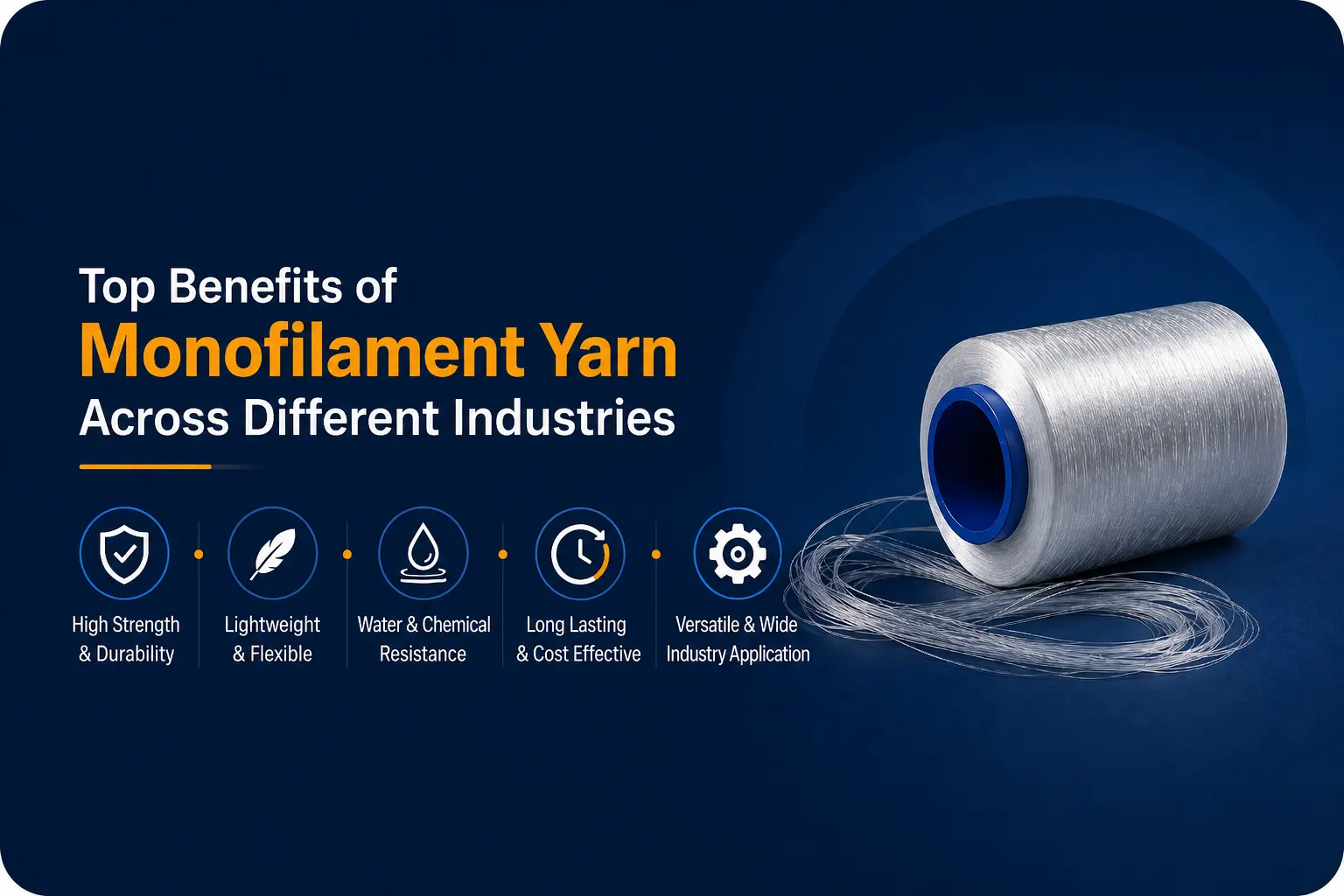
Unlike multifilament yarn, which consists of multiple fine filaments combined into a yarn structure, monofilament is formed as an individual strand with a defined diameter. This construction makes it useful in applications where dimensional consistency, surface characteristics, and mechanical performance are important.
ETFE is often considered for specialized applications where conventional materials, such as nylon, polyester, or polypropylene, may not meet the required chemical or temperature performance. For a deeper understanding of this material, explore our guide to ETFE monofilament.
The suitability of ETFE monofilament depends on its grade, filament dimensions, manufacturing quality, and intended operating environment.
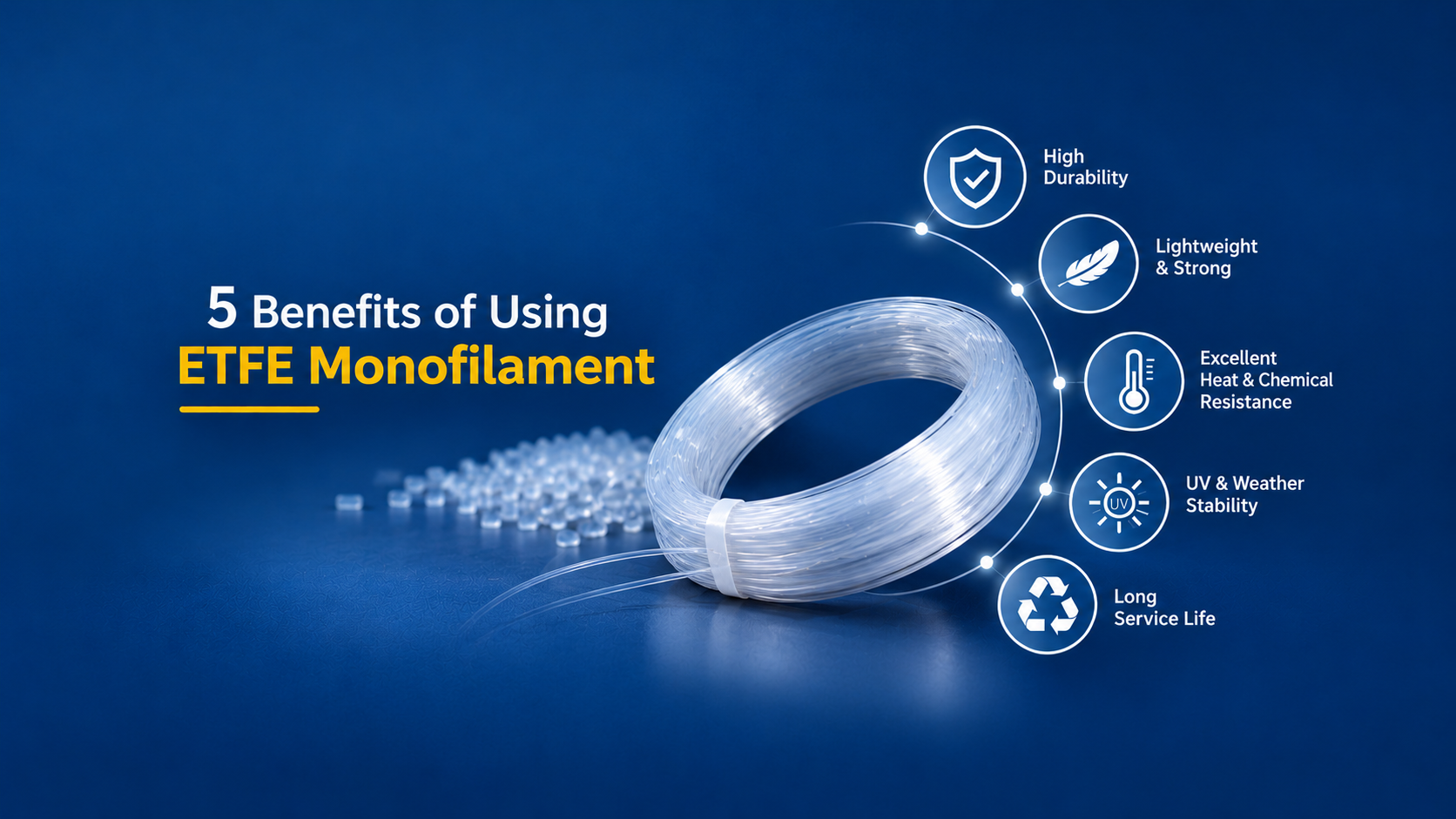
5 Major Benefits of Using ETFE Monofilament
The benefits of using ETFE monofilament extend across several industrial applications. However, the value of each property depends on the specific product design, exposure conditions, and performance requirements.
1. Excellent Chemical Resistance
One of the primary benefits of using ETFE monofilament is its resistance to many aggressive chemicals. In industrial environments, filaments may come into contact with chemical solutions, cleaning agents, processing fluids, or other substances that can affect conventional materials.
ETFE offers strong chemical resistance, making it a potential choice for specialized filtration components, industrial mesh, and technical textile applications where chemical exposure is a concern.
For manufacturers, selecting a chemically compatible filament can help reduce premature material degradation and support more reliable operation. Practical consideration: Chemical resistance is not universal. Compatibility depends on the specific chemical, its concentration, temperature, exposure duration, and the ETFE grade. Manufacturers should verify compatibility under actual operating conditions before finalizing material selection.
2. Good Thermal Stability
Industrial materials may be exposed to elevated temperatures during manufacturing, processing, cleaning, or everyday operation. A filament that cannot withstand these conditions may lose its intended mechanical properties or become unsuitable for the application.
ETFE offers good thermal stability compared with many conventional polymers, making it suitable for certain applications involving elevated operating temperatures. This property can be valuable in specialized technical textiles, industrial components, and filtration applications where both temperature resistance and chemical compatibility are important.
Practical consideration: The maximum usable temperature depends on the material grade, mechanical load, exposure duration, and application design. Buyers should consult the manufacturer's technical data sheet rather than relying on a general temperature rating.
3. Low Moisture Absorption
Moisture can influence the dimensional and mechanical behavior of some polymer materials. In applications involving humid environments, water exposure, or frequent cleaning, maintaining consistent material characteristics is an important consideration. ETFE has very low moisture absorption, helping it retain its material characteristics in many wet or humid environments. This property can make ETFE monofilament useful for selected mesh structures, technical fabrics, and components exposed to moisture during operation.
For manufacturers, low moisture absorption can help support dimensional consistency where changes caused by moisture would otherwise affect product performance.
However, the complete assembly must also be considered. Seams, coatings, supporting structures, and other materials may respond differently to water exposure.
4. Strong Weather and UV Resistance
Products designed for outdoor or environmentally demanding applications may experience prolonged sunlight exposure, rain, temperature changes, and other weather-related stresses. ETFE offers good resistance to weathering and ultraviolet exposure, making it a material worth evaluating for applications where environmental durability is important. Potential applications include specialized outdoor mesh structures, technical textiles, and industrial components designed for extended environmental exposure.
The benefit for manufacturers is the potential to maintain material performance over time when the filament is correctly specified for the application.
Practical consideration: Actual service life depends on the filament grade, UV intensity, temperature fluctuations, mechanical loading, and other environmental factors. Product testing and supplier guidance are important when designing components for long-term outdoor use.
5. Dimensional Consistency and Industrial Versatility
Monofilament construction provides a continuous strand with a defined diameter. When manufacturing processes are properly controlled, this construction can support consistent filament dimensions and predictable processing behavior. This is particularly important in applications such as mesh manufacturing, screening, technical textiles, and specialized filtration components, where filament dimensions influence the characteristics of the finished product.
ETFE's combination of chemical resistance, thermal stability, and low moisture absorption can make it suitable for applications requiring several performance characteristics at the same time. For a broader perspective on the practical advantages of monofilament materials, read about the benefits of using monofilament yarn.
For example, a manufacturer developing a specialized mesh may need a filament that maintains its properties during chemical exposure while also providing suitable dimensional stability.
The final result depends on the quality of the polymer, extrusion process, filament diameter, and other manufacturing parameters. Material selection should therefore consider both the polymer's properties and the consistency of the finished filament.
Where Is ETFE Monofilament Used?
Understanding the benefits of using ETFE monofilament becomes more meaningful when they are evaluated against specific industrial requirements.
Potential application areas include:
- Industrial filtration: Specialized filter fabrics, meshes, and components that require chemical resistance.
- Technical textiles: Engineered textile structures designed for demanding operating conditions.
- Mesh and screening: Applications requiring defined filament dimensions and resistance to environmental exposure.
- Chemical processing environments: Selected components exposed to compatible chemicals.
- Specialized industrial products: Applications where a combination of thermal stability, low moisture absorption, and chemical resistance is required.
These are potential applications rather than a guarantee of suitability for every product within each category. The operating environment, design specifications, and relevant testing requirements must be evaluated before selecting ETFE.
ETFE Monofilament vs. Conventional Polymer Filaments
ETFE is not automatically the best choice for every industrial application. Nylon, polyester, polypropylene, PTFE, and other polymers each offer different combinations of performance, processability, and cost.
ETFE may be worth considering when chemical resistance, temperature performance, and environmental durability are key requirements. Nylon may be appropriate when flexibility, abrasion resistance, and mechanical performance are priorities. Polyester can be suitable for applications requiring dimensional stability and versatility, while polypropylene may be considered when low density and specific chemical-resistance characteristics are important.
The correct choice depends on the application's technical requirements rather than a general ranking of materials. Manufacturers exploring other material options can learn about durable and versatile monofilament yarn to understand how different monofilament solutions may suit their applications.
How to Choose the Right ETFE Monofilament
Before purchasing ETFE monofilament, manufacturers should assess several factors to ensure that the selected specification meets the needs of the finished product.
Define the Operating Environment
Identify the chemicals involved, operating temperatures, moisture exposure, UV intensity, and expected service duration. These factors help determine whether ETFE is suitable for the application.
Confirm Filament Specifications
Evaluate filament diameter, tensile strength, elongation, flexibility, and dimensional tolerances according to the intended use. These characteristics can affect manufacturing efficiency and finished-product performance.
Review Quality and Testing Requirements
Ask the supplier about quality-control procedures, dimensional consistency, material documentation, and available test data. Where appropriate, request samples and conduct application-specific testing before placing a bulk order. For additional guidance, refer to our article on quality testing standards for monofilament, which discusses the importance of evaluating filament quality and performance.
Consider Total Cost and Service Life
ETFE may have a higher initial material cost than some conventional polymers. However, the relevant comparison should include performance requirements, maintenance, replacement frequency, and the consequences of material failure.
A technically appropriate material specification can help businesses balance initial cost with long-term operational requirements.
Why Work With an Experienced Monofilament Manufacturer?
Selecting a high-performance polymer is only one part of achieving a reliable finished product. Consistent extrusion, diameter control, raw material quality, and suitable inspection procedures also influence filament performance.
An experienced monofilament manufacturer can help buyers understand available specifications and assess their compatibility with the intended application.
When evaluating suppliers, buyers should consider manufacturing capabilities, product consistency, technical support, and the ability to meet agreed specifications. Businesses sourcing within India can explore monofilament yarn manufacturers in India to learn more about the domestic supplier landscape.
For businesses based in or sourcing from Karnataka, this guide to monofilament yarn manufacturers in Bangalore provides an additional resource for supplier research.
At Shanthi Industries, customers evaluating specialized monofilament solutions should communicate their operating conditions, dimensional requirements, and performance expectations when discussing their material needs. Technical documentation and application-specific testing can help establish whether a particular filament meets the required specifications.
Conclusion
The benefits of using ETFE monofilament include chemical resistance, good thermal stability, low moisture absorption, weather and UV resistance, and the potential for consistent dimensional performance. These characteristics make it a useful material to evaluate for specialized industrial applications, including filtration, technical textiles, mesh structures, and selected chemical-processing environments.
However, successful material selection requires more than understanding general polymer properties. Manufacturers must consider the operating environment, filament specifications, manufacturing process, testing requirements, and total cost of ownership.
Keeping up with global monofilament yarn market trends can also help manufacturers and procurement teams understand broader industry developments when planning their material sourcing strategies. By evaluating these factors and consulting an experienced supplier, businesses can make informed decisions about whether ETFE monofilament is the right solution for their industrial requirements.
FAQs
1. What are the main benefits of using ETFE monofilament?
The main benefits include resistance to many chemicals, good thermal stability, low moisture absorption, weather and UV resistance, and dimensional consistency when manufactured to suitable specifications.
2. What are the industrial applications of ETFE monofilament?
ETFE monofilament may be suitable for specialized filtration components, technical textiles, industrial mesh, screening products, and selected applications involving chemical or environmental exposure.
3. Is ETFE monofilament resistant to chemicals?
Yes. ETFE has strong resistance to many chemicals. However, compatibility depends on the chemical type, concentration, temperature, exposure duration, and specific material grade.
4. Can ETFE monofilament withstand high temperatures and outdoor conditions?
ETFE offers good thermal stability and resistance to weathering and UV exposure. Its suitability depends on the operating temperature, exposure duration, mechanical loading, and environmental conditions.
5. How do manufacturers select the right ETFE monofilament?
Manufacturers should evaluate chemical compatibility, temperature requirements, filament diameter, tensile strength, dimensional tolerances, environmental exposure, and cost. Reviewing technical data and testing samples under actual operating conditions can help confirm suitability.